
Last updated on July 16, 2026
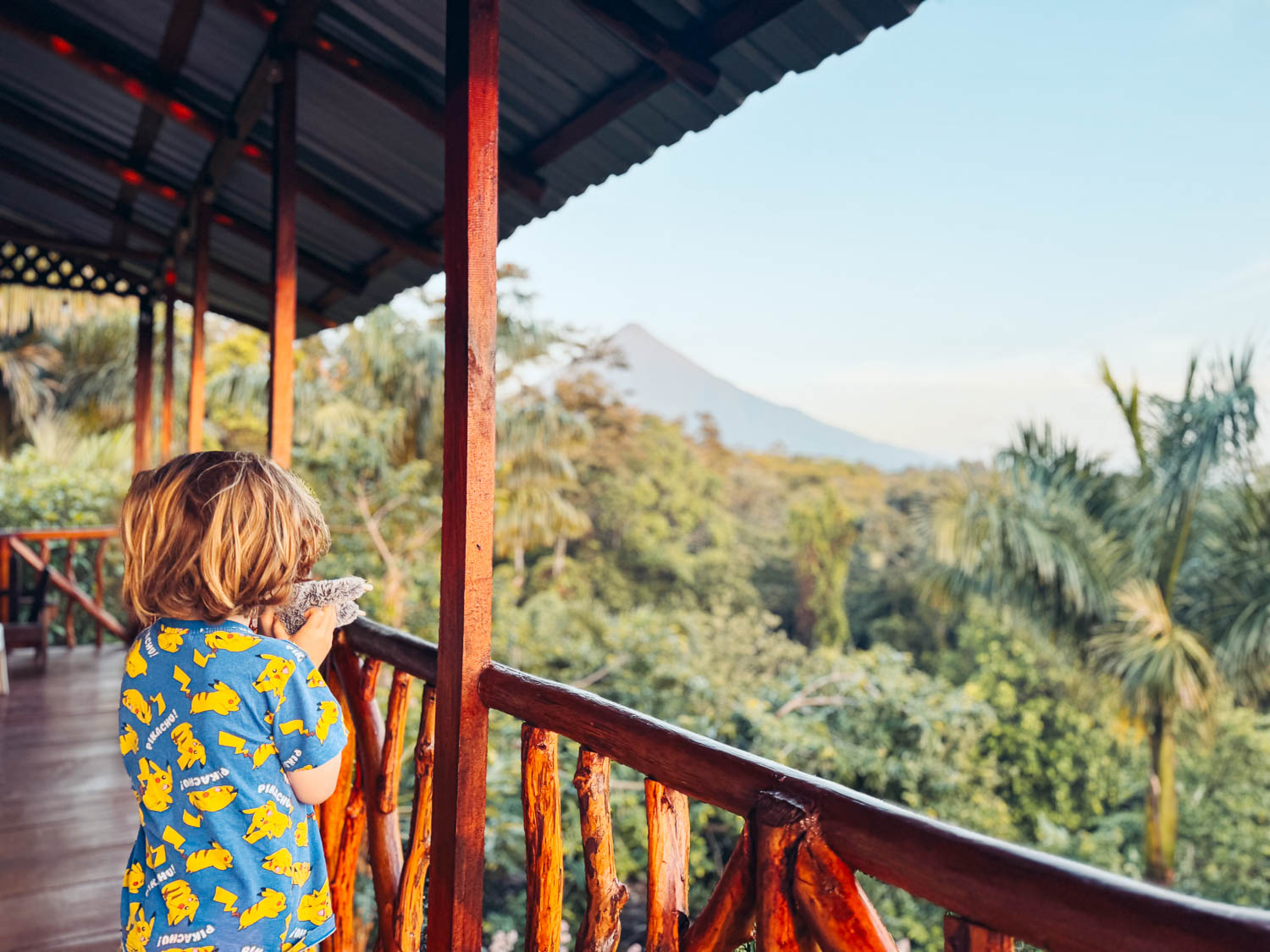
Costa Rica has long been on our family travel bucket list. The promise of sloths, jungle adventures, volcanoes, and surfing beaches sounded like a dream – especially for our nature-loving boys.
But what really drew me in was Costa Rica’s concept of pura vida (pure life), an ethos that encapsulates a philosophy of optimism, appreciation, and enjoyment of life’s simple pleasures. It connects Ticos to their environment and community, and has no doubt helped it become one of the world’s most eco-friendly countries.
It’s also become one of the most popular vacation spots for people looking for something adventurous, but still accessible. Having largely kept our family travels to Europe and the USA so far, Costa Rica was a natural stepping stone into more far flung adventures (I put it on par with Thailand for the level of ease).
Read all our Costa Rica guides
Visit our Costa Rica page for all our Costa Rica tips. Or take a shortcut to your favourite below.
Costa Rica destination guides: Things to do in La Fortuna | Things to do in Manuel Antonio | Things to do in Santa Teresa
Costa Rica accommodation reviews: Special places to stay in Costa Rica | Blue Surf Sanctuary (Santa Teresa) | Domo Hotel Boutique (Nosara) | Hideaway Rio Celeste | Isla Chiquita (Nicoya Peninsula) | Monteverde Lodge (Monteverde) | Si Como No (Manuel Antonio)
Costa Rica itineraries and tips: Costa Rica in 7,14 or 21 days | Best things to do in Costa Rica with kids
Our Costa Rica road trip
We spent three weeks road-tripping through Costa Rica, starting in the lush rainforests of Rio Celeste and winding our way around to the beach towns of the Nicoya Peninsula. It was a trip filled with core memories.
As always, we sought out special places to stay – accommodation with soul, creativity, and a family-friendly touch – and Costa Rica delivered in abundance. From treetop lodges and jungle domes to barefoot beach hideaways, each stop offered something different. This wasn’t just a holiday, it was a proper adventure.
In this post, I’ve shared our full Costa Rica itinerary with tips, reviews, and suggestions for anyone looking to do a similar trip. It’ll suit you whether you’re travelling with little ones like us or seeking a grown-up getaway with plenty of style and substance.
How to use this Costa Rica itinerary
This Costa Rica itinerary planner is designed to help you plan a trip that suits your time and budget. You can follow the route as we did or pick and choose sections that suit your plans and tastes. I’ve also added suggestions for how long to stay in each place, alternatives where relevant, and notes on what we might have done differently.
If you don’t have three weeks to spare, I’ve included ideas for how to adapt this itinerary into 7, 10 or 14-day versions, depending on how much time you have. There are some notable places we missed out, like Uvita, Corcovado and the Caribbean coast, which you might like to add in (we would have if we had more time!).
Who is this itinerary for? Families, couples, groups?
This Costa Rica itinerary is ideal for people who want a trip that blends adventure with comfort – think jungle hikes followed by hot springs, or wildlife spotting by day and beachside sunsets by evening. It’s designed with young children in mind, but the pace and experiences work just as well for couples or adult travellers who want to explore Costa Rica’s highlights without rushing. We deliberately sought out places that adults would love too – stylish hotels, good food, and a sense of magic and beauty.
It’s not a tick-box itinerary – there are plenty of moments built in for downtime. We made decisions based on what worked for our kids (ages 4 and 7), which meant skipping some of the “must-dos” in favour of less stressful, more enjoyable options.
It’s also not a resort holiday. If you’re looking to go straight from the airport to an all-inclusive beach hotel without really seeing the country, this probably isn’t the itinerary for you. This trip is about experiencing Costa Rica’s landscapes, wildlife, culture, and pura vida spirit.
Why visit Costa Rica?
Costa Rica may be a tiny country, but it packs a lot in, from lush jungles and volcanoes to tropical beaches and wildlife galore. Within a few hours of landing, you can be swimming in a volcanic hot spring or watching monkeys swing through the trees outside your hotel room.
Costa Rica has become a popular choice for travellers looking for something adventurous, but not too daunting. A bit like Thailand, it strikes a perfect balance – it’s tropical, exciting, and full of adventure, but with a strong tourism infrastructure, good healthcare, and the sort of ease that makes travelling with kids feel far more manageable. A huge bonus is that all the tap water is drinkable.
For families, it’s a dream. The country is incredibly welcoming to children, and there’s so much nature to explore. One day you might be spotting sloths and toucans in the treetops, the next building sandcastles on the beach or making chocolate from scratch.
It’s also a place that values nature and sustainability. Over a quarter of the land is protected in national parks and reserves, it’s successfully reversing deforestation, and almost 100% of its energy comes from renewable sources. Many of the hotels and tours we visited were genuinely committed to conservation. That ethos filters into daily life – Costa Rica is clean, peaceful, and full of pride for its environment.
And then there’s the spirit of pura vida. It’s more than a catchphrase, it’s a way of life. Easy-going, friendly, and deeply connected to the natural world. It’s an aspirational approach (and one I think a lot more of the world could do with adopting!).
Our Costa Rica highlights

It’s hard to pick favourites from a trip that gave us so many wow moments, but here are a few of the things we still talk about weeks later.
- The wildlife – from red-eyed tree frogs to sloths, coatis, dolphins and howler monkeys – we saw something incredible every day.
- Bioluminescence tour at Isla Chiquita – like touching stardust. We were all completely enchanted.
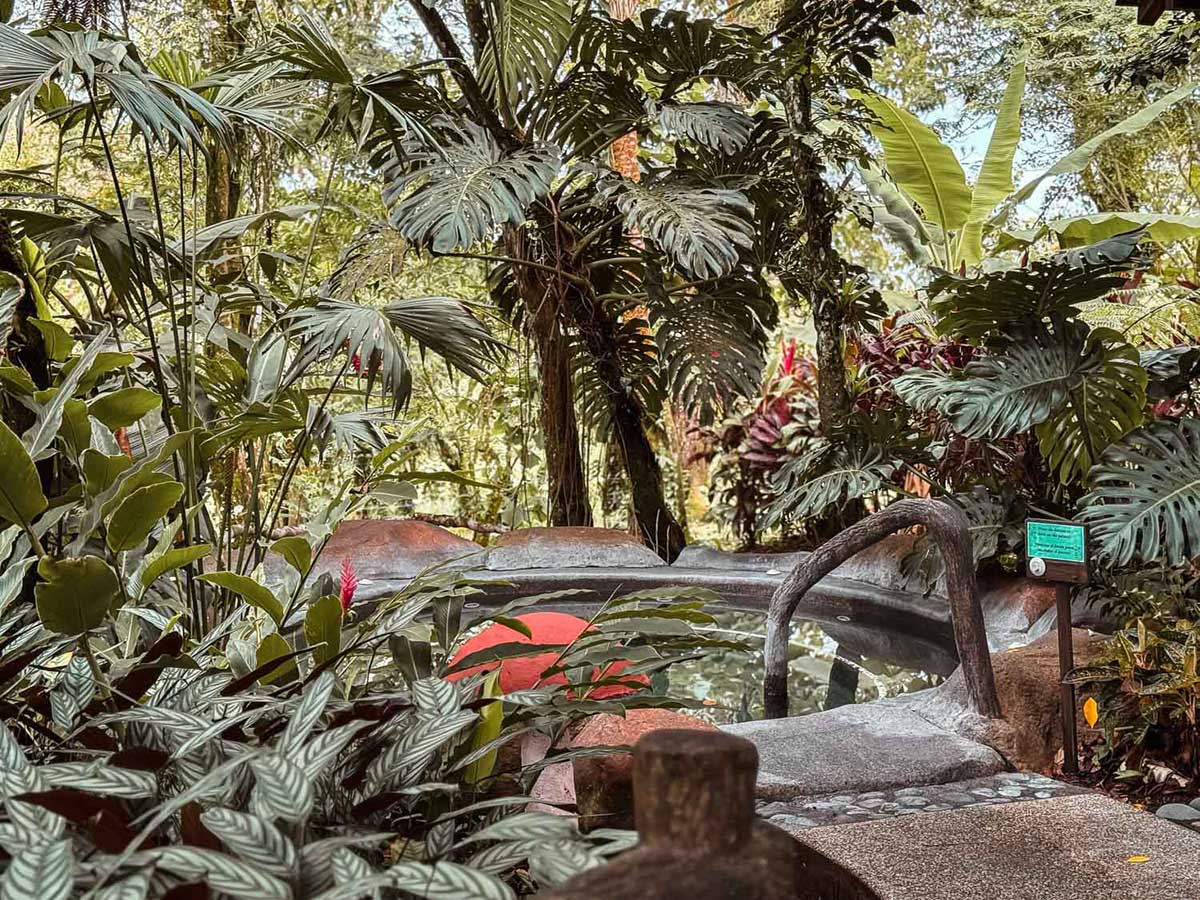
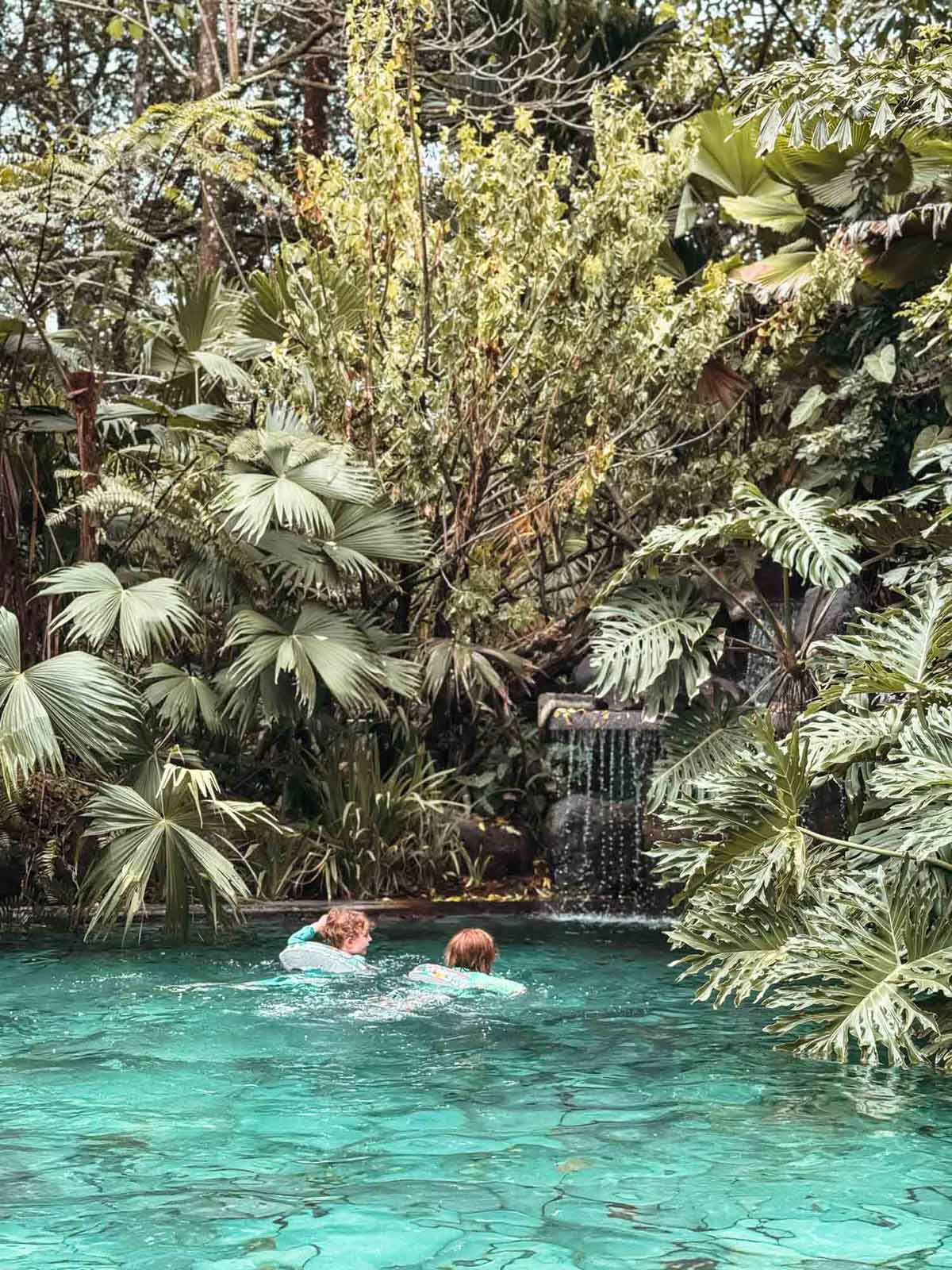
- Soaking in the hot springs at El Silencio del Campo – sipping margaritas while the kids played in the warm water, surrounded by jungle. It was one of those perfect holiday moments.
- Waking up in our treehouse near La Fortuna – sunrise on one side, volcano views on the other, it felt like something from a movie.
- Surfing in Santa Teresa – our boys’ first ever lesson, and they absolutely loved it. Toro, their instructor, was incredible with kids (and nervous adults like me!).
- Relaxing at Si Como No – our boys declared it the best hotel they’ve ever stayed at. Between the jungle views, the waterslide, and the toucans spotted from our balcony, it had the perfect vacation vibe.
- Chocolate-making at Two Monkeys – a fun, interactive, family-focused tour that taught us a lot and kept the kids entertained. The coffee tour at Trapiche was also excellent.
- The laid-back surf town of Nosara – surf, wellness and laidback beach vibes. I could live there (were it not quite so expensive!)
Costa Rica itinerary map
To help you visualise the route, here’s a map showing all the destinations we visited, starting from Liberia airport in the north and looping through rainforest, volcano, and beach regions before returning via the Nicoya Peninsula.
Costa Rica itinerary at a glance
Here’s a quick overview of our 3-week Costa Rica itinerary. You’ll find more details on each stop further down, including our favourite activities, places to eat, and where we stayed.
- Days 1-3: Rio Celeste
- Days 3-6: La Fortuna
- Days 6-8: Monteverde
- Days 8-10: Manuel Antonio
- Days 10-11: Jaco
- Days 11-13: Isla Chiquita
- Days 13-16: Santa Teresa
- Days 16-20: Nosara
Our detailed Costa Rica itinerary
Rio Celeste

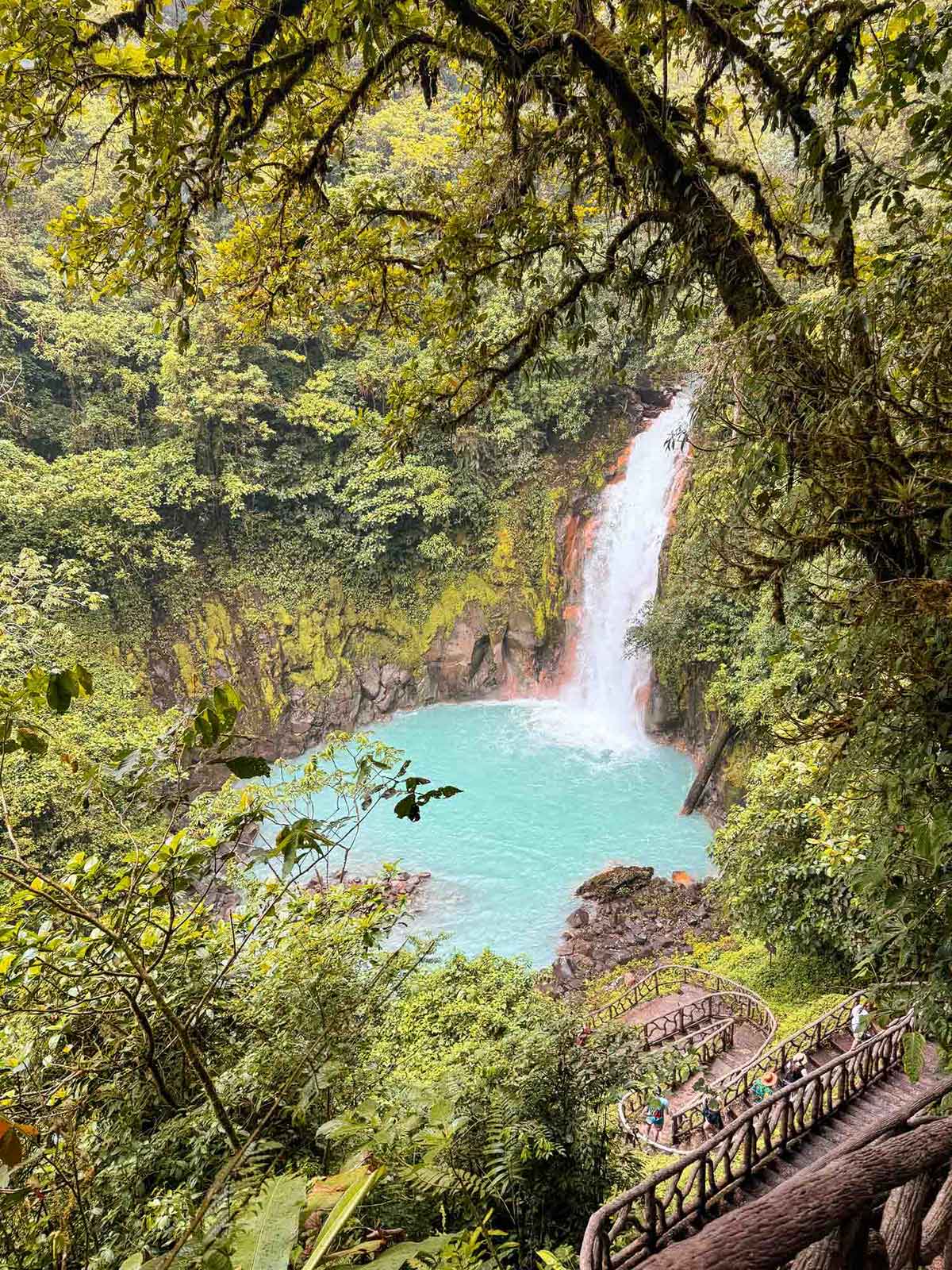
Rio Celeste was the perfect place to begin our Costa Rica adventure. It’s a peaceful, slightly off-the-beaten-path area, home to the magnificent Tenorio Volcano National Park. The region’s namesake river and centrepiece is a surreal, milky turquoise blue caused by volcanic minerals in the water. Be warned, the river’s brightness varies according to how much it’s rained, so if there’s been a downpour, the colour may be different. But it’s worth seeing, whatever the weather.
We almost skipped Rio Celeste and I’m so pleased we didn’t. It was one of the most spectacular spots on our entire Costa Rica itinerary.
Things to do in Rio Celeste
Rio Celeste Waterfall
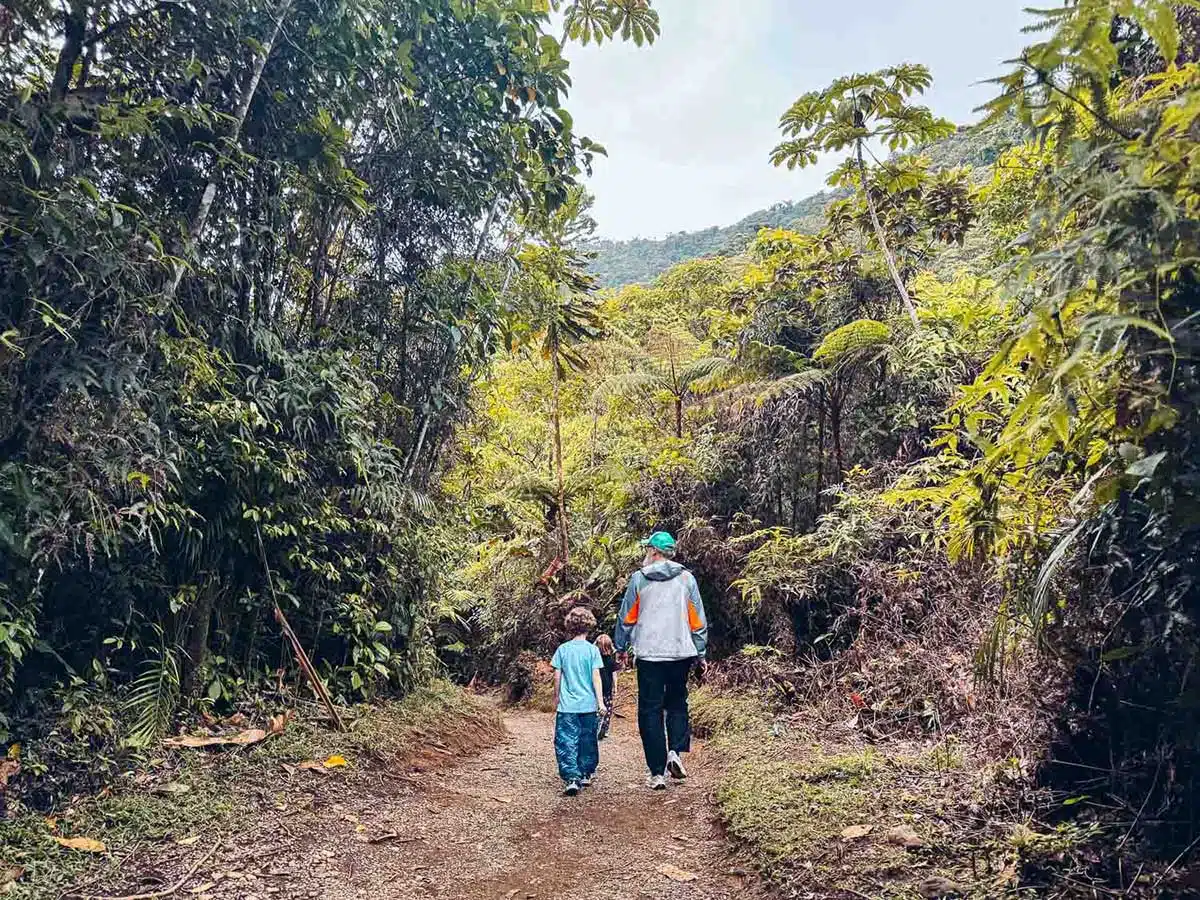
Hiking to the Rio Celeste waterfall is one of the “must do” activities in the area. I spent soooo long researching this, trying to work out if it was doable with our kids. I was worried the hike might be too challenging. In the end, it was absolutely worth it and fairly manageable, albeit with some whinging!
The hike to the waterfall viewpoint from the entrance to the park takes about 30 minutes. The first 15 were wonderful with the kids practically skipping along the trail. The next 15…less so. The novelty wore off and the whinging kicked in. Once you get to the waterfall, there are 200 steps down to the base, which you have to climb back up to leave. We didn’t make it down the full 200 steps to the base, but the halfway viewpoint still gave us a stunning view of that gorgeous blue water.
The path itself is relatively flat aside from the steps, and the kids enjoyed hopping across a few little streams. We even spotted an eyelash viper right by the trail, which was a highlight, albeit it a somewhat terrifying one!
Tip: You need to book park tickets in advance (they don’t sell them at the gate), and the signal is patchy, so do it before you arrive. You can book through the SINAC website.
Finca Amistad Cacao Tour
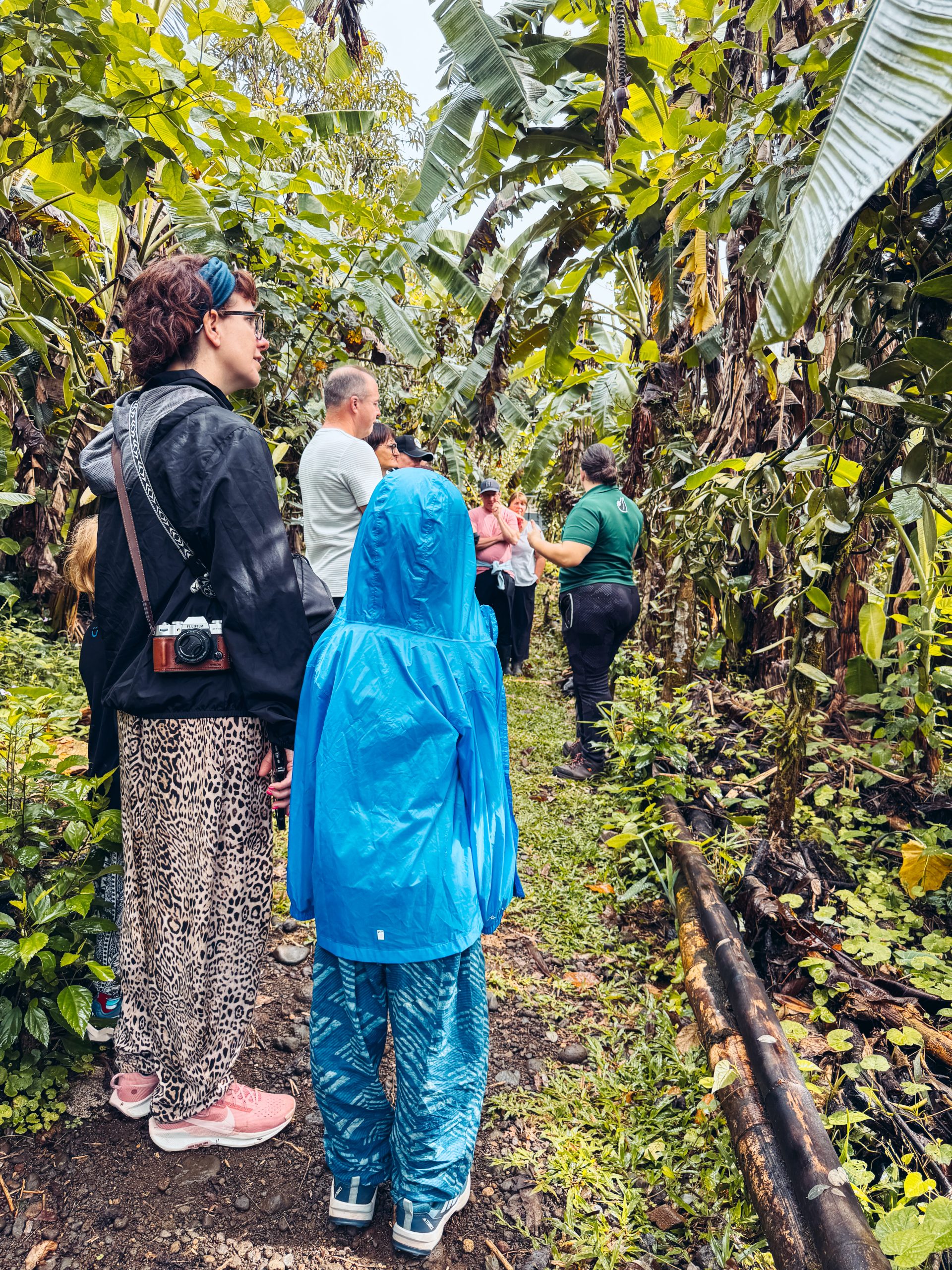
Finca Amistad is one of Costa Rica’s biggest cacao farms, providing beans to international companies as well as making its own boutique line of chocolate. We saw it on sale all around the country. We stayed at Finca Amistad (more details on that in the accommodation section), but you can also simply visit for a tour or a chocolate workshop.
We did the tour, which was really informative, but perhaps better suited to adults or older kids as it was tricky for the little ones to stay engaged.
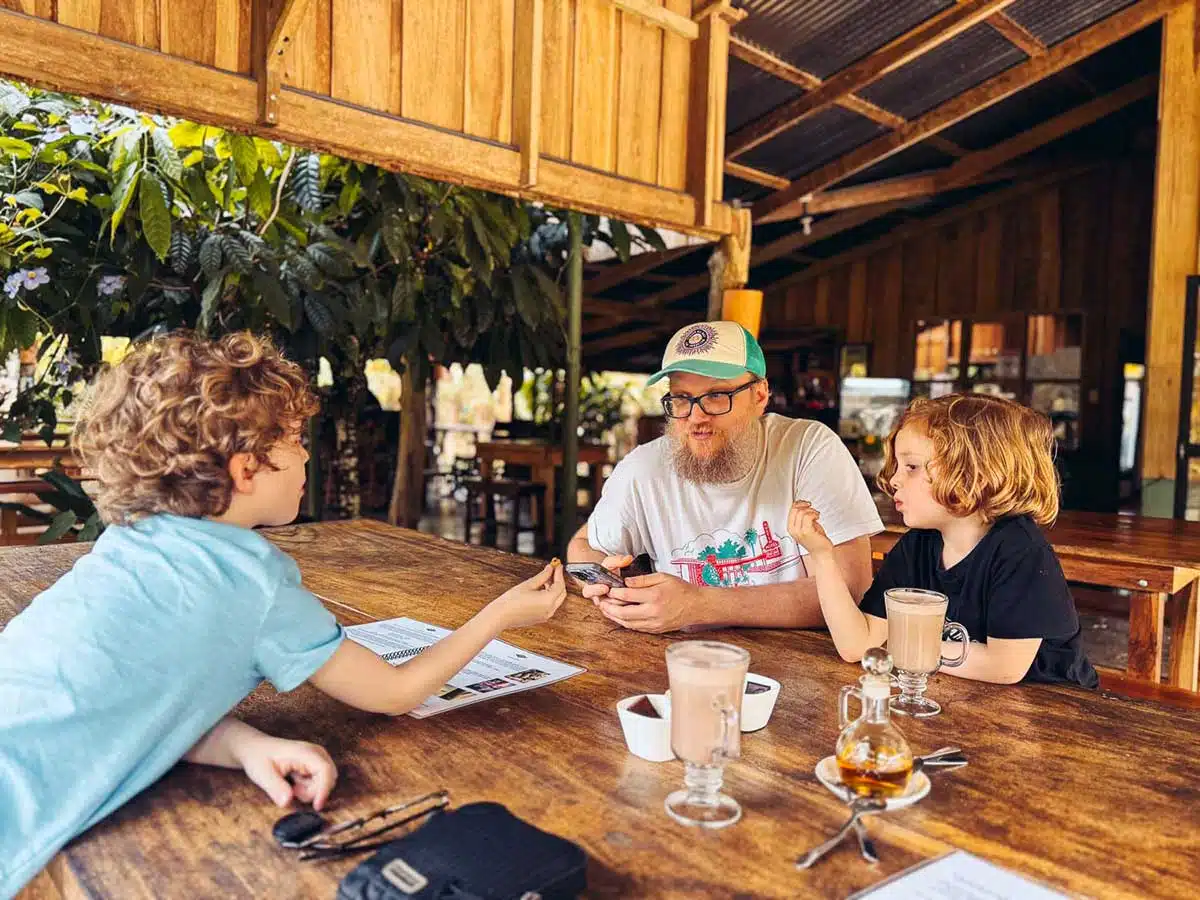
There’s also a chocolate-making workshop, which we skipped as we had one booked in La Fortuna, but it’s very well reviewed.
Bear in mind the road to the finca is rocky and remote. It’s definitely 4×4 territory – in fact, we saw an abandoned low clearance vehicle by the side of the road!
Tubing on the Rio Celeste
We didn’t do this, but it’s one of the most popular things to do in Rio Celeste and one that looks super fun. We only opted out because we felt Arlo was a bit young and not a strong enough swimmer. That said, there are places that accept little kids on the tours, so you can make that call yourself. The trips are guided and generally last a couple of hours, floating in tubes and riding the white water of the Rio Celeste.
Night walk
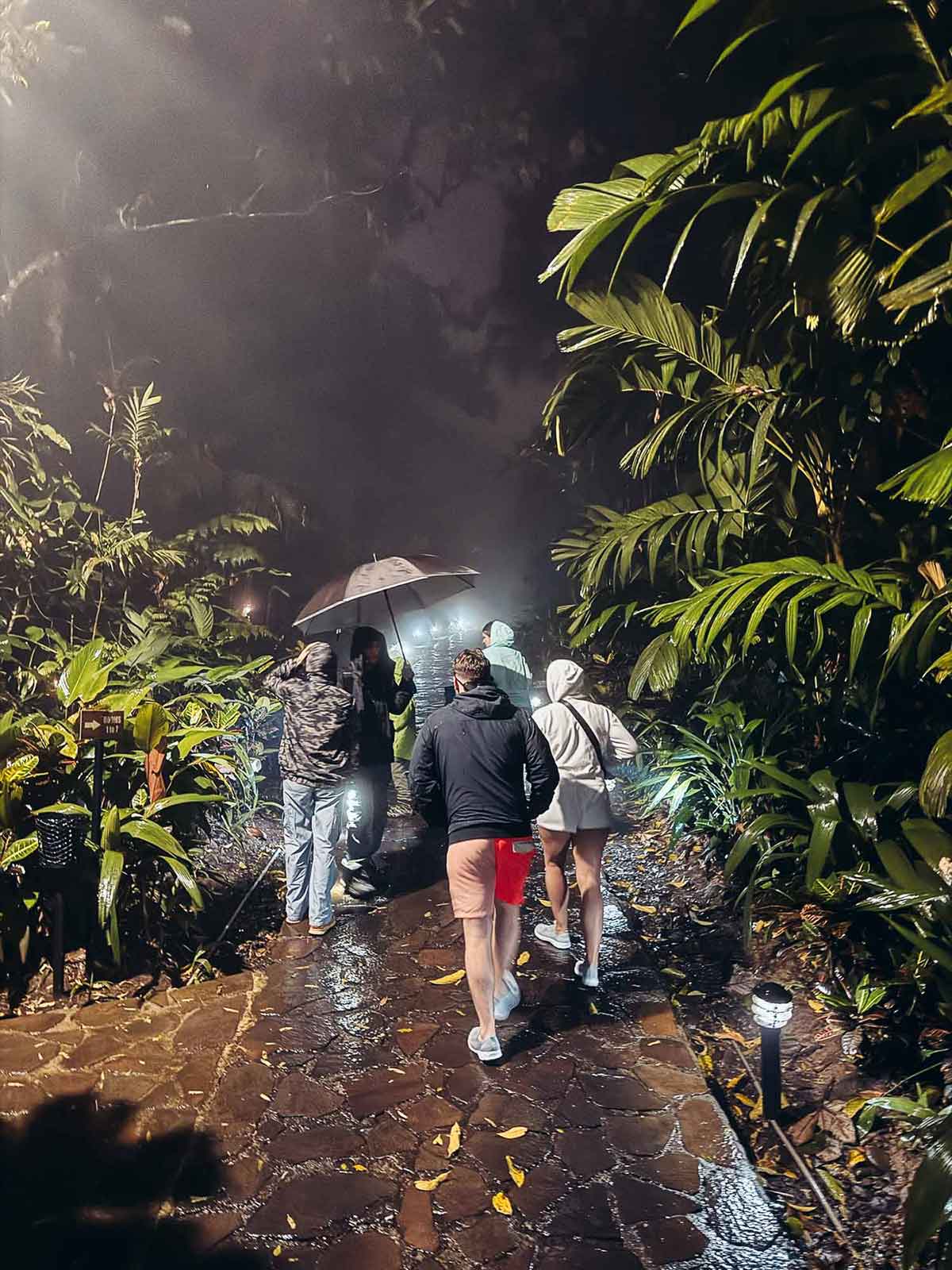
Seeing as so many of Costa Rica’s creatures are nocturnal, one of the best ways to see wildlife around Rio Celeste is by doing a night walk. We did one at our hotel, Hideaway, but you can also join tours outside of the hotels, for example, in the Tapir Valley.
Where to eat and drink in Rio Celeste





Many of the hotels are remote, so the easiest option is to eat at your hotel. We loved the meals at both Hideaway and Finca Amistad. The veggie ceviche in Hideaway was a highlight. And Steve and I loved trying traditional food at Finca Amistad.
If you want to eat elsewhere, the main urban area in Rio Celeste is Bijagua de Upala, which is where the majority of the dining options are. Some well-reviewed options include: La Terraza, La Cabana Lodge and La Choza del Maiz.
Across from the entrance to the national park, there’s a little cluster of roadside options, including fresh coconuts, a soda, and a bigger restaurant serving traditional food.
Where to stay in Rio Celeste


Hideaway Rio Celeste
Hideaway Rio Celeste is ideal if you’d like a slice of luxury, but also want something that feels more authentic than the big brand resorts. The secluded, luxury eco lodge is on its own 80-acre rainforest reserve, right next to the Tenorio National Park. It even has private access to swimming areas of Rio Celeste. And there’s a gorgeous pool with a swim-up bar if you prefer.
The whole place has a luxurious, but friendly feel. And the vibe is 100% nature-forward with incredible jungle-filled grounds and walking trails through the onsite tapir reserve.
Included in your stay is a guided night walk around the property where we saw tree frogs, snakes and more. And in the daytime, we saw coatis and agouti. It was the perfect introduction to Costa Rican wildlife.
Check availability and book now.
Finca Amistad Cacao Lodge
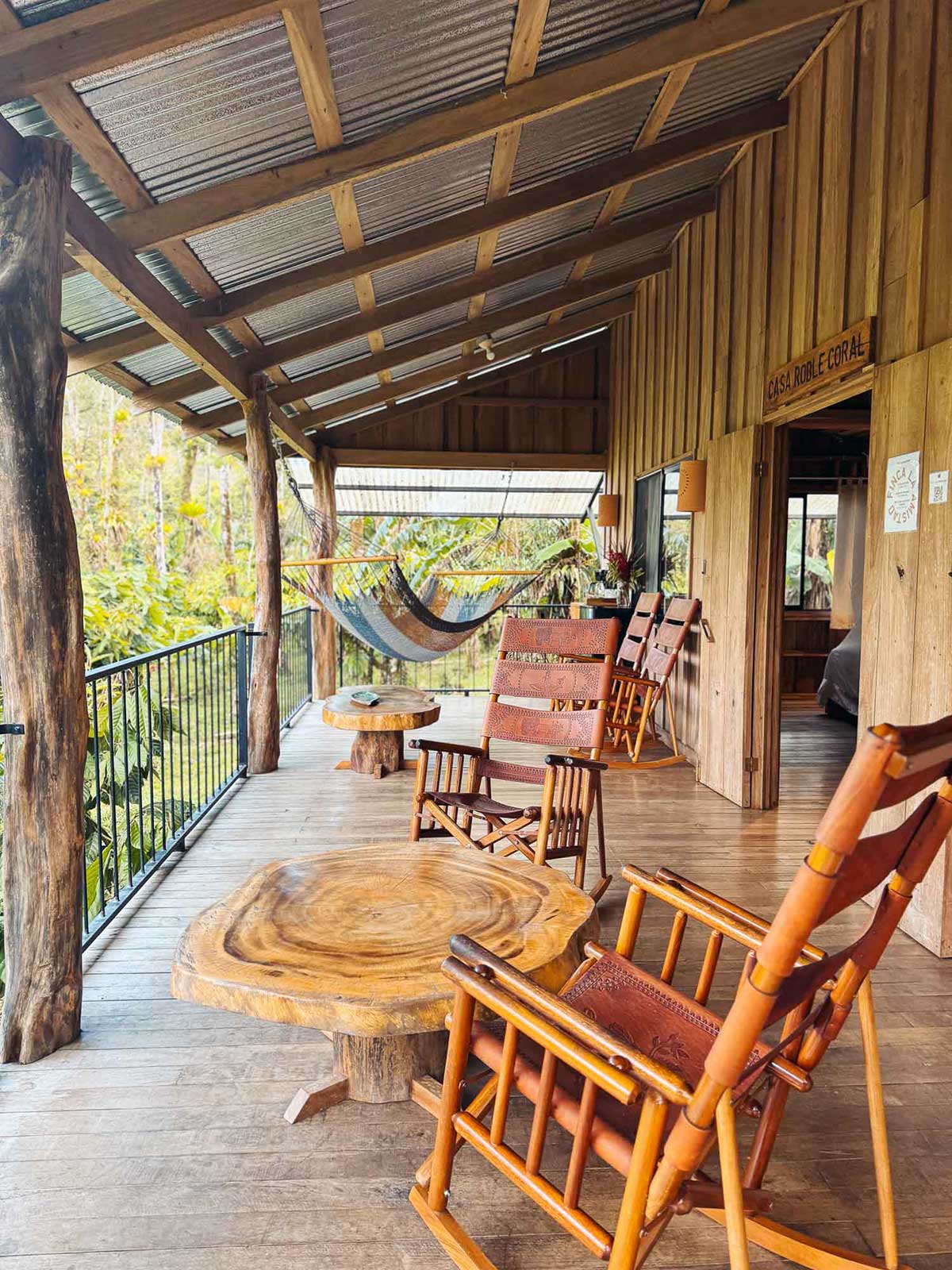
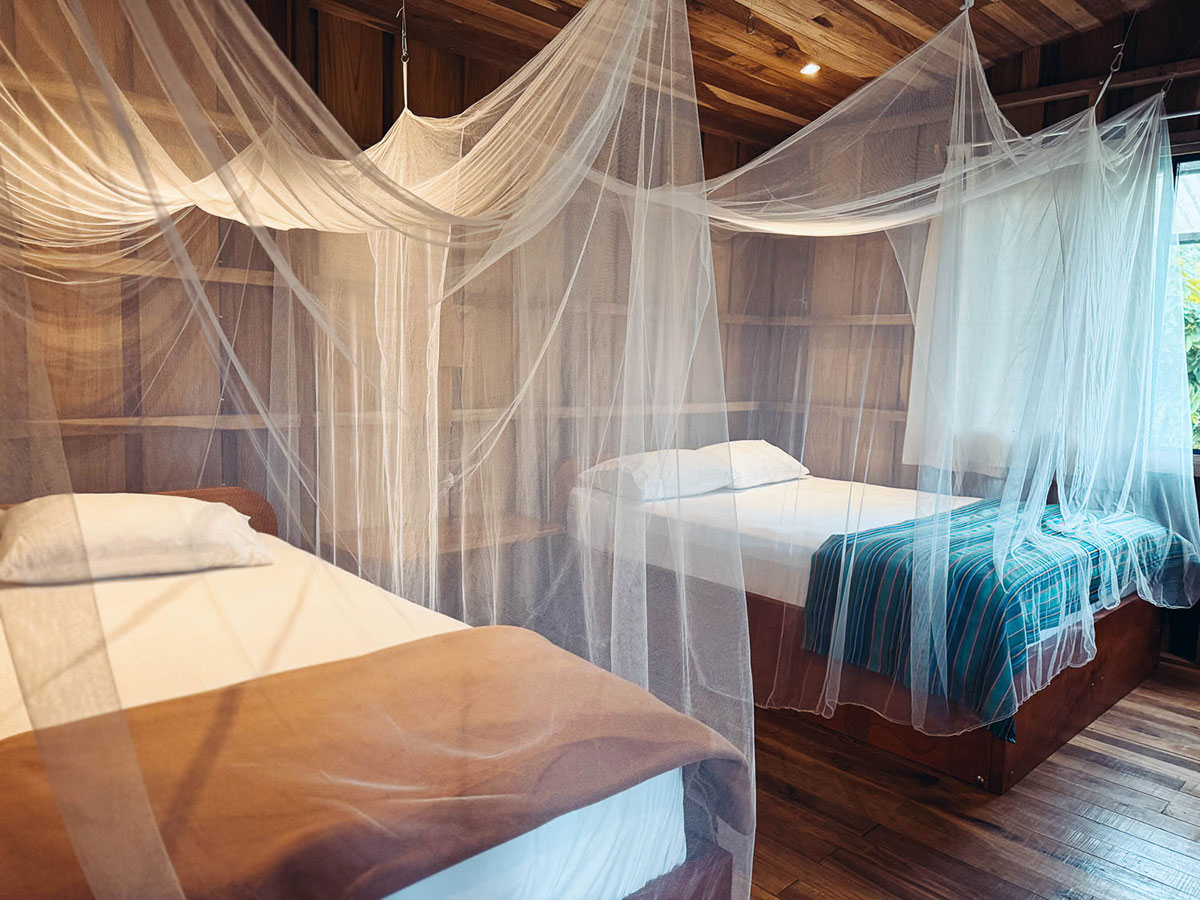
I talked about Finca Amistad in the ‘things to do’ section because it’s worth visiting even if you’re not staying there. But if you can spend the night, I encourage it. It’s an easy sell for kids and adults alike – staying on a cacao farm with plenty of chocolate treats included!
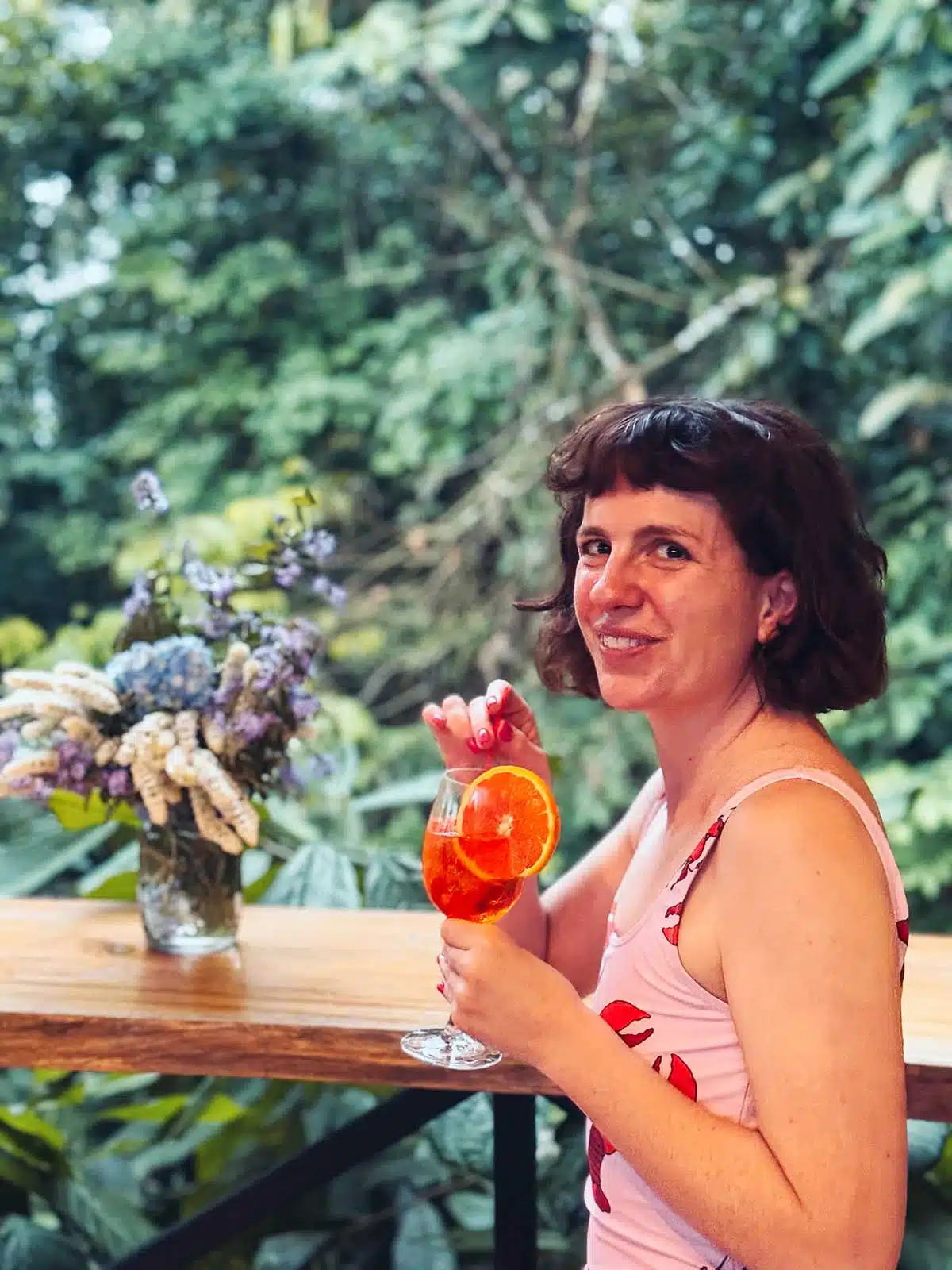
It’s a fairly rustic stay and one that requires a 4WD to get you down the rocky drive. But there are also luxury touches like an onsite spa area with warm and cool plunge pools, and space for doing yoga. You can even order cocktails to the pool! All guests can reserve the spa area for an hour of private use. It was a lush experience, relaxing in the pool surrounded by jungle.
You also get a free tour of the farm, and can book a chocolate making workshop if you like. A highlight is the complimentary chocolate treats on arrival. The chocolate milkshake was amazing!
Check availability and book now.
How to get to Rio Celeste
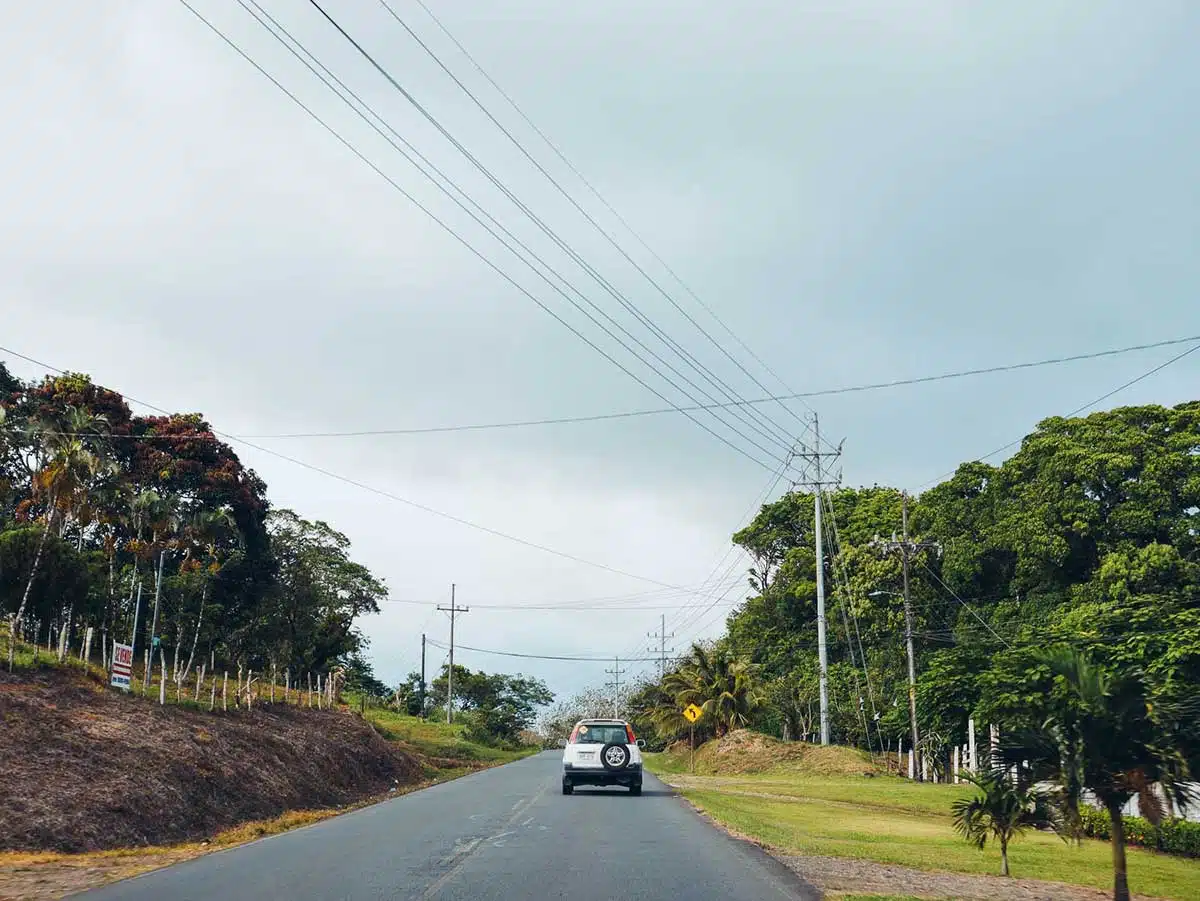
The journey from Liberia airport to Rio Celeste takes about 1.5 hours. The roads narrow and become increasingly bumpy as you get closer to the national park. There are hidden speed bumps and narrow bridges that you need to look out for, and it’s especially important to be careful if it’s raining (we arrived in a massive downpour!). But even in heavy rain, it was all manageable. Think about these sorts of road when choosing which car to hire (we were very happy with our 4WD for our time in Rio Celeste).
La Fortuna

Home to the iconic Arenal Volcano, La Fortuna is one of Costa Rica’s most popular destinations. It’s packed with unique things to do, from wildlife walks to natural hot springs and all sorts of adventure activities.
We met a lot of people who didn’t like Fortuna because of its focus on tourism, and it’s true the downtown area is fairly overrun with gift shops, hotels and tour operators. It isn’t what you’d call charming. But if you drive just five minutes beyond, you’ll find all sorts of nature reserves and incredible wildlife to discover. To avoid the less attractive parts of town, I recommend staying just outside Fortuna and focusing your time on the wildlife and nature it has to offer.
Failing that, Monteverde is a quieter alternative if you don’t mind missing the sight of Arenal.
Things to do in La Fortuna
We’ve put together a full guide to the best things to do in La Fortuna with kids, but here are some of the highlights.
- Soak in the hot springs – Choose from luxurious resorts like Tabacón, fun-filled (but somewhat hectic) spots like Baldi, or quieter pools like EcoTermales. We loved the serene private springs at our hotel, El Silencio del Campo. There are also free hot springs at El Choyin near Tabacon.
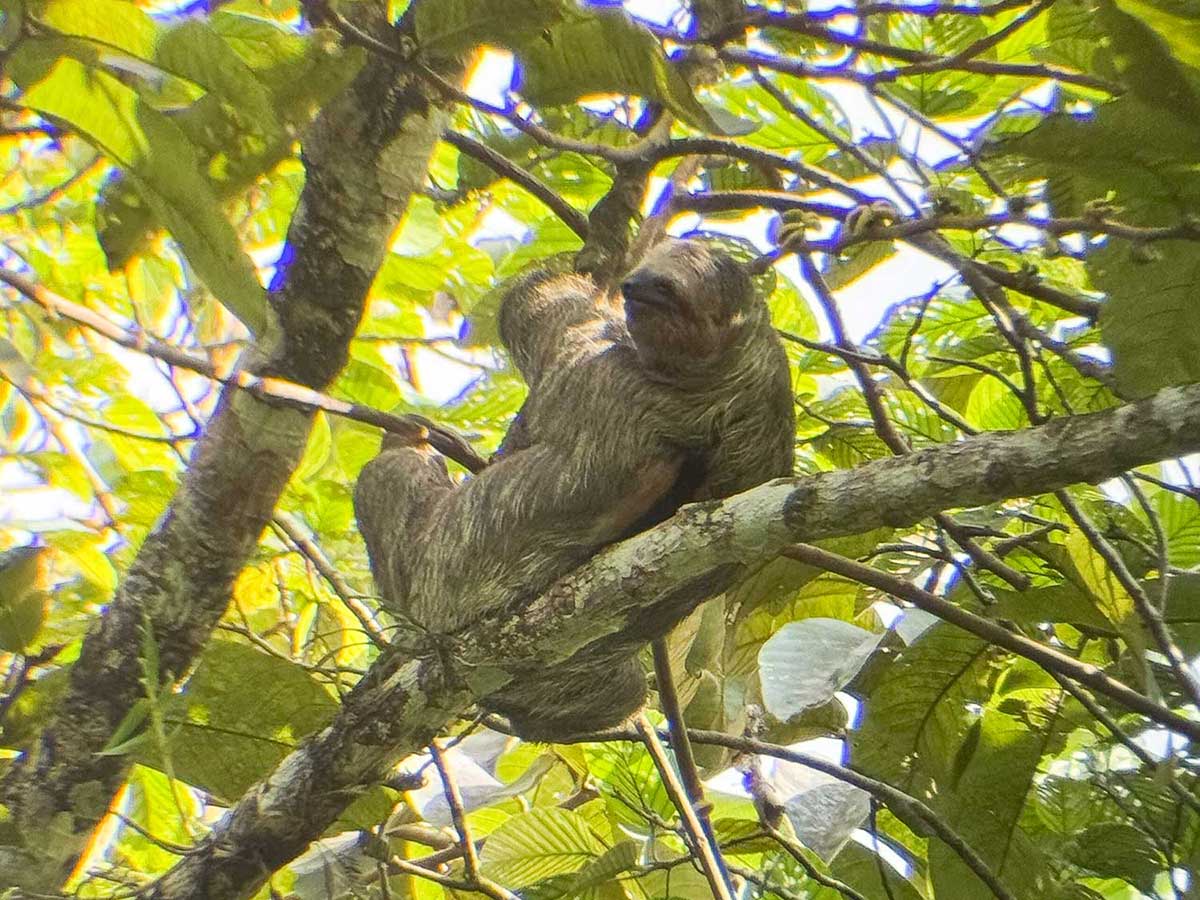
- Do a sloth walk. There are many to choose from, but be careful as some are less authentic than others (we’ve even heard stories of fake sloths in the trees!). We did the Bogarin Trail, which felt authentic and was good for kids. We saw five sloths, frogs, birds and even an owl. Proyecto Asis or Ecogarden Arenal also come highly recommended.
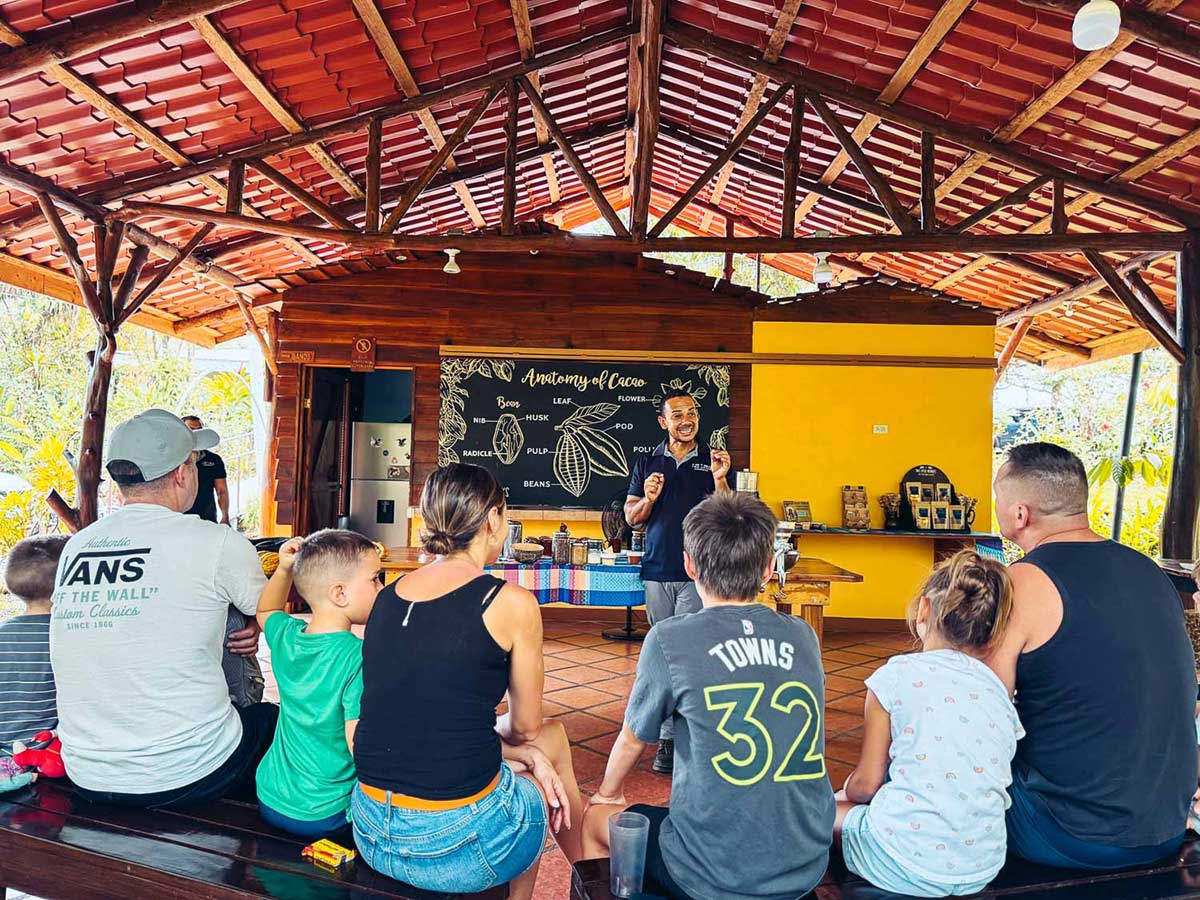
- Do a chocolate making workshop at Two Monkeys chocolate tour. The experience was created for families so is perfectly kid-friendly. You could also combine a chocolate and coffee tour at Don Juan, or do just coffee at North Fields.
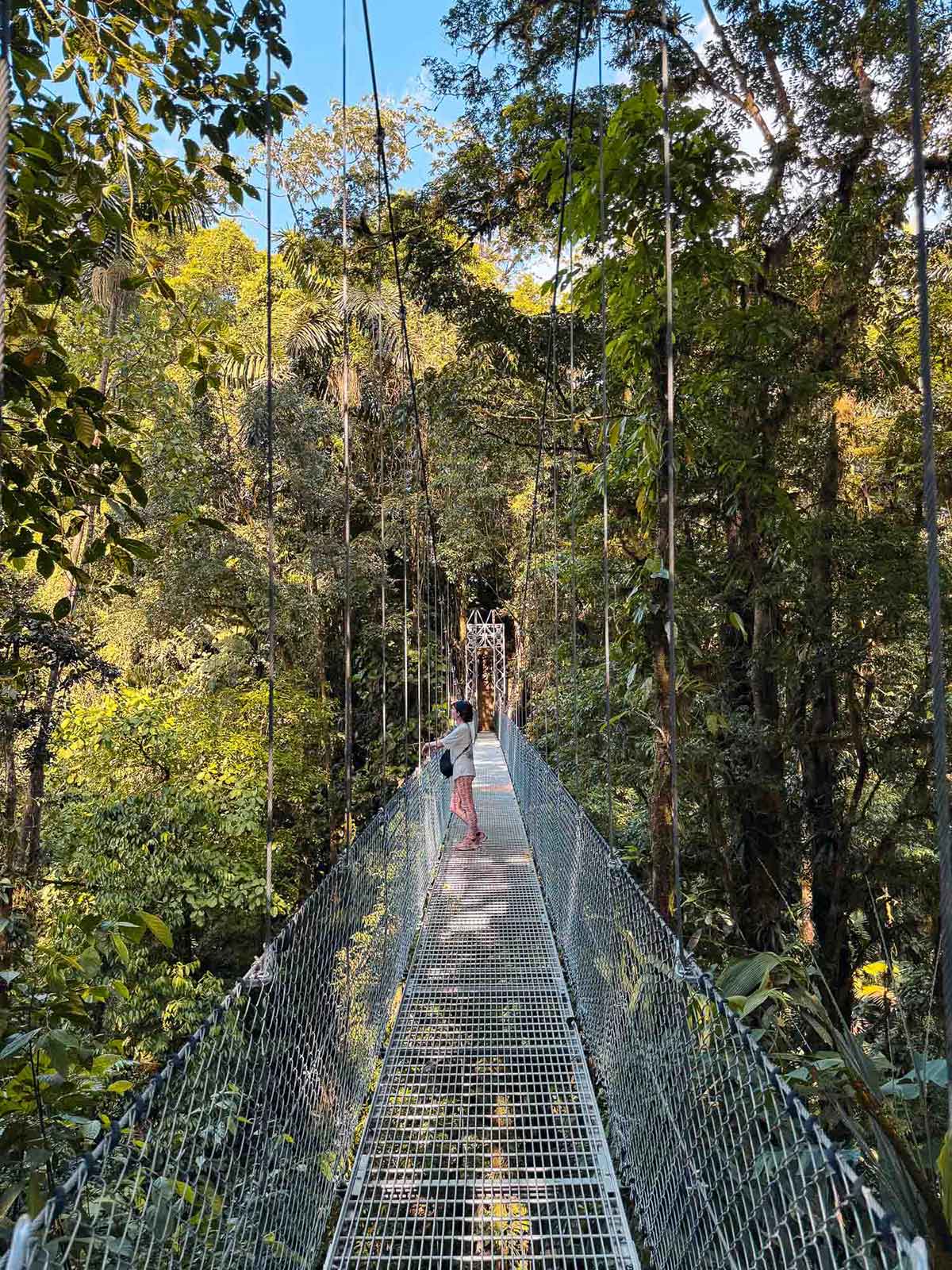
- Explore Mistico Hanging Bridges – a jungle adventure through the treetops with suspension bridges, volcano views, and wildlife spotting. It’s gorgeous!
- Take a dip at El Salto rope swing – a popular local swimming hole with a big rope swing and natural pool. This is one for older kids/adults.
- La Fortuna Waterfall and Mirador El Silencio are two of the most popular sights in the area, but we skipped them as the kids aren’t fans of hiking!
- There are also lots of ziplining and rafting activities that would be good for older kids/adults. We’ve suggested some tours from Get Your Guide below.
Where to eat and drink in La Fortuna
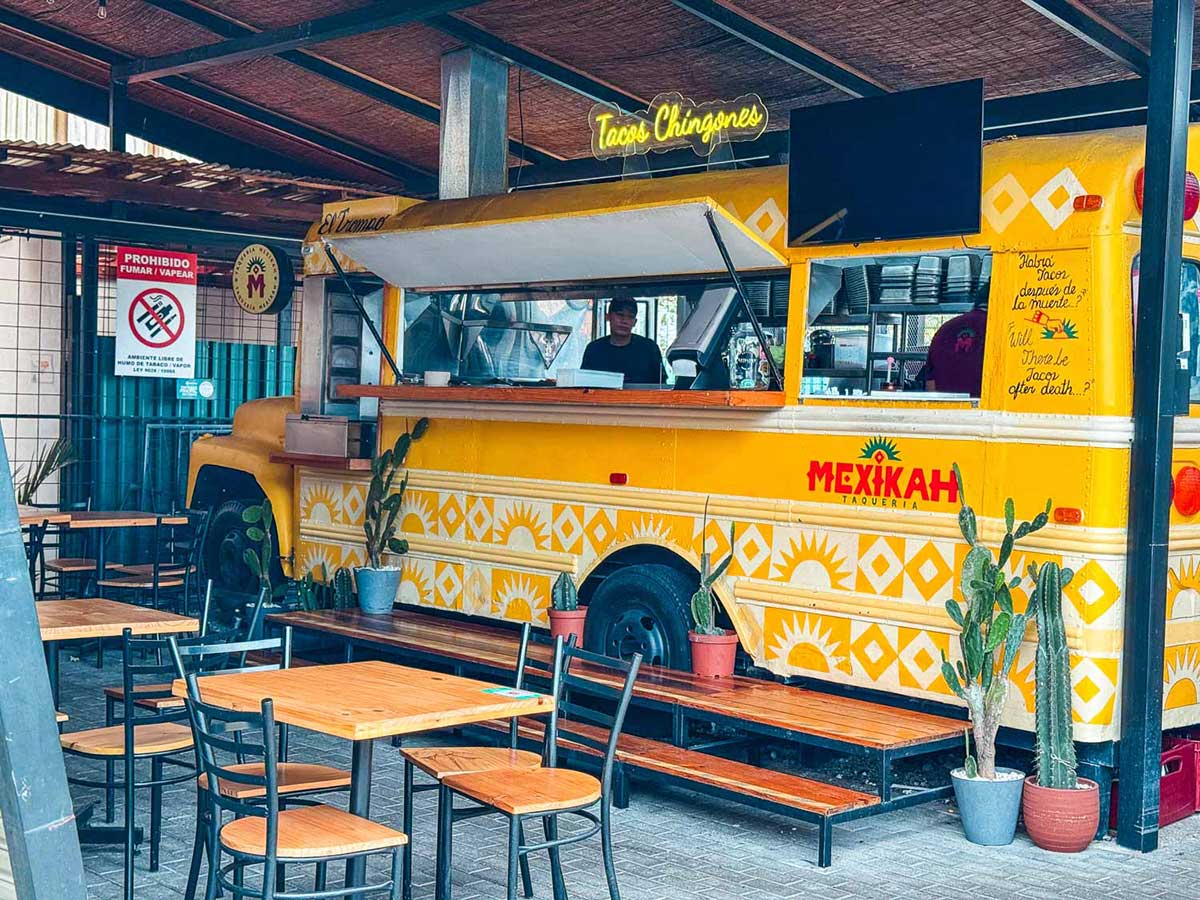
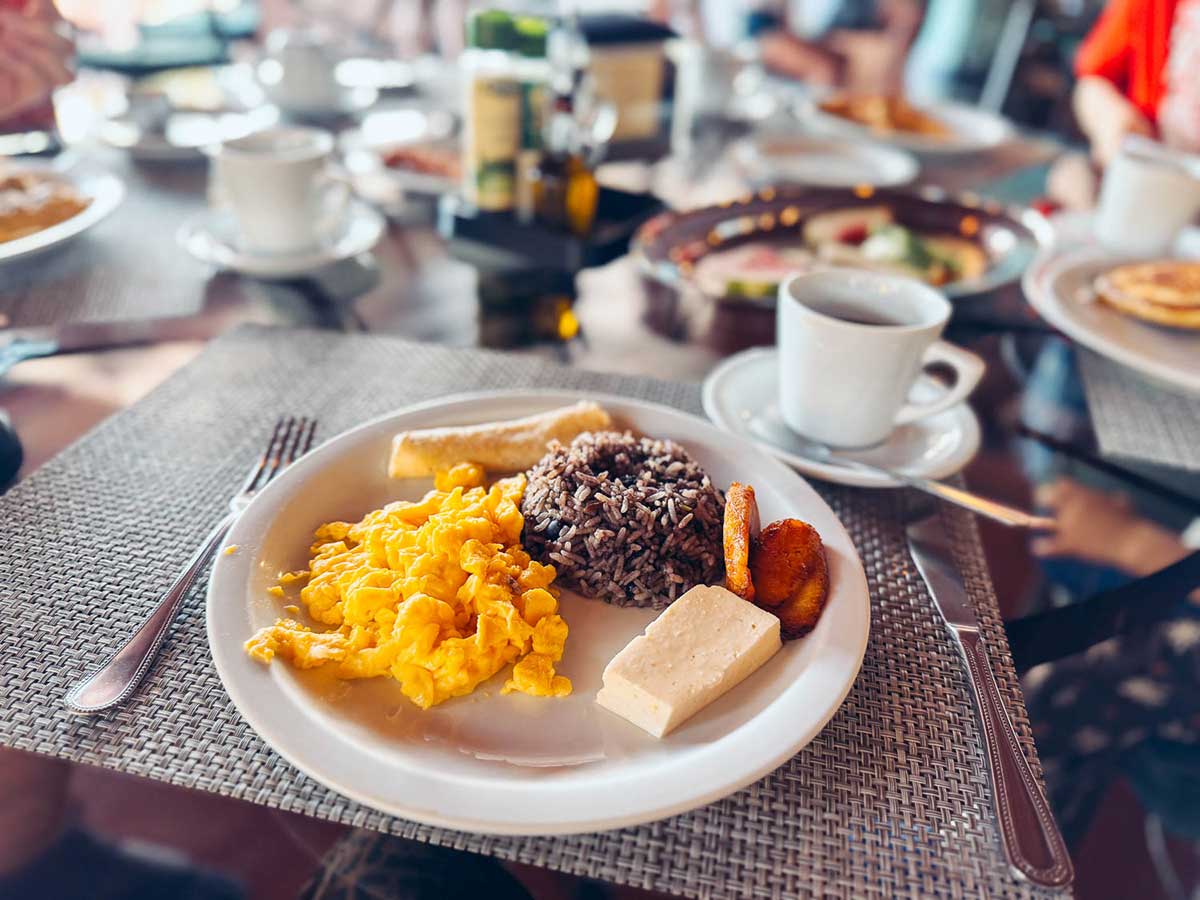

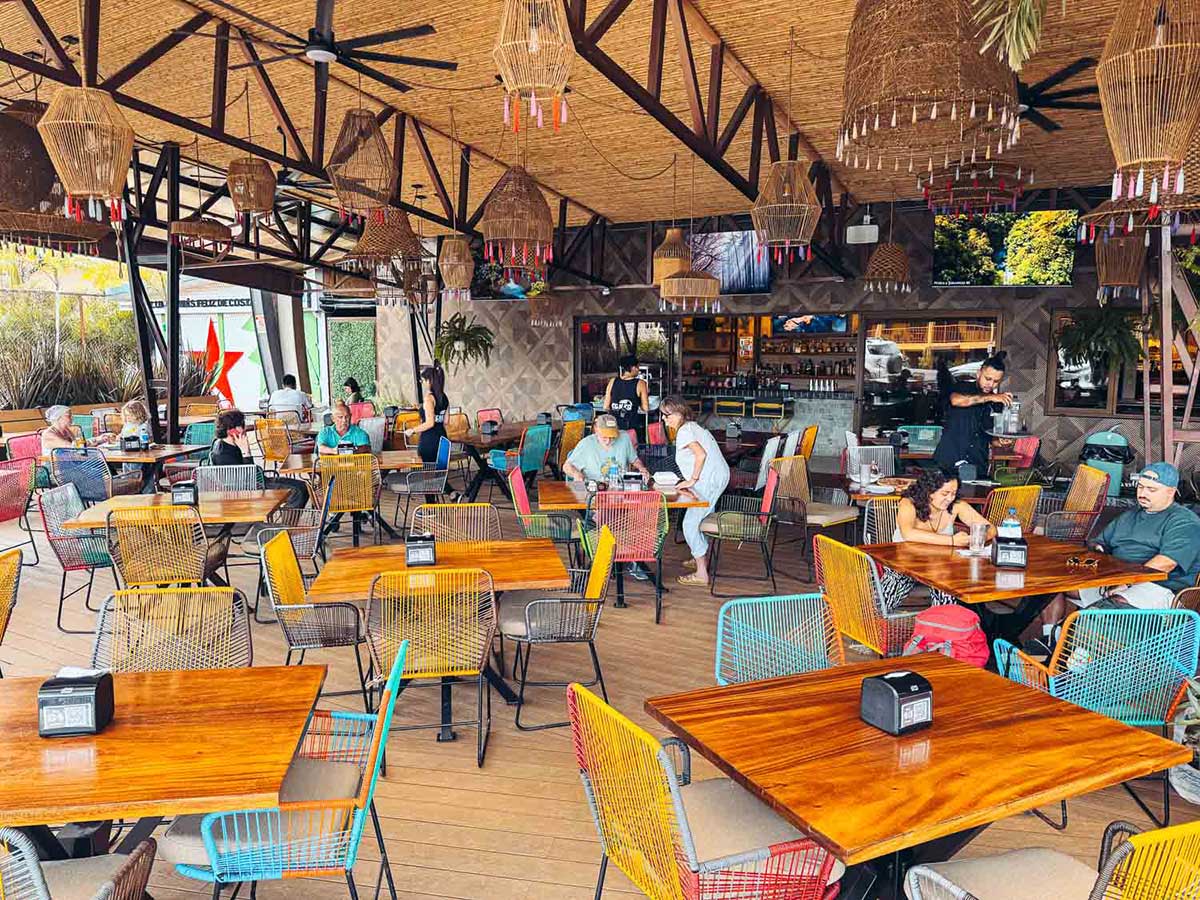
La Fortuna has a big mix of restaurants, from touristy pizza places to local sodas and healthy cafés. The ones we tried were partly out of convenience, but Restaurante Cafe Pizza Mediterraneo was a gem.
- Restaurante Cafe Pizza Mediterraneo – ideal for families, with a dedicated play area complete with a little house, climbing frame, and toys. The kids entertained themselves while we had some rare grown-up conversation.
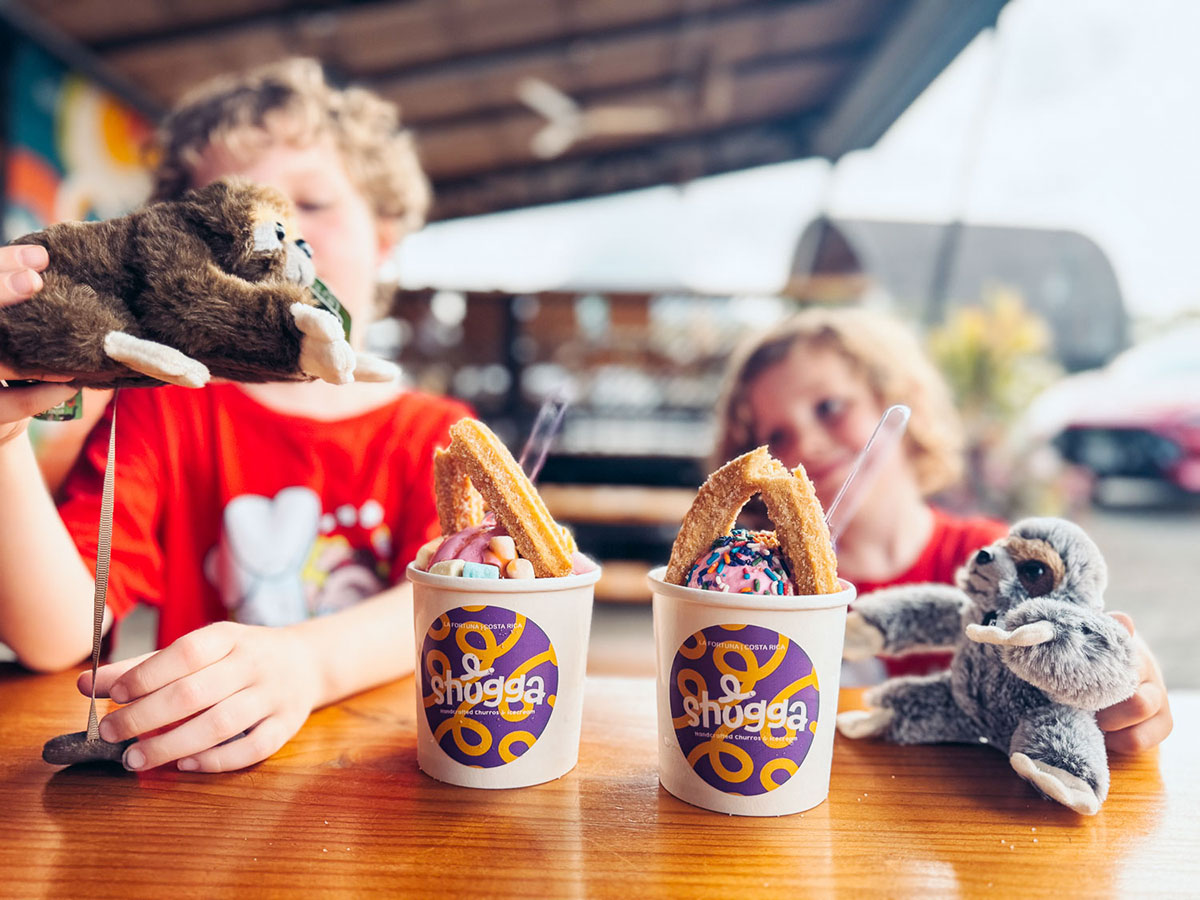
- Mercadito Arenal – Fun food-court-style setup. We had churros and ice cream, which were a hit with the kids (but I’m a dessert snob and wouldn’t recommend them!). The market also has pizza, burger and Mexican options.
- Kenko Arenal Restaurant – right next to the Bogarin Sloth Trail, this looks like a tourist trap, but was much better than expected. Even the sushi was decent, and the pizza was wood-fired and tasty.
If you’re self-catering, there are supermarkets in town where you can stock up on essentials. We cooked simple pasta at the treehouse and it worked perfectly after a busy day out.
Where to stay in La Fortuna
We stayed in three different places across our time in Arenal so we could review them for the blog, but I’d ideally recommend basing yourself in just one. That said, if, like us, you’re heading to Monteverde afterwards, Hotel La Mansion Inn Arenal is an ideal spot to break up the drive.
El Silencio del Campo
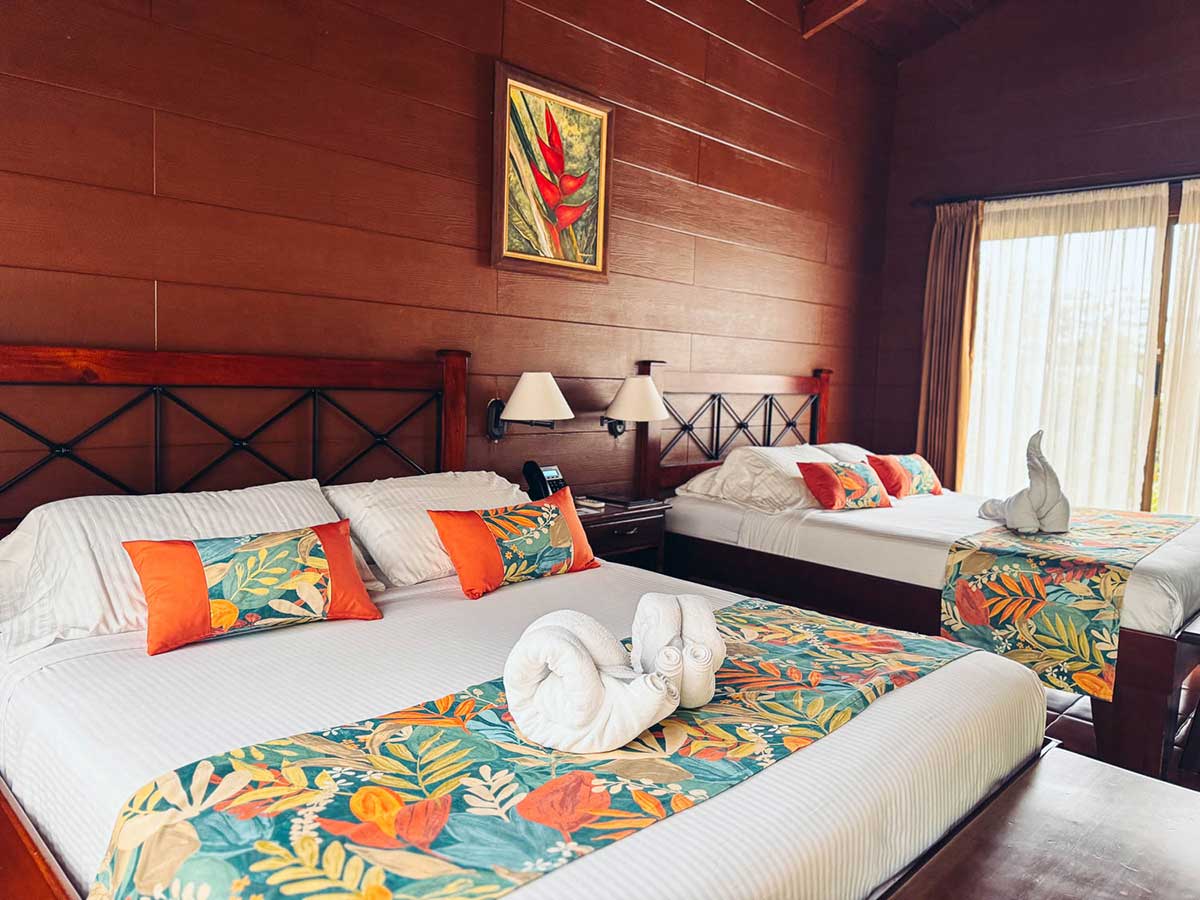

This mid-range hot spring resort feels far more intimate (and affordable!) than some of the bigger players in town. While it’s close to the main road and the pool area isn’t huge, the hot springs are truly special and the setting around them is gorgeous. We had the whole area to ourselves during the daytime. Breakfast and dinner were both good, and the spa is well worth a splurge—I had one of the best massages of my life there! They also have good family facilities, including a playground, mini farm and trampoline. We saw a lot of wildlife on the property, including a sloth and loads of incredible lizards.
Check availability and book now.
Airbnb treehouse
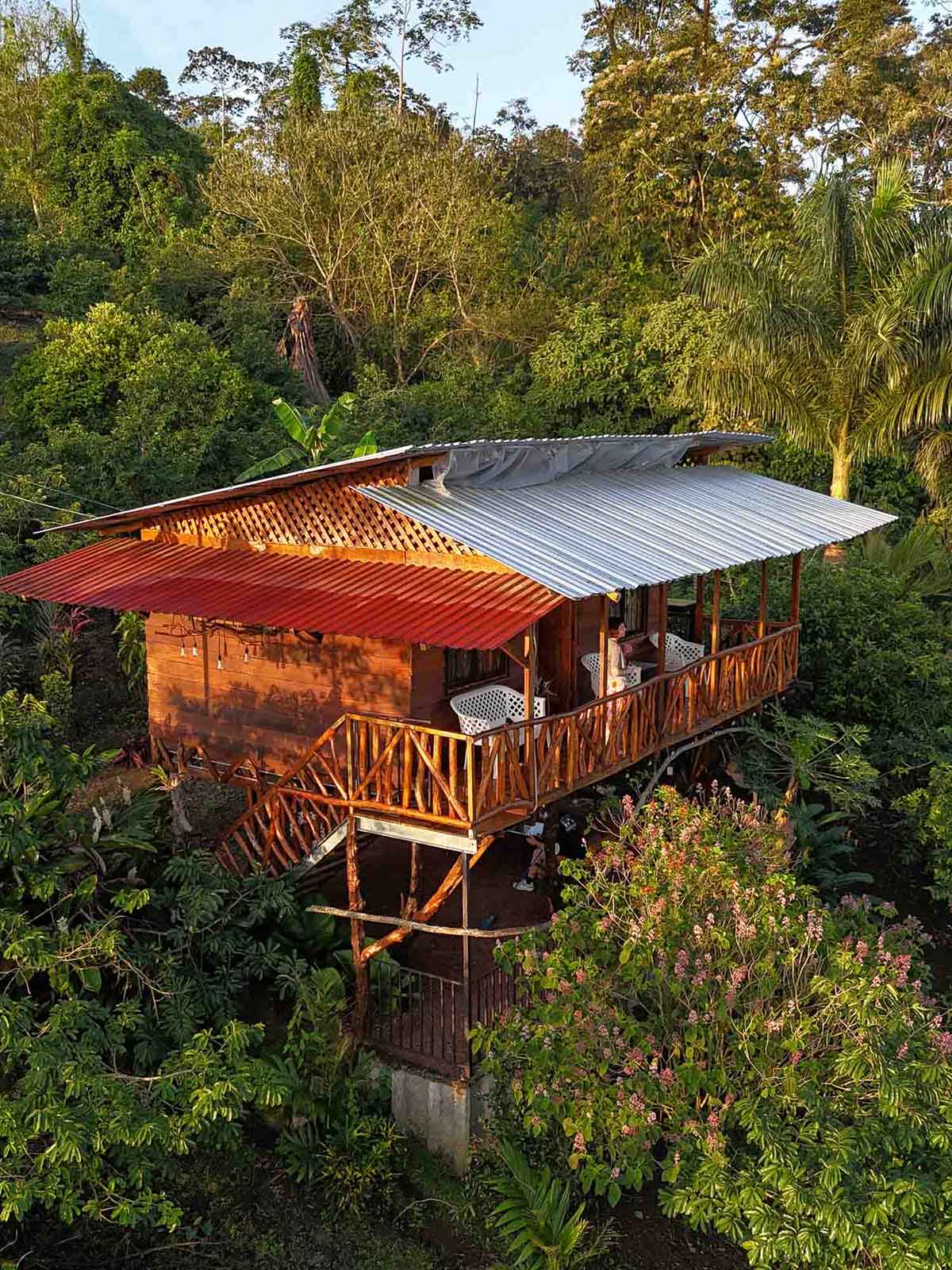
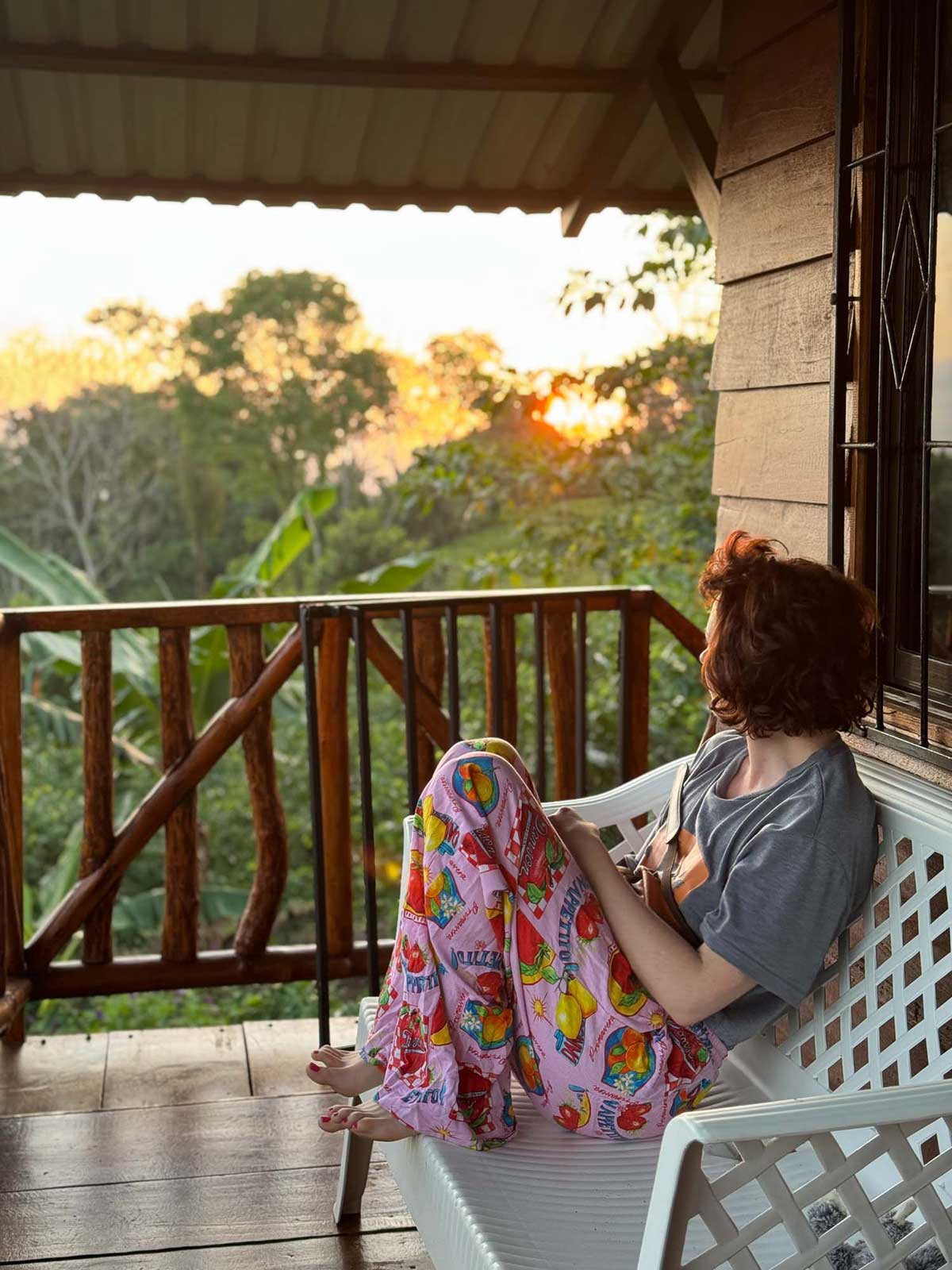
This was one of my favourite places we stayed. It’s rustic but thoughtfully designed, with incredible views of Arenal Volcano and the surrounding jungle. We loved the sunrise on one side and the volcano views on the other. The pool is small but lovely, and the whole place has a peaceful, back-to-nature feel. Be aware that the treehouse is called Cabana y Mirador Los Tucanes, but it’s tricky to find as the sign down the road says Cabanas Rous & Campos!
Hotel La Mansion Inn Arenal


Set right on the lake, this place offers a quieter alternative to the bustle of La Fortuna town. The view from the pool is breathtaking. It’s more bucolic than jungle-y, and while the restaurant isn’t a standout, the accommodation is comfortable and well-suited to families. It’s about 30 minutes outside the centre of La Fortuna on the way to Monteverde. It worked well with our itinerary as we stopped there en route to Monteverde and straight after Mistico, which is in the same direction.
Check availability and book now.
How to get to La Fortuna

The drive from Rio Celeste to La Fortuna is an easy 1.5-hour drive along fairly good roads.
Monteverde and Santa Elena
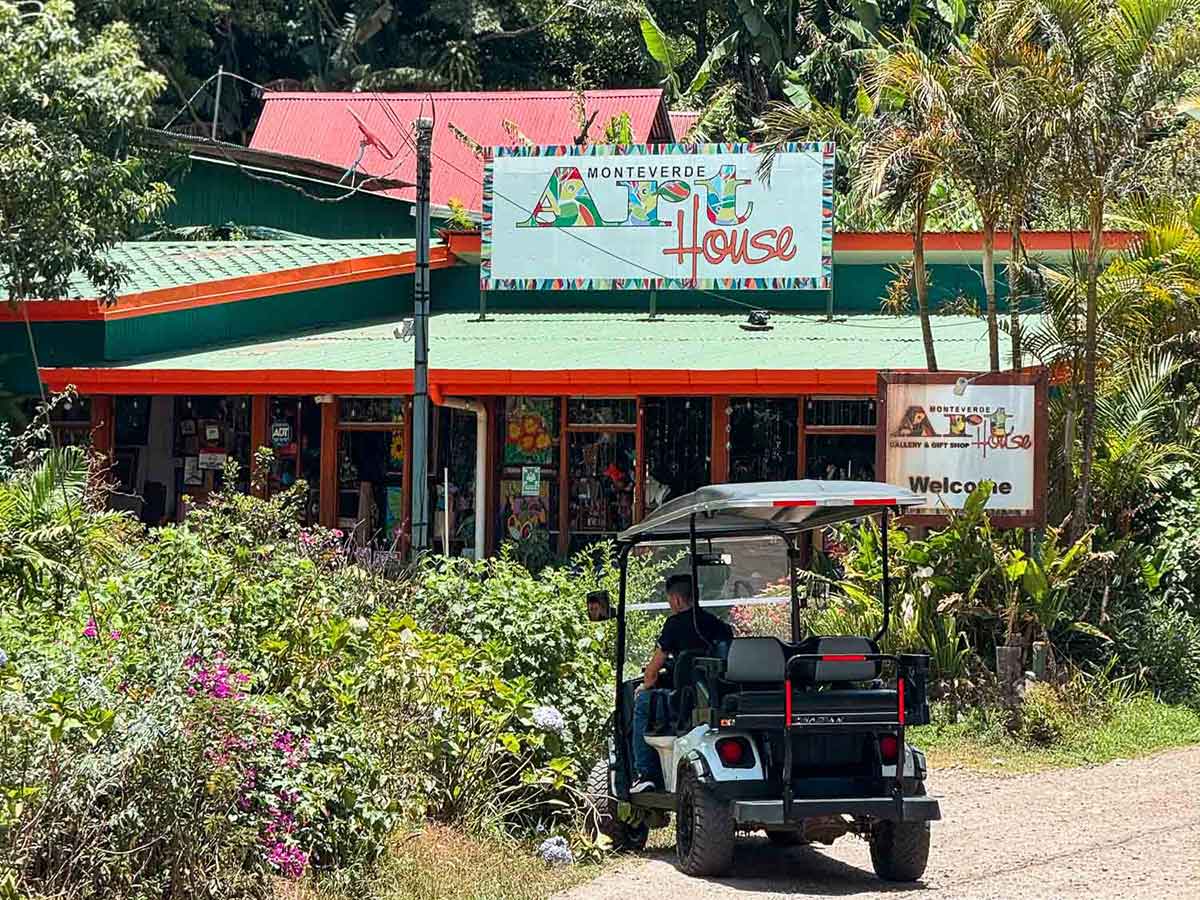
On the coast, you find the place where the jungle meets the ocean, but in Monteverde, it’s where the jungle touches the sky in the magical cloud forest reserves.
Monteverde itself is a small Quaker settlement, neighboured by the village of Santa Elena. Both have their own eponymous cloud forest reserves, only around 15 minutes apart. On a clear day, you can see all the way to the Pacific and the Nicoya Peninsula.
Despite being on the tourist trail (although less so than La Fortuna and Manuel Antonio), Monteverde has a calmer energy. You’re surrounded by forest at every turn and there’s a palpable community vibe. Lots of ex-pats and retirees settle here.
Be prepared for cooler, wetter weather in Monteverde – we experienced everything from full sun to torrential rain.
Things to do in Monteverde


The cloud forest is the main event, but there are also farms to explore and some incredible adrenaline adventures on offer. Here are some of our favourites.
El Trapiche coffee tour
Our tour at Trapiche was one of our favourite family-friendly experiences on our entire Costa Rica trip. Our guide Jeffry was warm, engaging, and brilliant with kids – he has a four-year-old of his own, and it showed. We walked through the coffee plantations, tasted raw beans, saw the traditional processing methods, and made our own sugar toffee. The tour also includes a taste of local coffee and chocolate, plus a snack at the end. It’s a great intro to Costa Rican agriculture with lots of hands-on fun. I was worried the kids would be bored, but they loved it.
Selvatura Park
Selvatura Park is a nature and adventure park set within 850 acres of protected cloud forest. It’s one of the region’s top attractions, with ziplines, suspended bridges and nature walks. There’s also a butterfly garden, amphibian house and on-site sloth sanctuary where you get to see sloths up close.
We only visited the sloth sanctuary, which is done as an hour-long guided tour (you can’t go in alone). At first, all the sloths were asleep and hiding their faces, but by the end, we’d seen four wide-awake sloths, climbing, scratching, and generally being delightful.
I would have also liked to do the hanging bridges/zipline, but the kids weren’t keen and it was too expensive to risk (for a family of four, the hanging bridges cost around $160).
Another good option, right next to Selvatura, is Treetopia, which offers even more adrenaline options, like the chance to ride a bike along a zip line! Treetopia also has a cable car you can ride above the forest.
Frog Pond
This amphibian house was on our maybe list, and we tried to squeeze it in, but ran out of time. Reviews are mixed—it seems it’s better at night when the nocturnal frogs come out. That said, you can return on the same ticket during the day, so you could technically see them all. It’s probably worth it if you or your kids are into frogs and you haven’t managed to see them in the wild. Other animal experiences include the Bat Jungle and the Butterfly House.
Explore the cloud forest
Monteverde is one of the best places in the world to experience a cloud forest. The main places to visit are the Monteverde Cloud Forest Biological Reserve and the Santa Elena Cloud Forest Reserve, which both have extensive trails where you can do guided walks or explore by yourself. Expect misty trails, lush greenery, and plenty of wildlife and bird spotting.
There’s also the Curi-Cancha Reserve (known for quetzal spottings, and the Children’s Eternal Rainforest. The latter was started by children from around the world who raised money to help protect the forest in the 1980s. The trails there are shorter and family-friendly, but you’re likely to see more wildlife in the Monteverde or Santa Elena reserves.
Where to eat and drink in Monteverde
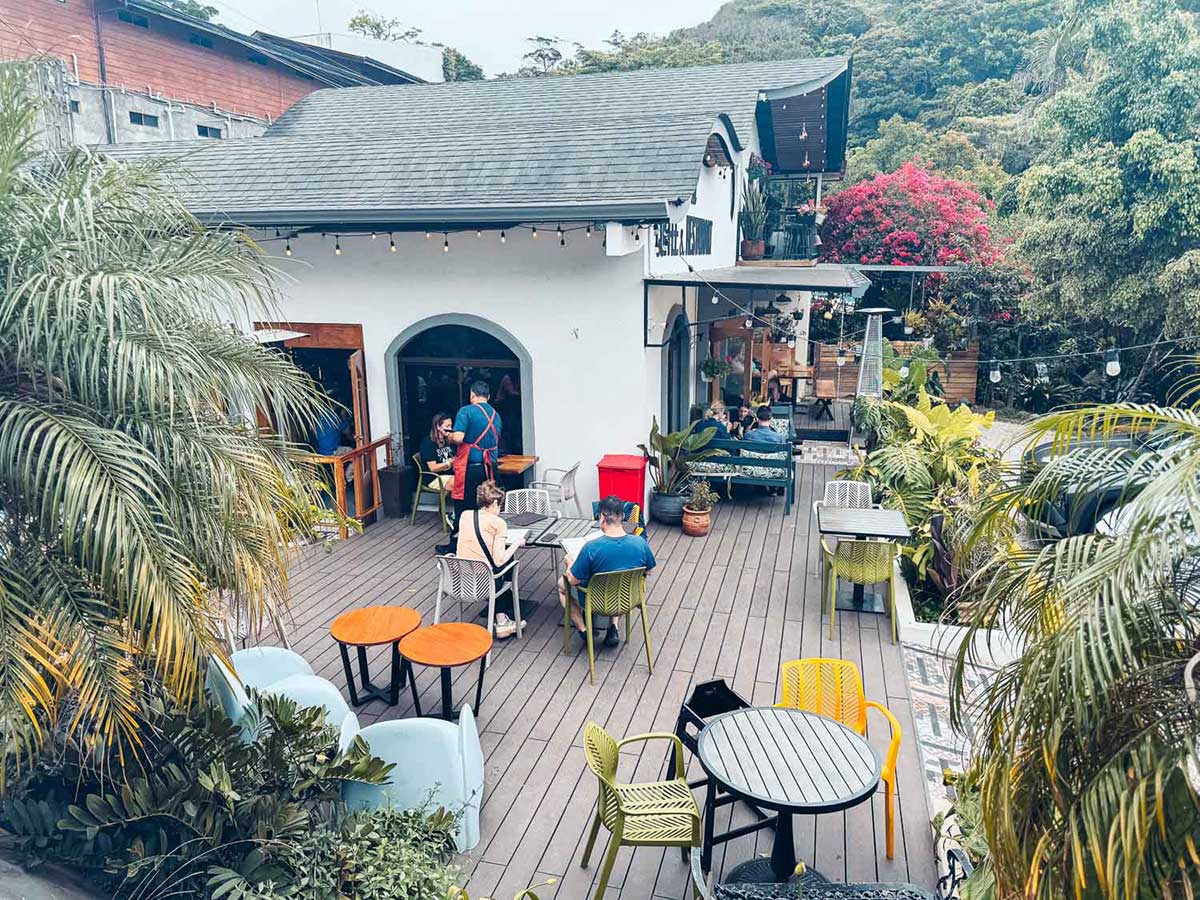

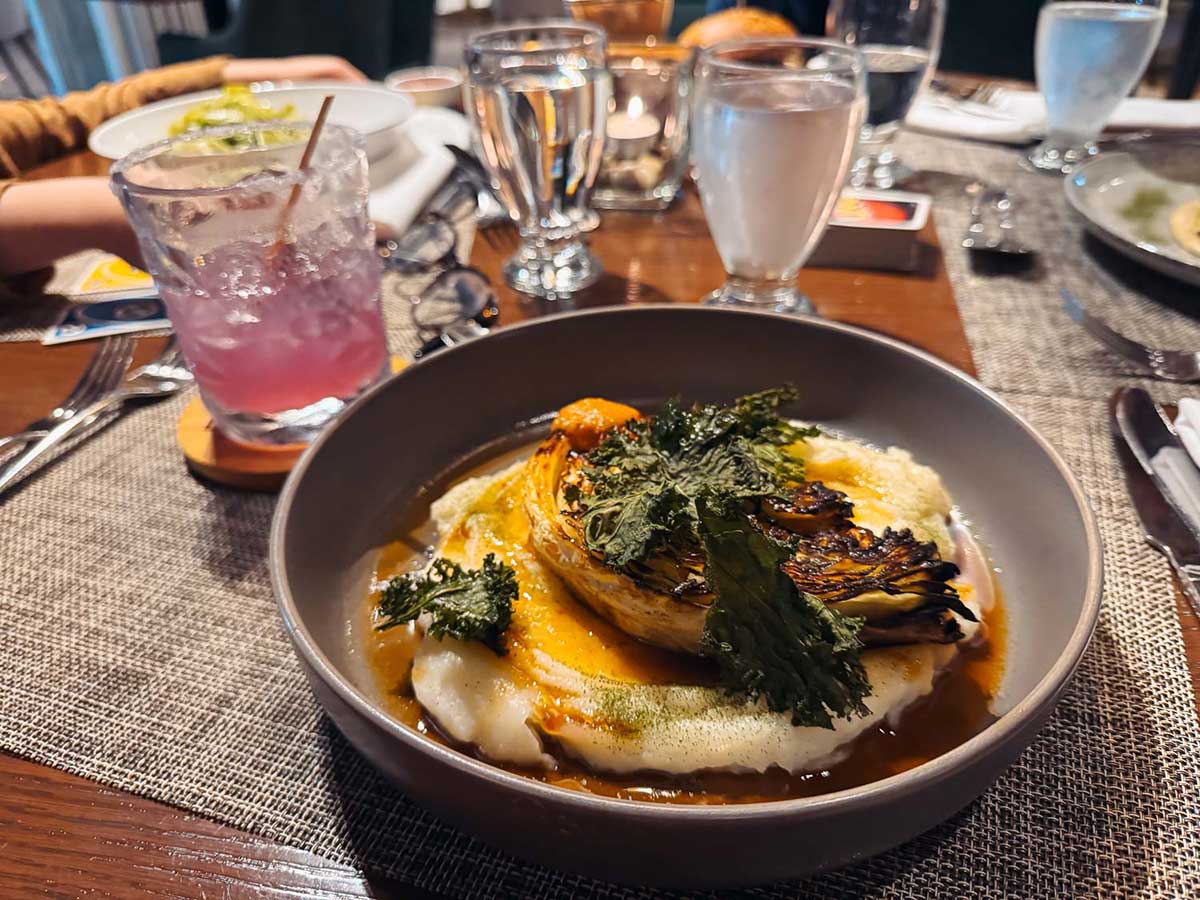
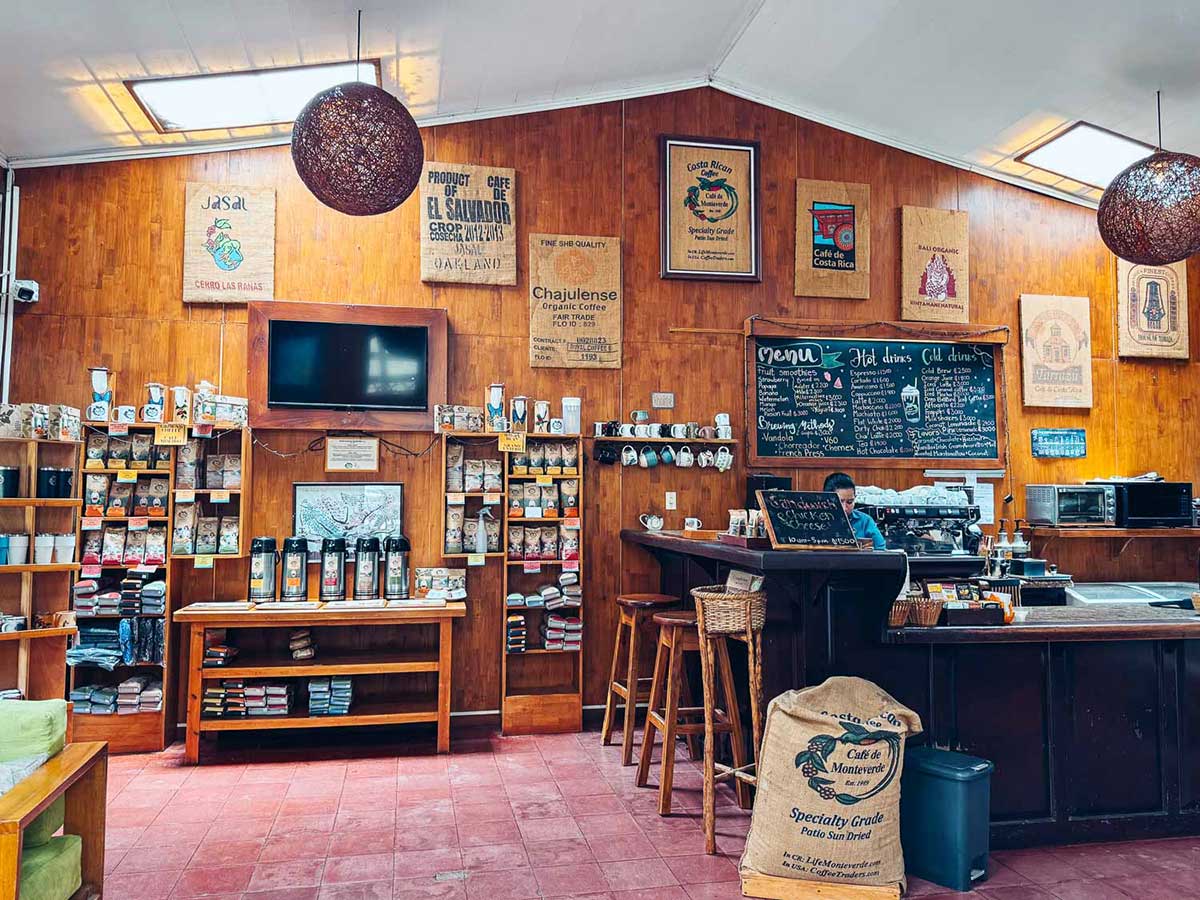
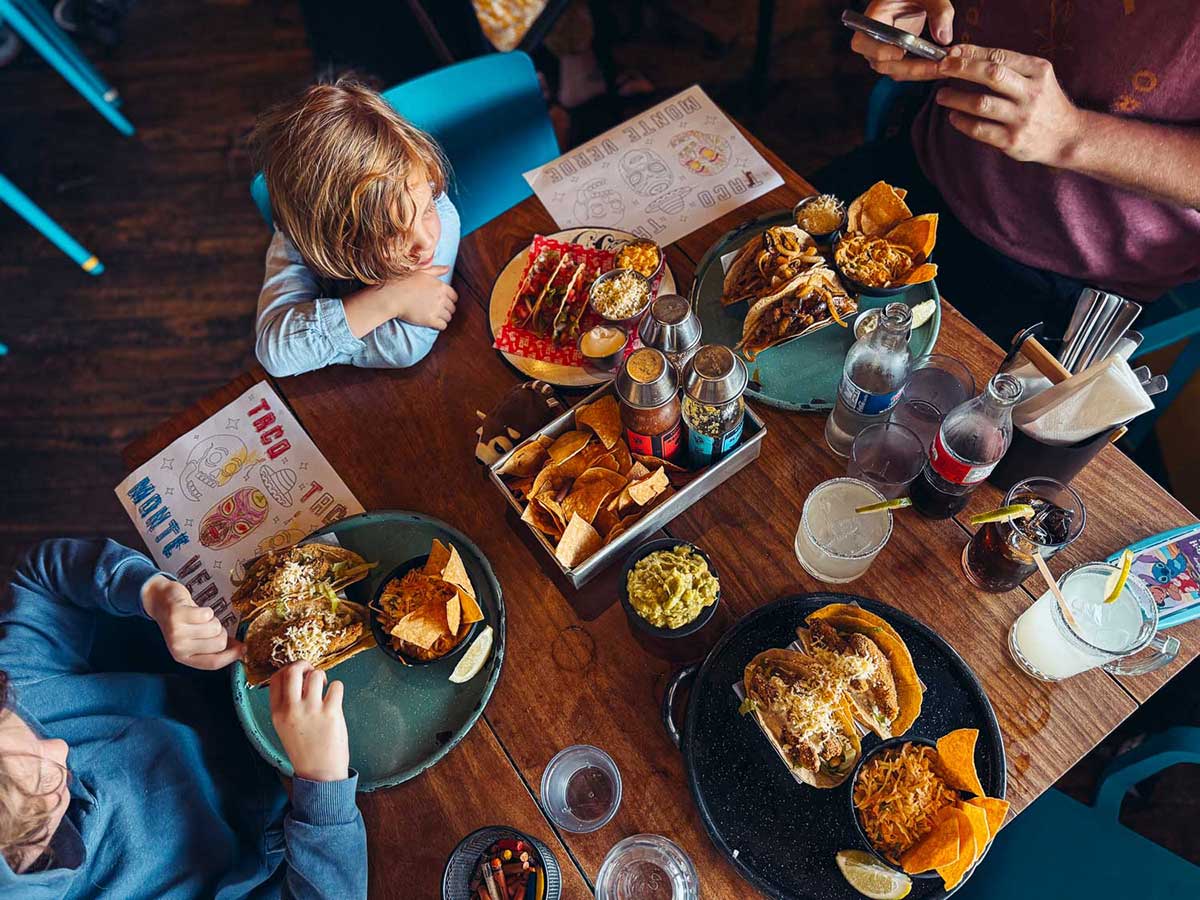
We ate some of the best food from our time in Costa Rica while in Monteverde, especially at Monteverde Lodge. The food there is exceptional with an interesting Tico-influenced international offering. There are also some lovely cafes in town. Monteverde is more atmospheric and charming than Santa Elena, so be sure not to miss that area.
Here are some highlights.
- Taco Taco – casual, tasty, and family-friendly. We had some excellent tacos and enjoyed the fun, colourful setting.
- Orchid Coffee – bright and attractive cafe with a good selection of cakes and snacks. It’s right next to the Orchard Garden if you’re visiting there.
- El Jardin (at Monteverde Lodge) – one of the best meals we had in Costa Rica. Serves gourmet vegetarian dishes alongside classic kids’ fare like pasta and burgers.
- Stella’s – lovely café in Monteverde with lush gardens and good veggie options
- Café Monteverde – cute café with a gorgeous setting and a lovely community vibe. You can sample the coffee for free. This is one of our favourite Monteverde spots.
- Cafe Colibri – right next to the entrance to the Monteverde reserve, this place is famed for its hummingbird spotting, (they have feeders in the garden). The cafe itself is underwhelming. Plus they had signs saying that the coatis there are known to be aggressive (they even have photos of tourists’ wounds) so we were put off sitting outside with the kids.
- Treehouse Restaurant – this place is a proper tourist trap – a restaurant with a huge (real) tree in the centre. Our kids insisted we go here, and as expected, the food and drinks were mediocre, but the novelty of sitting in a tree delighted them, so it was kind of worth it.
Where to stay in Monteverde
We split our time between Ananta Forest Dome, an off-grid glamping dome, and Monteverde Lodge, a luxurious jungle lodge with lush grounds and a stunning pool. Either would make a great base depending on your preferences.
Monteverde Lodge

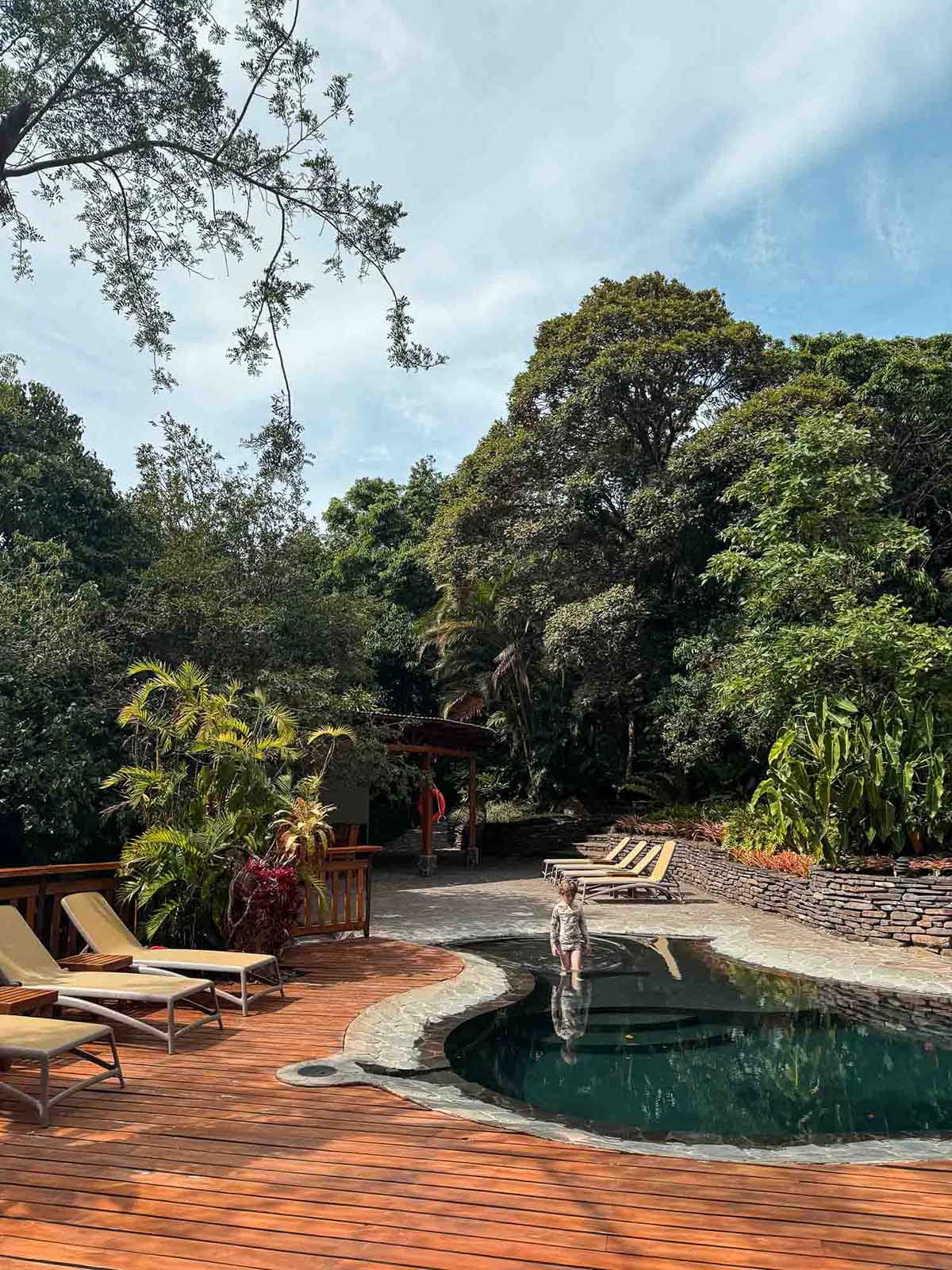

Monteverde Lodge is part of the Boena collection, a small chain of five lodges with eco-luxury at their core. The jungle gardens are stunning with various trails and a picturesque pool in the centre. It’s one of the most aesthetically pleasing pools I’ve seen, blending perfectly into the environment.
The rooms are huge with an understated style and family-friendly luxury (they even have kids’ robes!). A highlight is the food at El Jardin restaurant, which is worth visiting even if you aren’t staying at the hotel. The Tico-influenced international menu is some of the best food we had in Costa Rica.
Check availability and book now.
Ananta Forest Dome

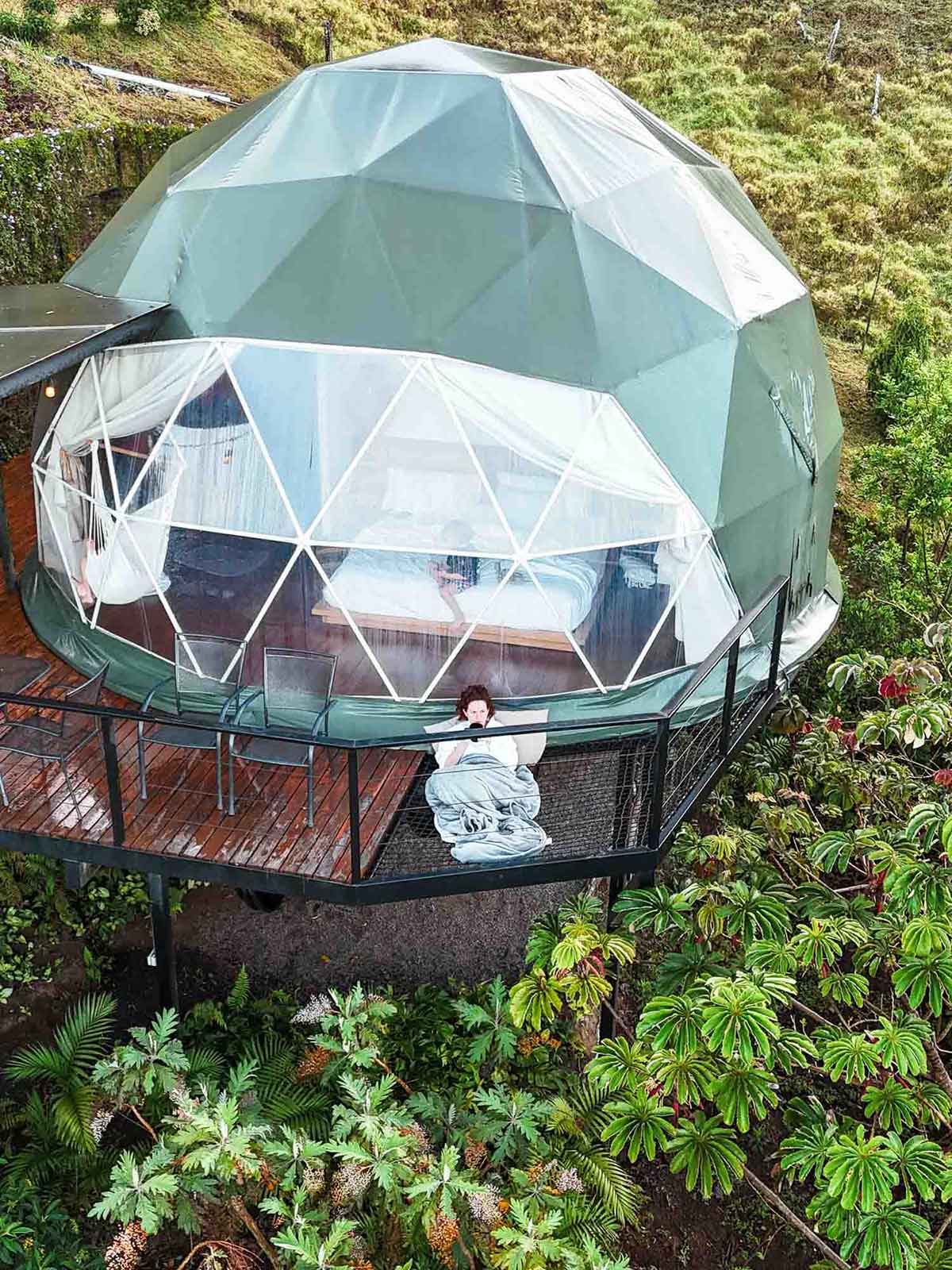

This place has wow-factor. The dome itself is thoughtfully designed, with stylish interiors, luxury touches, and a suspended outdoor net for morning coffee with a view. There’s even a hot tub where you can soak at nighttime while keeping one eye on the kids safely asleep.
It’s not completely secluded – you can see other buildings in the distance – but it still feels tucked away in the clouds. The only thing to watch out for is that the upstairs bed is a bit dicey for kids (there’s a very low balcony they could easily fall from), so we ended up putting them downstairs. The location is excellent for nearby activities (just 10 minutes from Selvatura in one direction and Santa Elena town in the other).
Check availability and book now.
How to get to Monteverde
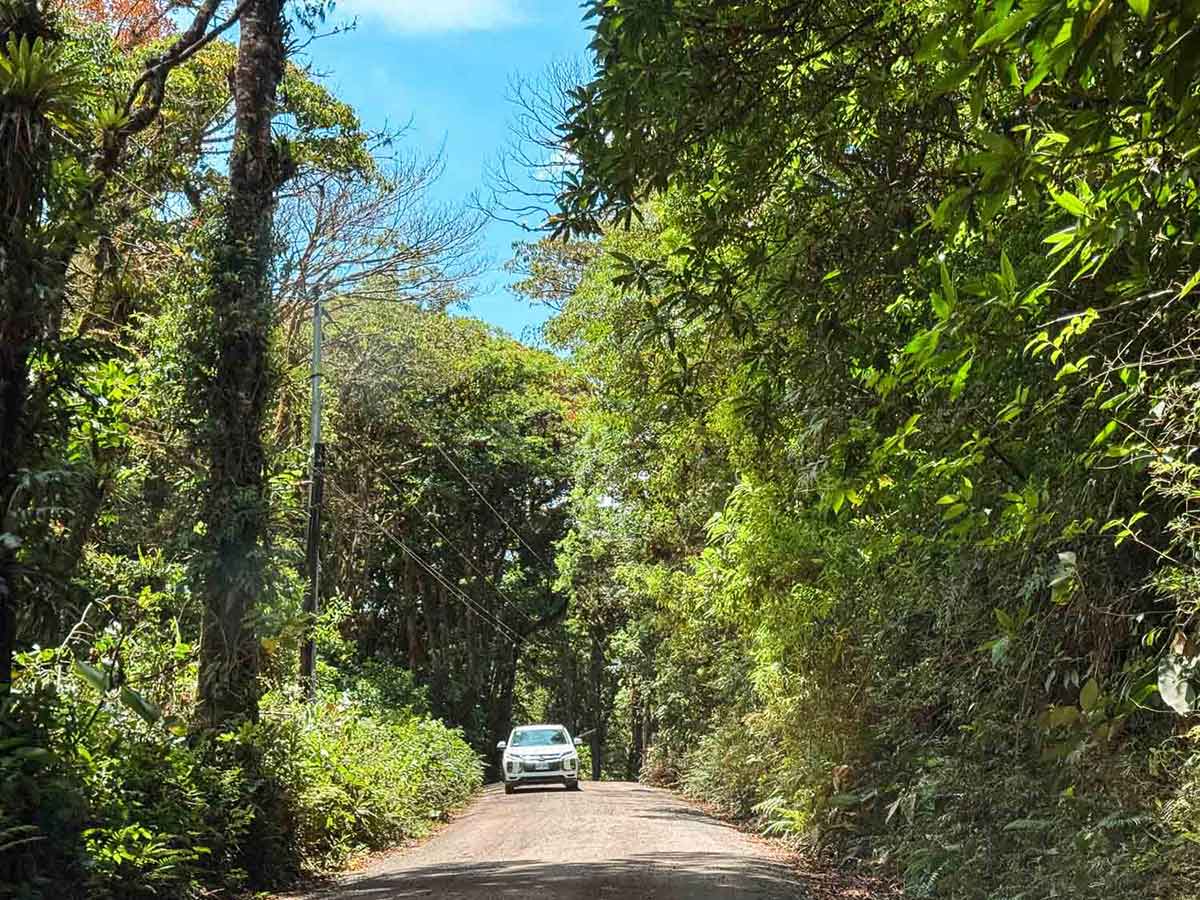
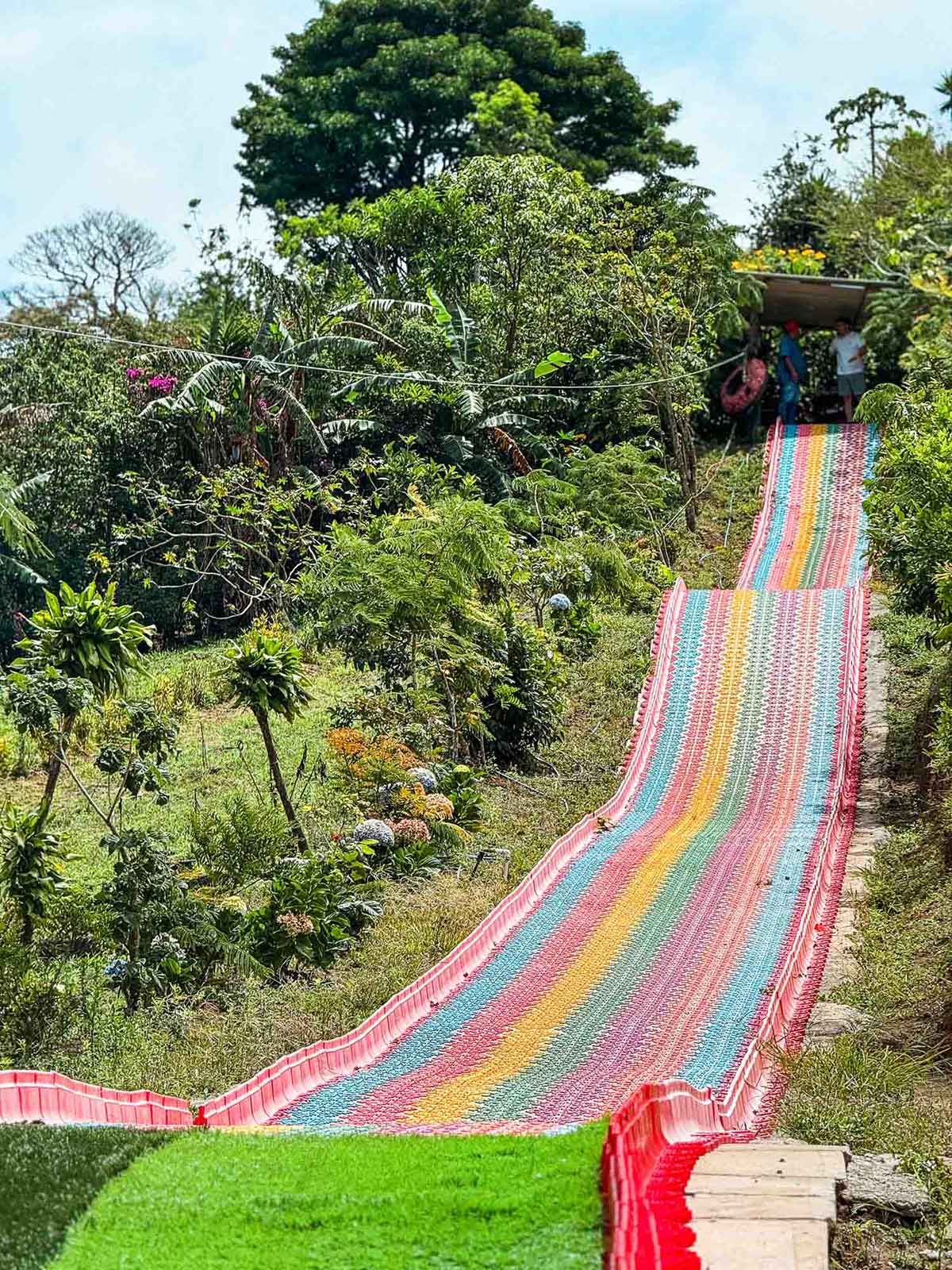

The drive from La Fortuna took us just over two hours, starting smoothly and then getting progressively more potholed as we climbed higher into the hills. It was all part of the adventure, and the shift in landscape and climate was immediate – cooler, greener, and noticeably more serene. We stopped at a fun roadside attraction en route called The Florida Project. They had a maze, plus an incredible giant rainbow slide that you speed down on a tube!
Other popular places to stop en route include the German Bakery and Cafe Macademia, which has amazing views across the lake.
Manuel Antonio
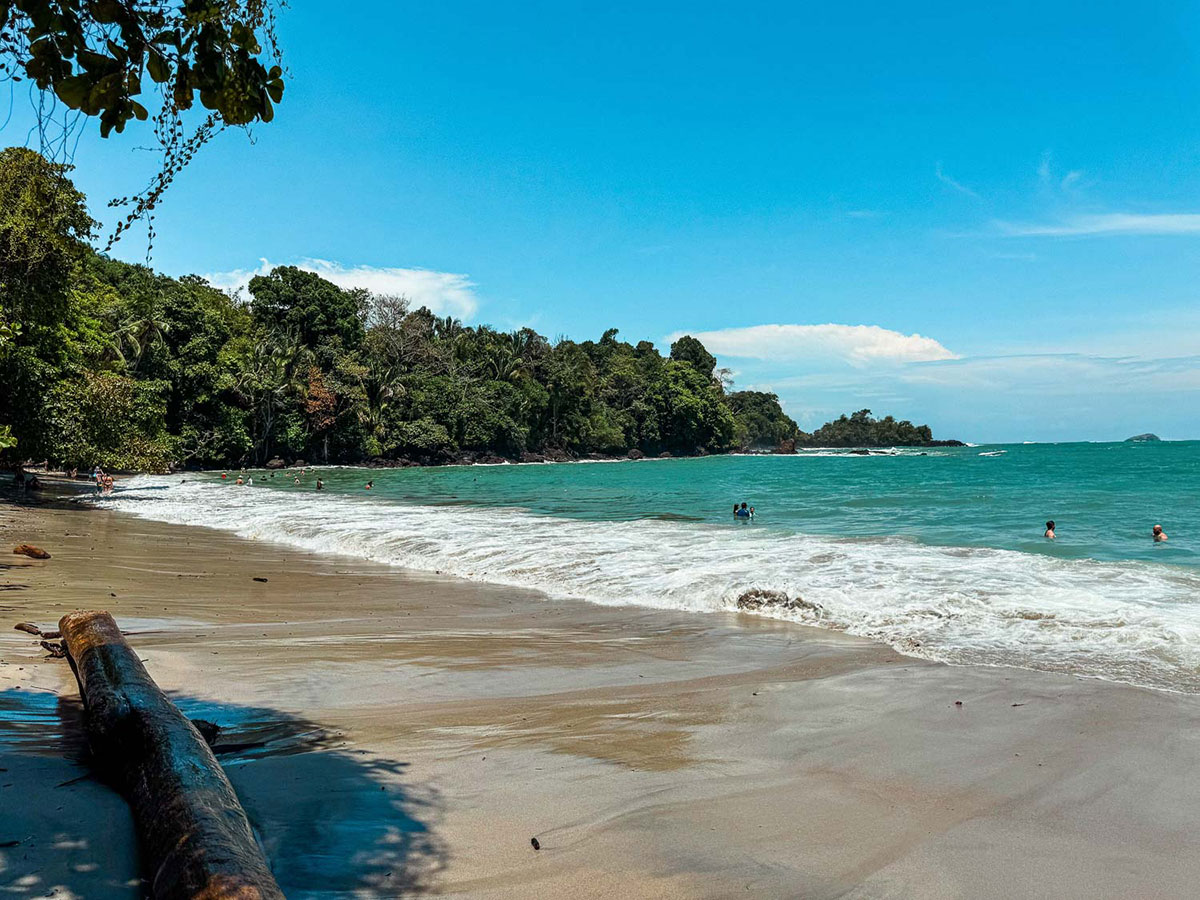
Manuel Antonio is one of Costa Rica’s most iconic destinations – a place where dense jungle rolls into turquoise ocean, and monkeys swing through the trees.
It’s also one of the most touristy spots we visited. Beforehand, I read a lot of people complaining about how busy the national park is and how the town itself lacks charm – so much so that I questioned if it was worth visiting at all. But amid the complaints, there were many more people marvelling at its beauty and saying there’s nowhere quite like it in Costa Rica. So we risked it, and ended up having an amazing time.
Our enjoyment of Manuel Antonio was largely due to our hotel, Si Como No, which is a destination in its own right. But we also saw some incredible wildlife in the park, and the scenery is spectacular.
If you’re looking for something quieter and can’t bear the busyness, go further south to Corcovado – but if you’re short on time or have kids, Manuel Antonio is a great experience.
Things to do in Manuel Antonio


The main thing to do in Manuel Antonio is visit the national park, but there are also plenty of other activities you can fill your time with too.
We have a full guide to visiting Manuel Antonio with kids, but here are some of the highlights.
- Manuel Antonio National Park – this is the main event, and one that’s easy to visit with kids. There are good paths and raised walkways that make it easy and safe to navigate. Wildlife spottings are guaranteed. We did a fantastic private guided tour with Get Your Guide.
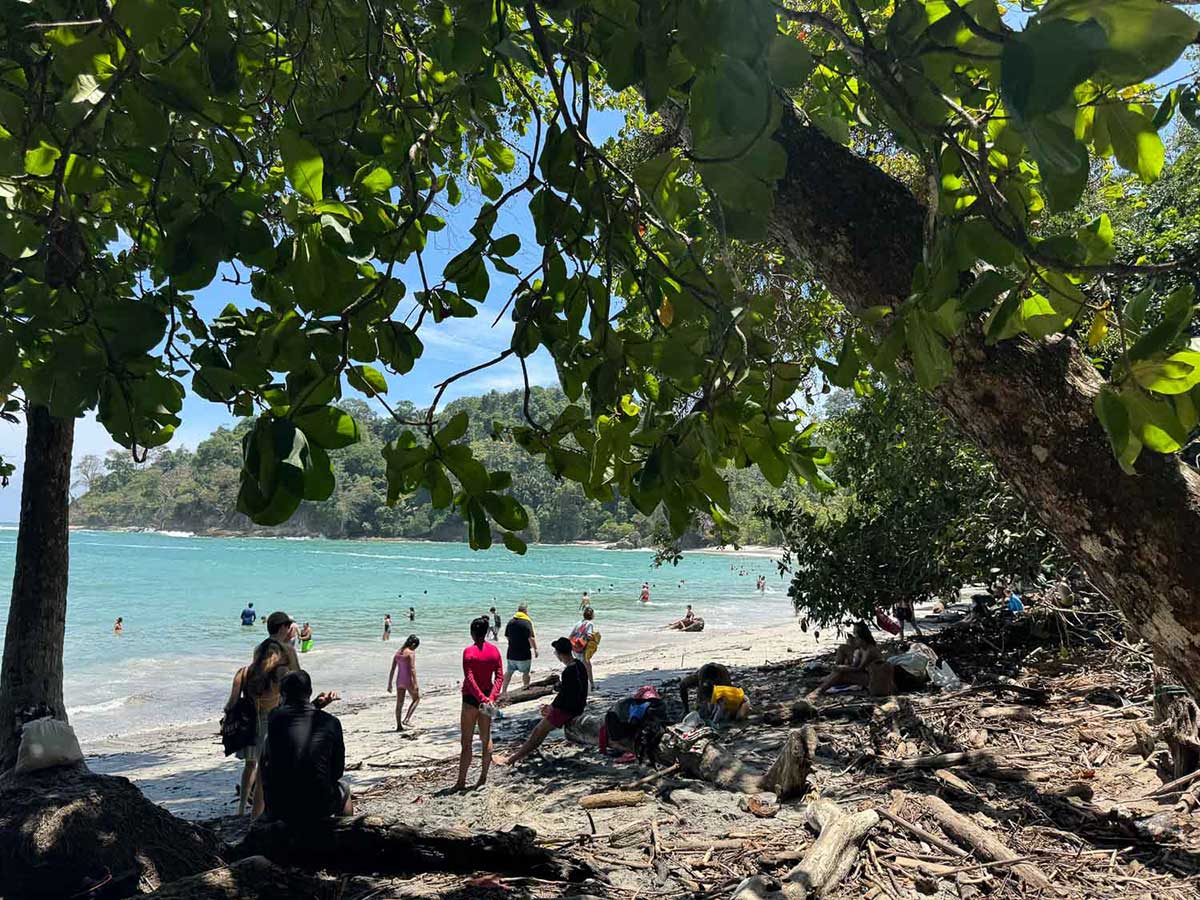
- Playa Biesanz – this “secret” beach is about a 15-minute walk down a forested path and offers a quieter, more sheltered alternative to the Manuel Antonio and Playa Espadilla beaches. It’s stunning and an ideal place to spend a beach day, with safe swimming and paddling.
- Ziplining or the Zipcoaster – adrenaline-filled fun for adventurous spirits.
- Day trips – consider nearby options like the Nauyaca Waterfalls (about an hour’s drive) or a day trip to Dominical, a laid-back surf town with a more hippie vibe.
Where to eat and drink in Manuel Antonio


Here are a few recommendations for where to eat in Manuel Antonio.
- Rico Tico (at Si Como No) – Great views, good variety, and veggie-friendly. I enjoyed the Thai curry, and breakfast here was one of the best we had in Costa Rica – a buffet plus à la carte options like huevos rancheros and pancakes.
- Claro Que Si – less scenic than Rico Tico and with TVs showing sport, but the food was good and it has a bustling, fun vibe.
- El Avión – a bit of a tourist trap with somewhat lacklustre service, but it’s no doubt a novelty to eat in a restaurant with a real cargo plane in the centre. The views are also excellent.
Where to stay in Manuel Antonio


Si Como No
This is a special Costa Rican family hotel, with all the trimmings: jungle views, spacious rooms, great pools, and a welcoming vibe. The kids declared it the best hotel they’d ever stayed in.
The pool has a fantastic slide, the bar is perfectly positioned for parents to supervise, and there’s wildlife literally on your doorstep (we saw toucans and heard howlers from our balcony).
It’s the kind of place you could happily stay put for a few days. Read our full review of Si Como No.
How to get to Manuel Antonio
The drive to Manuel Antonio was super long due to epic traffic along the coast road. It took us around 5 hours in total from Monteverde. Most of the hold-up was around the Tarcoles bridge, which is famed for the crocodiles that gather underneath. We stopped to see them, and I personally found it terrifying. The gaps between the railings on the bridge are huge and it would be easy for an adult to fall through, let alone children. I wouldn’t recommend stopping, but if you do, you pull over at the start of the bridge and pay one of the attendants to park/watch your stuff.
The road from Monteverde to the coast is pretty bendy and not ideal if you get car sick like me, but once you’re on the coast road, it’s straight and properly paved.
Jaco

Being honest, we only stopped in Jaco to break up the journey between Manuel Antonio and the ferry to Isla Chiquita. And while our hotel was lovely, the town itself didn’t win us over.
Jaco is one of Costa Rica’s more developed beach towns, and it definitely leans towards the party crowd. Think surf shops, nightclubs, and a somewhat worn-around-the-edges vibe.
It’s not without appeal – you can watch the surfers from the beach, and we even saw dolphins from the shore – but overall, it lacked the magic and character we found elsewhere.
Considering you have beach options like Santa Teresa and Nosara, I’d give Jaco a miss. There are many, many more beautiful and family-friendly places in Costa Rica.
In hindsight, we probably didn’t need to stop there to break up the journey between Manuel Antonio and the Puntarenas ferry. The total drive is 2.5 hours, and we didn’t hit terrible traffic (unlike on the way to Manuel Antonio). You could probably just leave Manuel Antonio in the morning and get the afternoon ferry to Paquera.
Things to do in Jaco
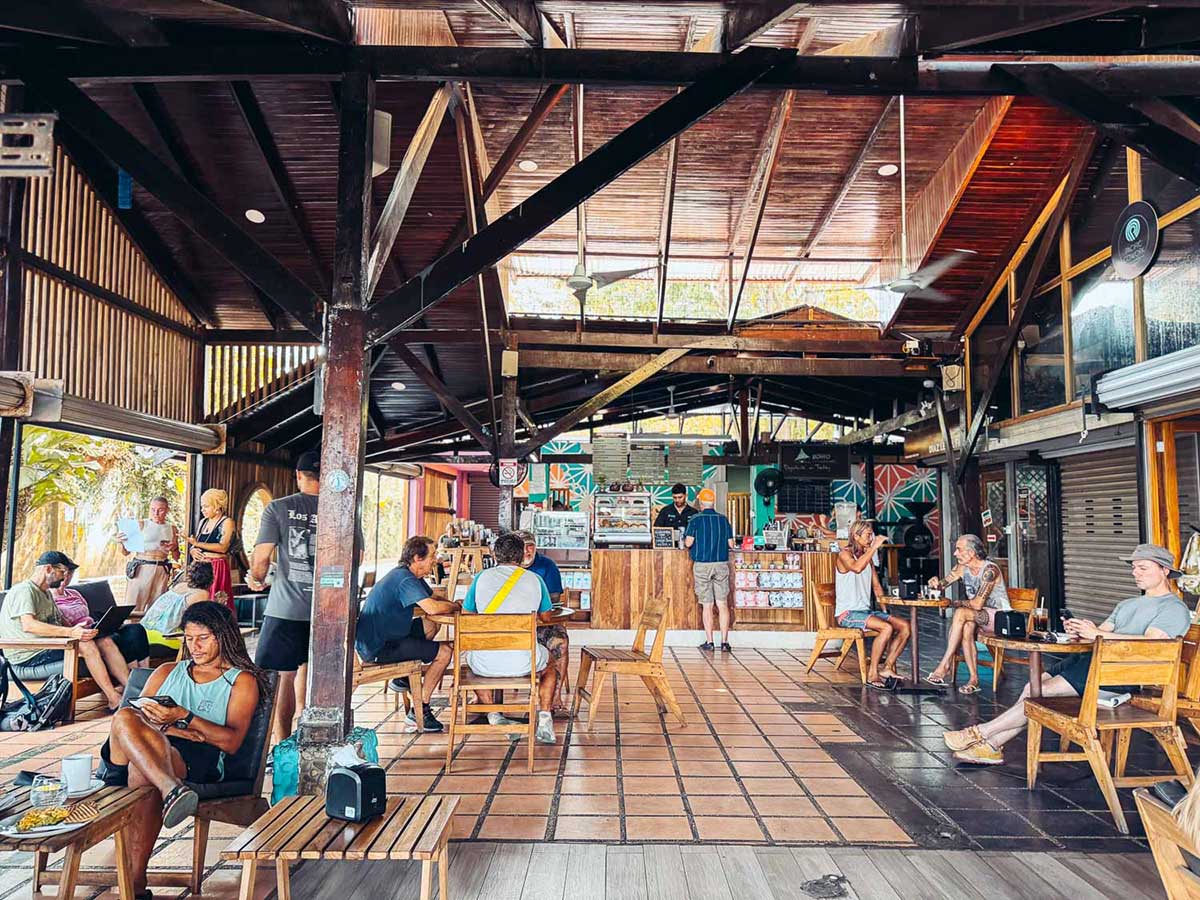
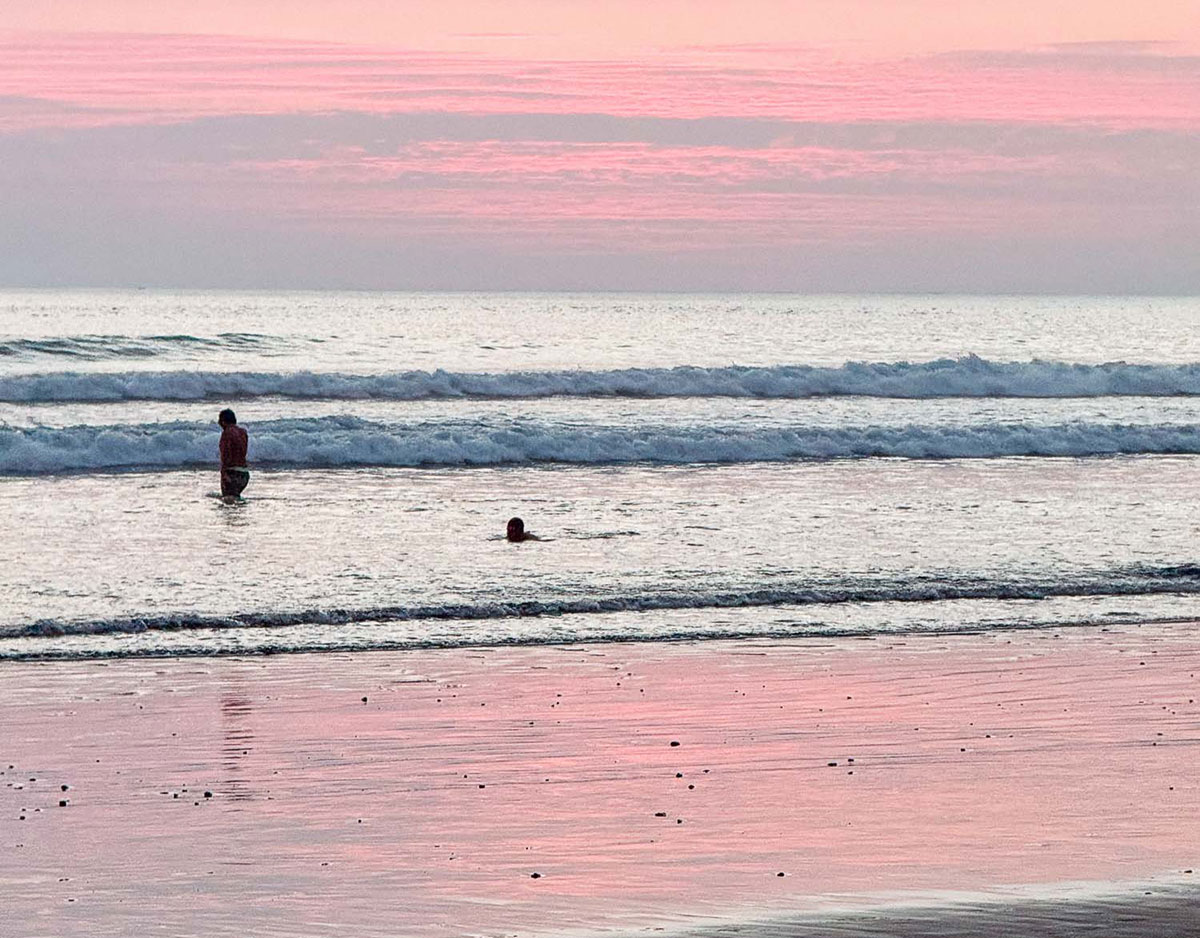

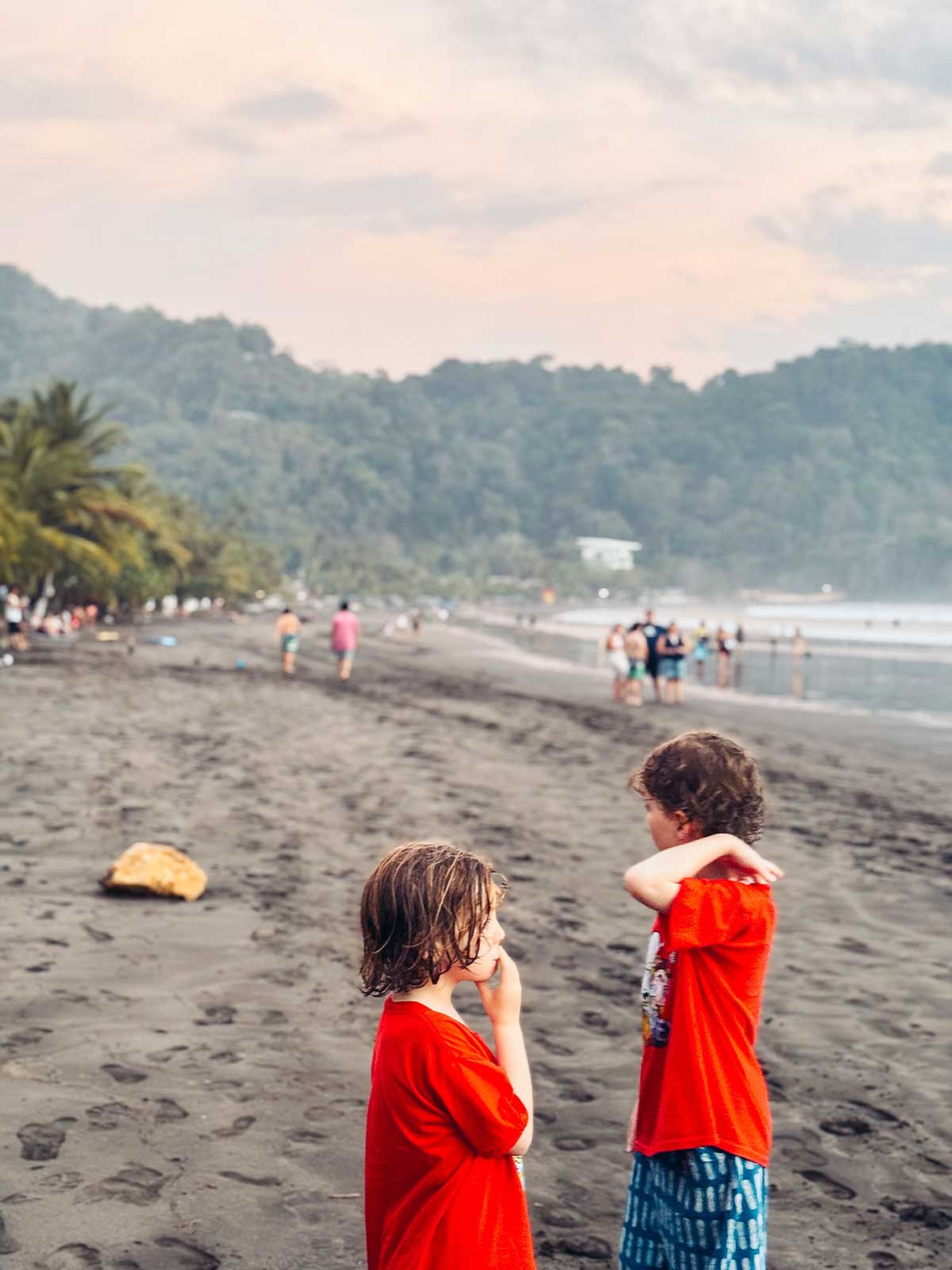
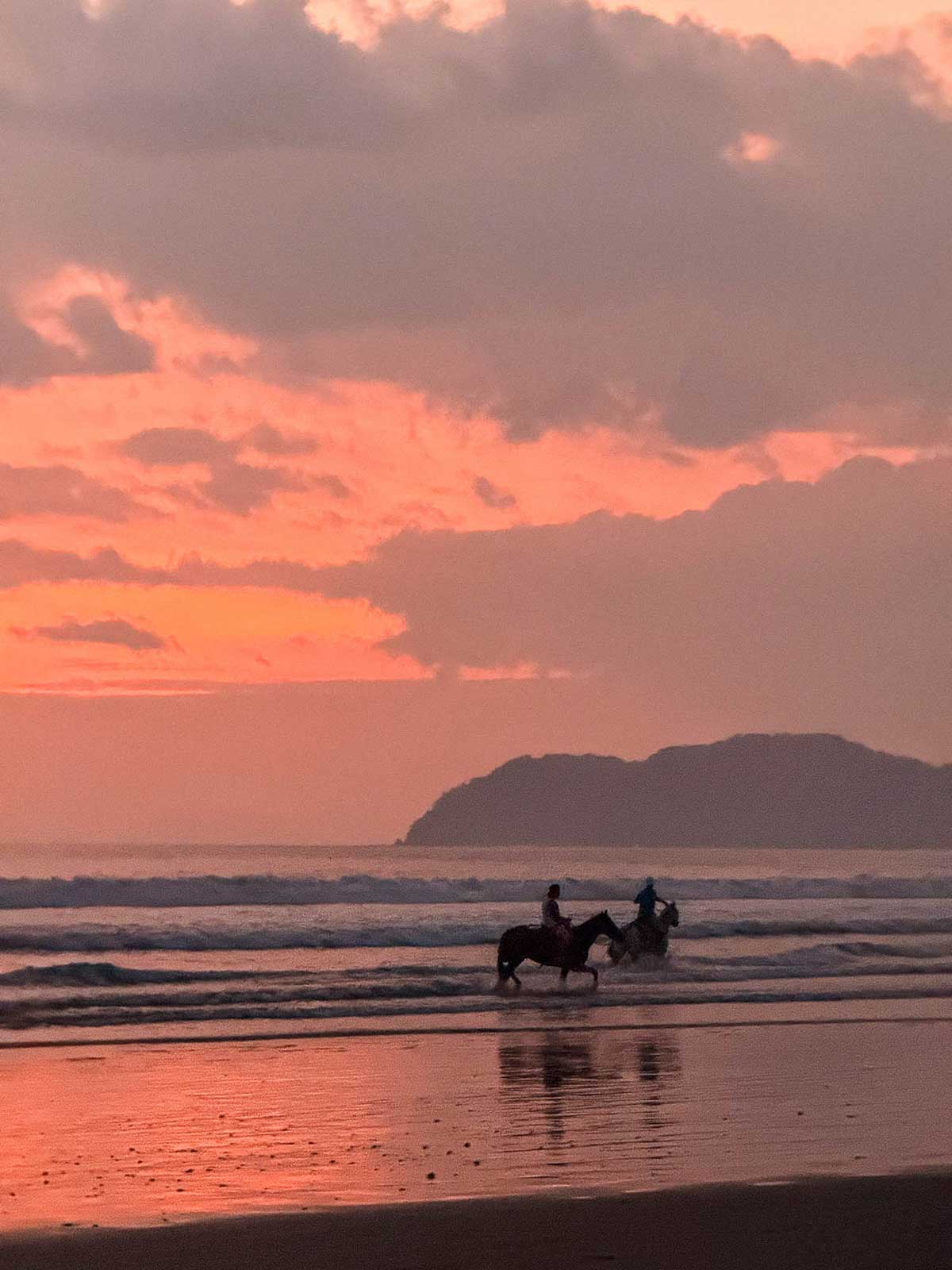
We didn’t do much in Jaco as we only had an afternoon and evening there. There was a surf competition on, so we went down to see that, and also watched the sunset from the beach near our hotel.
Other things to do in Jaco include:
- Watch the surfers at Jaco Beach – even if you’re not surfing yourself, it’s fun to sit back and watch (especially at sunset). We even saw dolphins from the shore.
- Take a surf lesson – the beach break and long sandy shore make it a great place to try surfing for the first time.
- Visit Playa Hermosa – just south of Jaco, this quieter beach is a favourite with experienced surfers.
- Hike up to El Miro Ruins – above Jaco, there’s an abandoned hilltop mansion covered in graffiti with sweeping views over Jaco and the ocean. Best done in early morning or late afternoon to avoid the heat. Our kids weren’t up for it, but to me, it sounded like one of the best of Jaco’s activities.
- Explore Carara National Park – about 30 minutes north of Jaco, this park is known for its scarlet macaws and easy walking trails.
Where to stay in Jaco

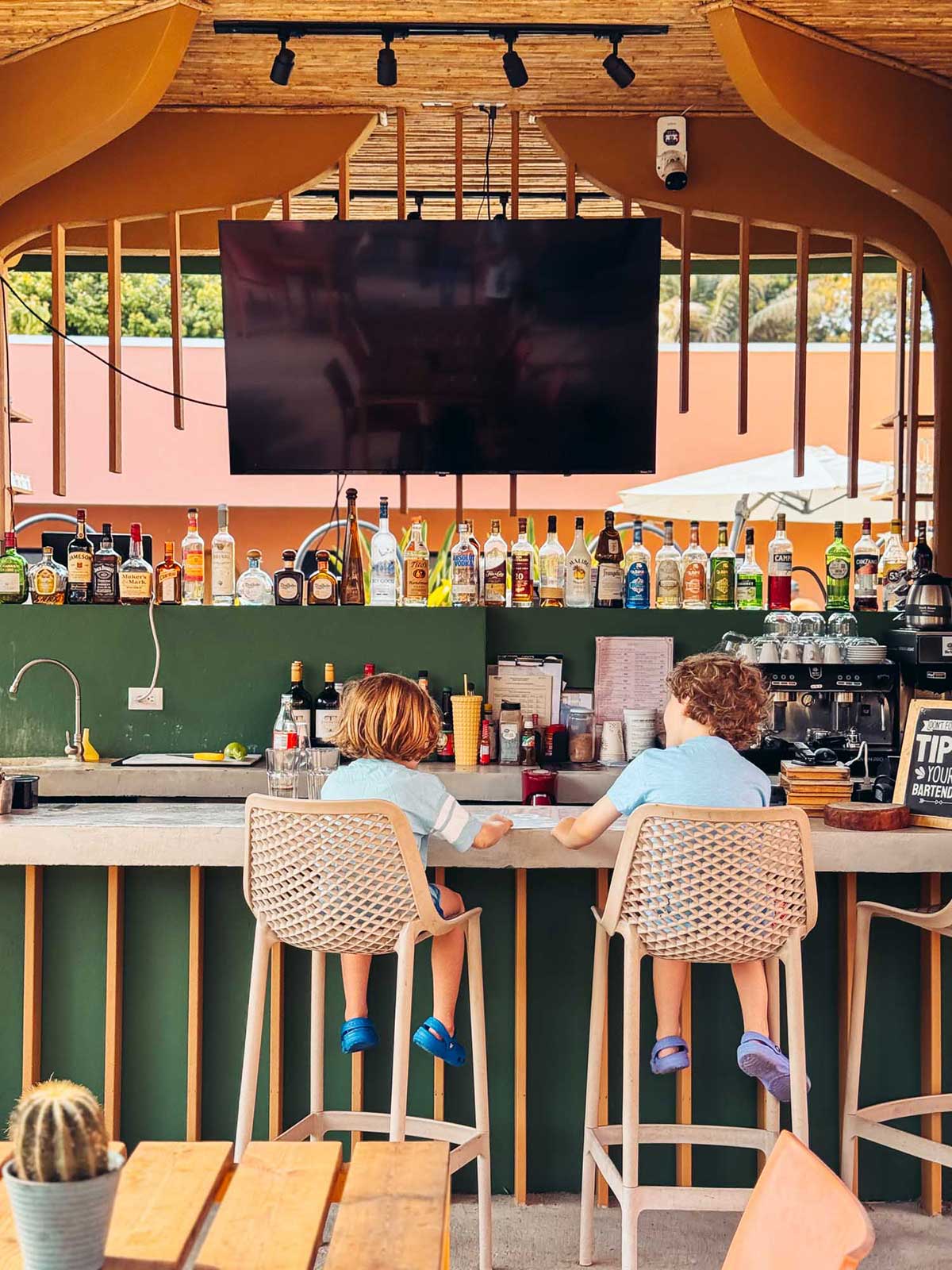

Hotel Amavi
Hotel Amavi was the highlight of our Jaco stop. A stylish, thoughtfully designed hotel with sleek, hipster interiors and a peaceful vibe – it felt more Santa Teresa than Jaco. If you need to break your journey in Jaco, this is a fantastic choice.
Check availability and book now.
Isla Chiquita

Isla Chiquita is a luxury glamping resort on a tiny island off the Nicoya Peninsula. It’s one of only two properties on Isla Jesusita (the other being a more basic campsite on the opposite side of the island), so it feels like a private island getaway. We were blown away by the whole place and it quickly became one of our favourite spots on our trip.
It has a barefoot luxury vibe with stylish glamping tents dotted over the hill amid the jungle. Down by the shore, there’s plenty of loungers, hammocks and spaces to relax, and you can hire paddleboards or kayaks to take out on the water.
There’s a gorgeous open-air restaurant with ocean views and island style. And the swimming pool and jacuzzi has a bar for afternoon happy hour.
Our kids loved the cornhole and little playground. And a massage at the hilltop spa was heaven for me.
It’s a place you could easily spend a few days, simply kicking back and enjoying island life.
Things to do on Isla Chiquita

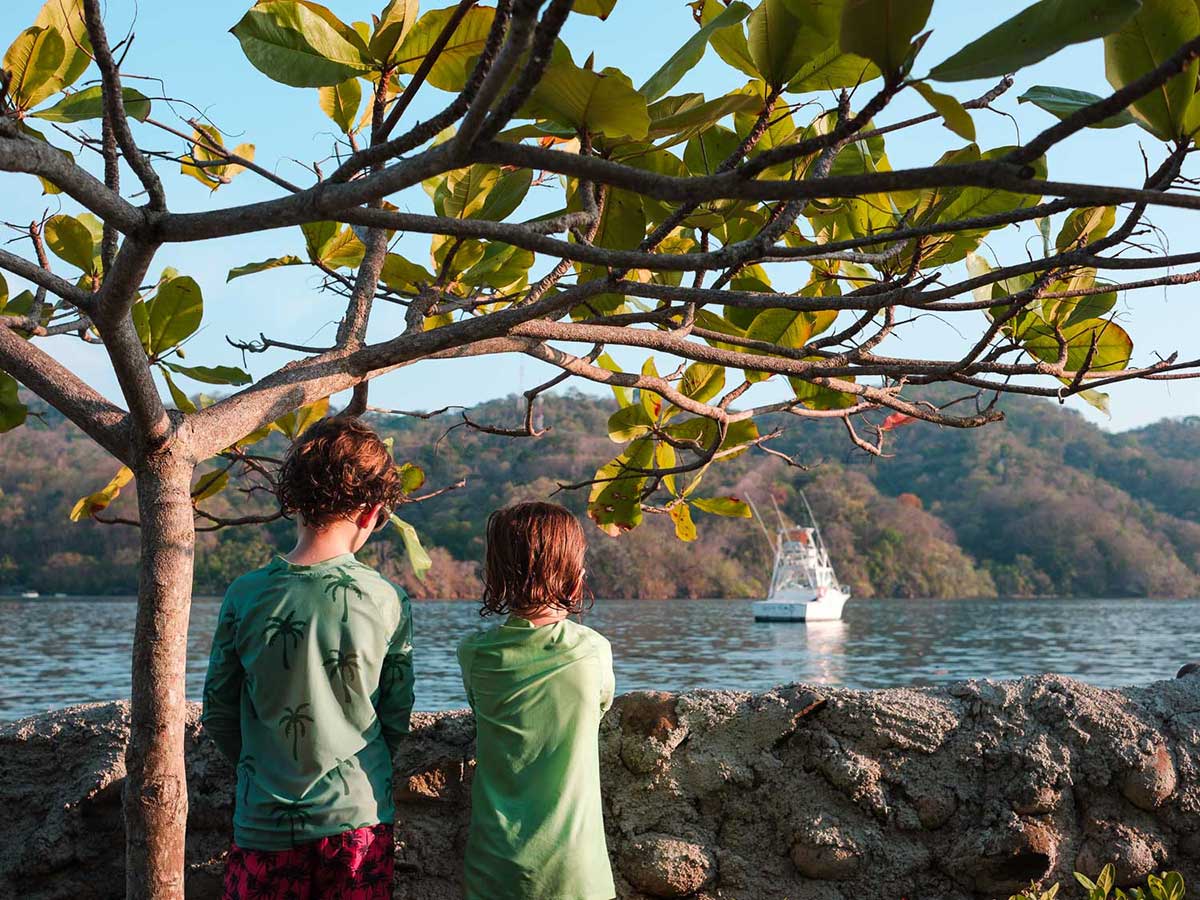

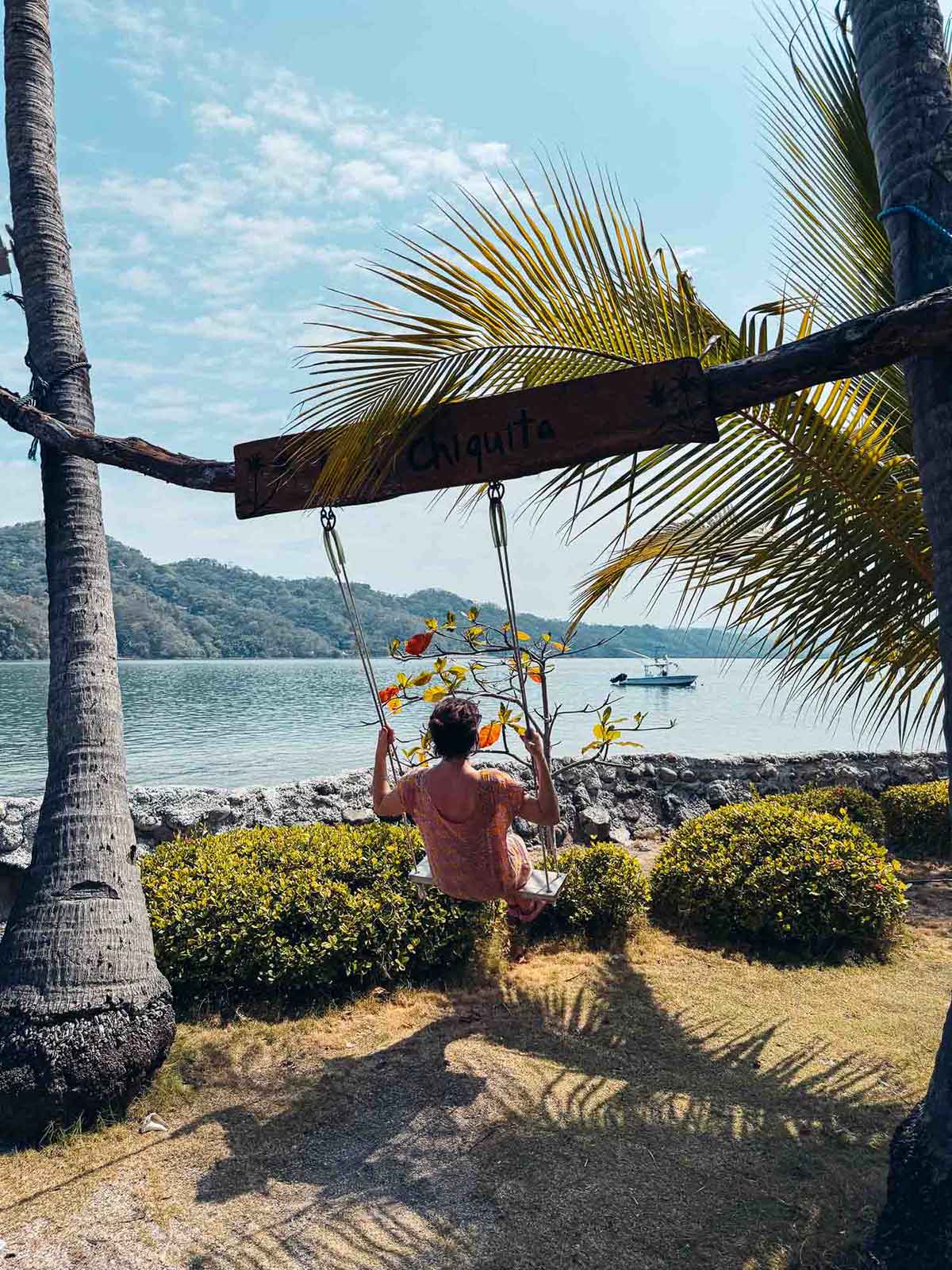
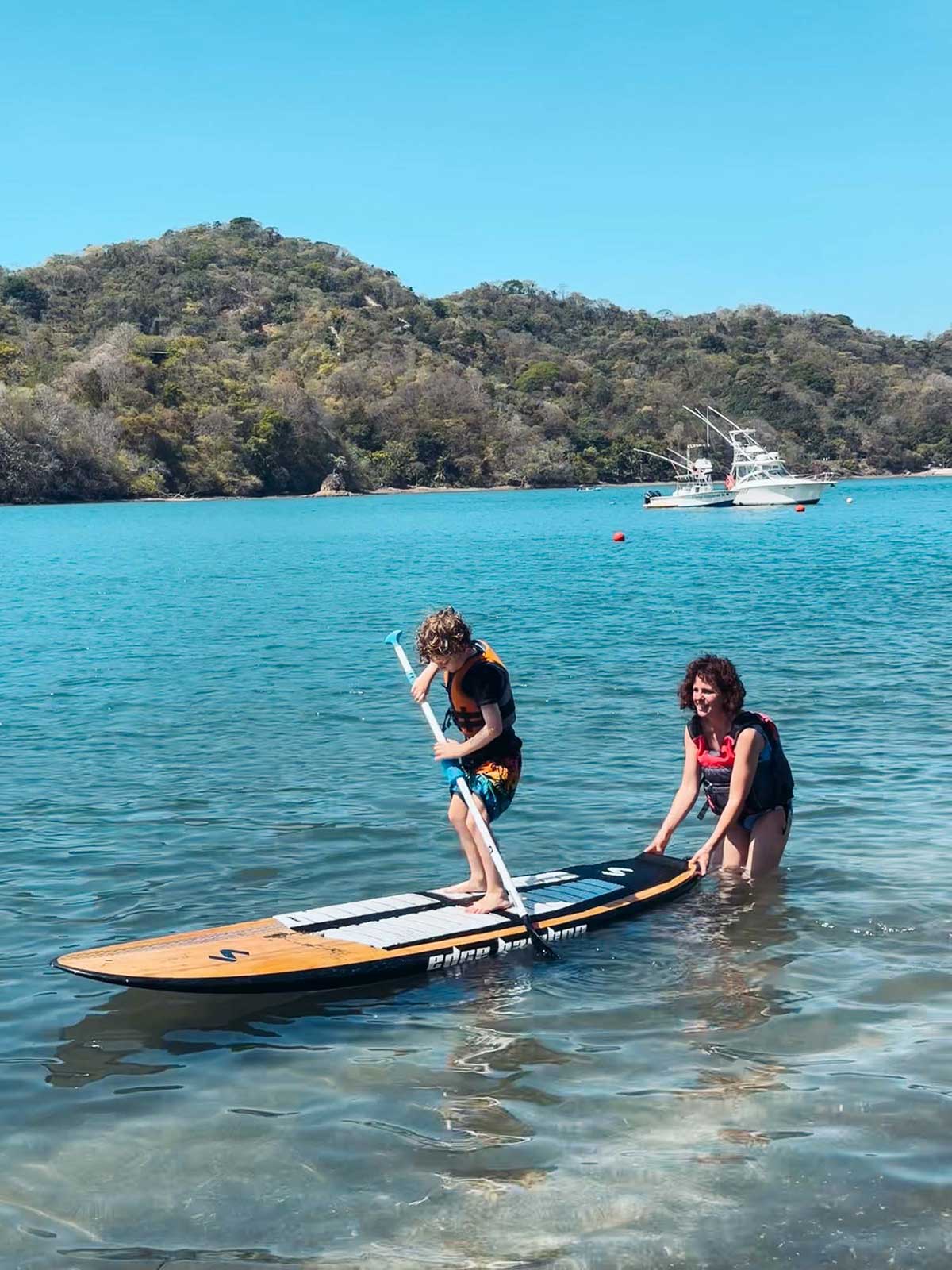
Part of the joy of a visit to Isla Chiquita is the chance to slow down and not do much at all. But there are some activities you can join. Whatever you do, don’t miss the bioluminescence tour.
- Bioluminescence tour – a big highlight from our entire trip. Take a nighttime boat trip directly from Isla Chiquita and see bioluminescence appear beneath your fingers.
- Paddleboarding and kayaking – the calm waters around the island are perfect for paddleboarding and kayaking, and you can hire all you need from Isla Chiquita.
- Spa – the resort’s massage hut sits high above the island with panoramic views out to sea and a full menu of treatments. The massage was amazing.
- Cornhole and kids’ play area – there’s a small playground for little ones (climbing frame, swings) and a shaded cornhole setup where we spent a lot of time playing as a family.
- Hiking the Simbiosis Trail – A gentle loop trail that winds through the island’s lush interior, offering glimpses of local wildlife like howler monkeys and a variety of tropical birds.
- Boat trips – choose from snorkelling, fishing or sunset boat trips.
Where to eat and drink on Isla Chiquita


The food at Isla Chiquita is excellent throughout. Breakfast is à la carte, with fresh breads, fruit, juice, and your choice of mains like pancakes or gallo pinto.
Lunches and dinners were just as strong – locally inspired and with enough variety to keep everyone happy, including the kids.
The main restaurant sits on a wooden deck with dreamy sea views and jungle greenery around the edges.
There’s also a small pool bar with a happy hour each afternoon – perfect for a cocktail while the kids splash in the pool.
How to get to Isla Chiquita
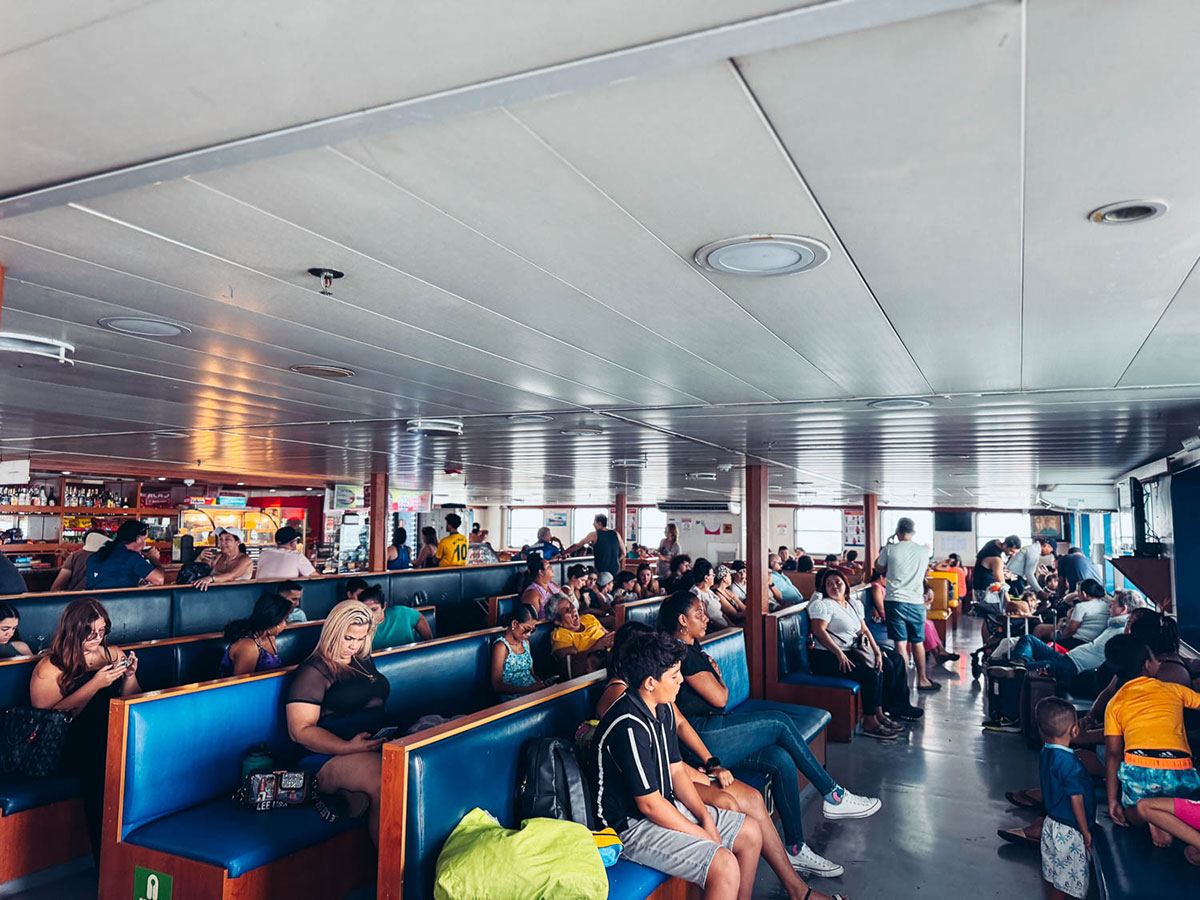
To get to Isla Chiquita, you take a water taxi (arranged by the resort) from a little parking area at Punta Cuchillos near Paquera. You leave your car there for the duration of your stay. The boat ride is just 5 minutes.
Punta Cuchillos is a 5-minute drive from the Paquera ferry terminal, which is where you arrive to from Puntarenas. The ferry takes 70 minutes, but you need to get there an hour before it leaves. You can book the Puntarenas to Paquera ferry here.
We travelled to Puntarenas from Jaco, which took about one hour on an easy-to-drive paved road. There was a small slowdown around the crocodile bridge at Tarcoles.
You can also arrange for a private transfer directly from places like Jaco to skip the ferry altogether. There’s even a heliport available.
Santa Teresa

We fell head over heels for Santa Teresa. I was worried it was going to be a bit too hipster for family travel, but it turned out to be one of the best places we visited.
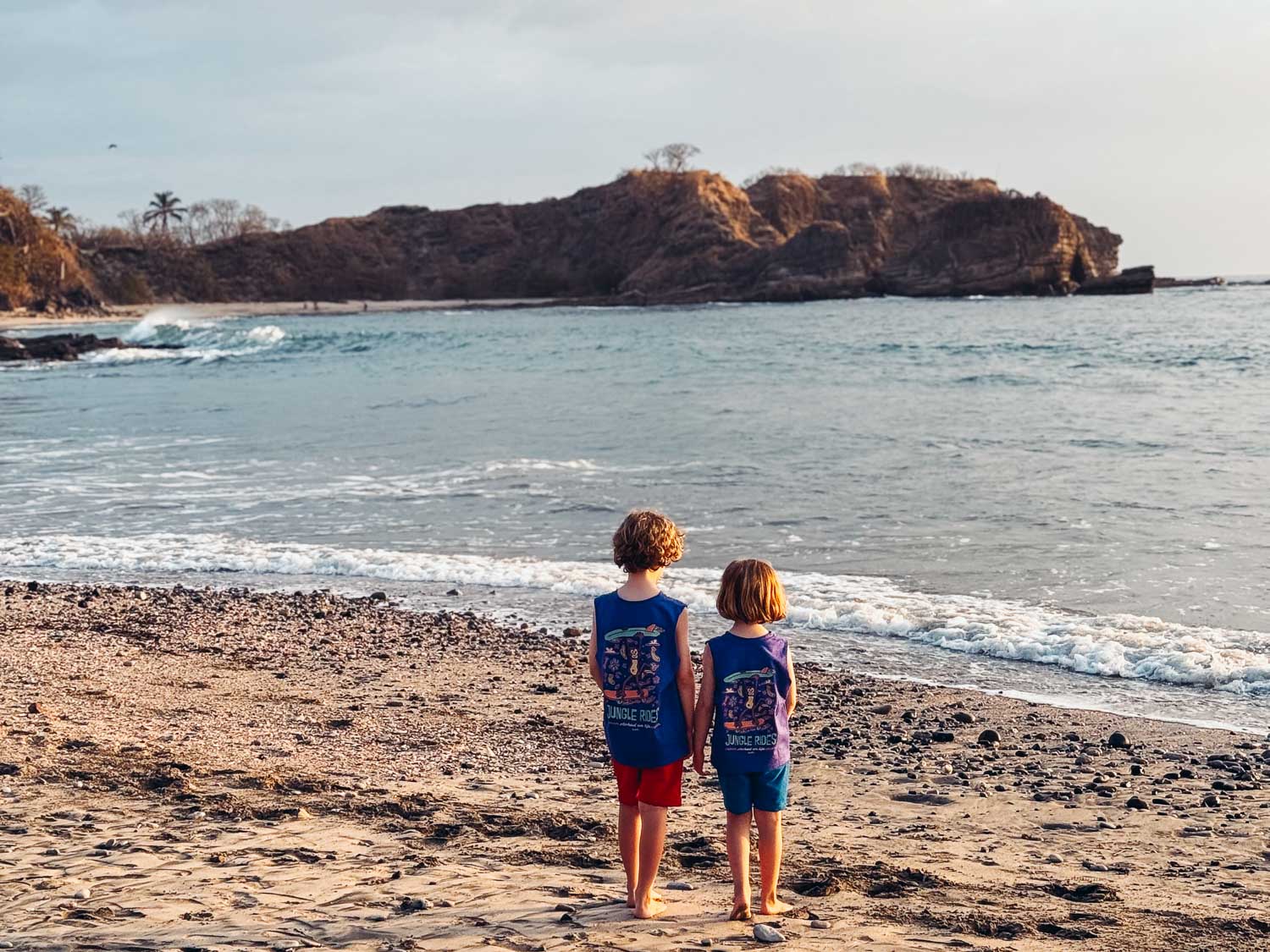
It’s a laid-back surf town with a hippy soul and a lot of style. The dusty main road is lined with smoothie bars, stylish boutiques and laidback (but excellent) restaurants. The beach is pure paradise – palm-fringed sands, perfect surf, and sunsets that stop you in your tracks.
It’s more polished than it used to be back in its hippy heyday, but still has that bohemian spirit if you know where to look. We stayed in the quieter north, which is perfect for families. See our full guide to visiting Santa Teresa with kids.
Things to do in Santa Teresa
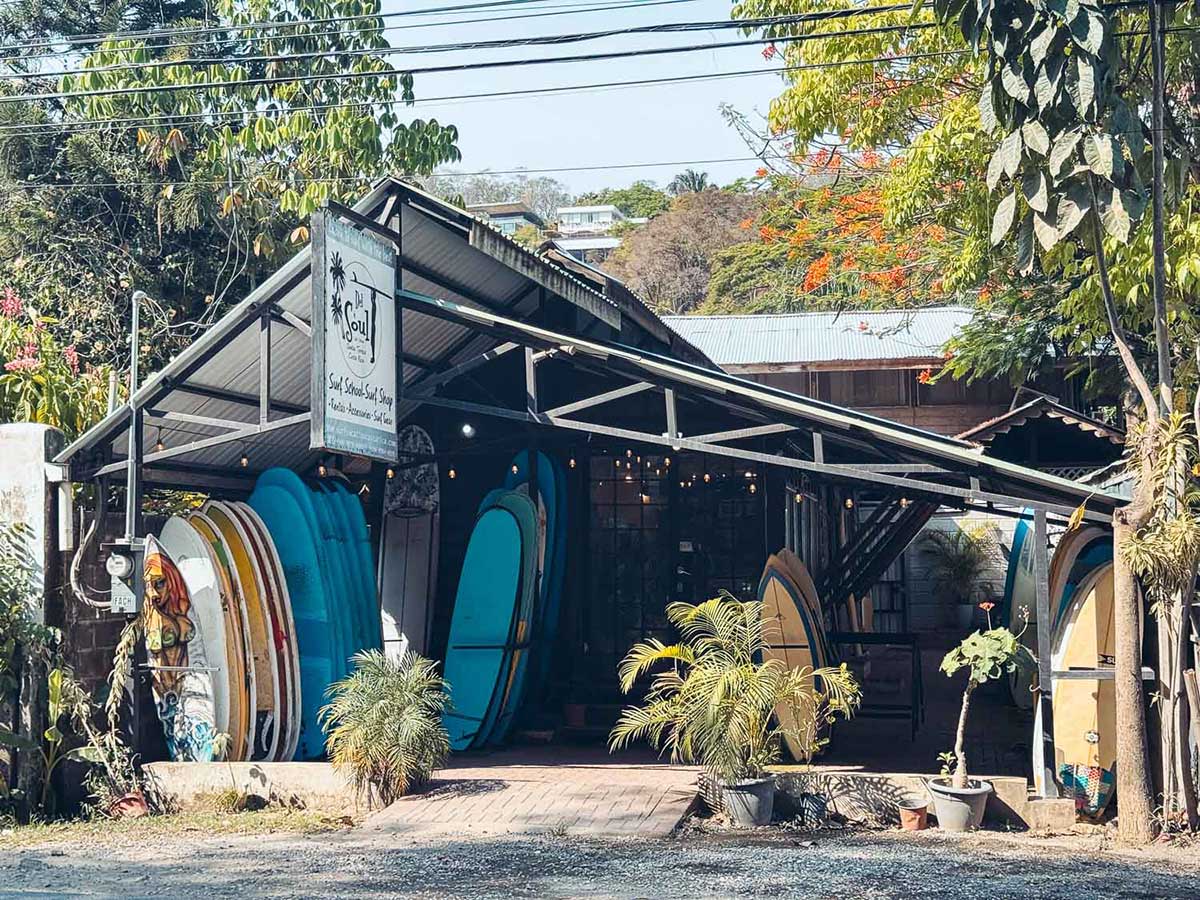
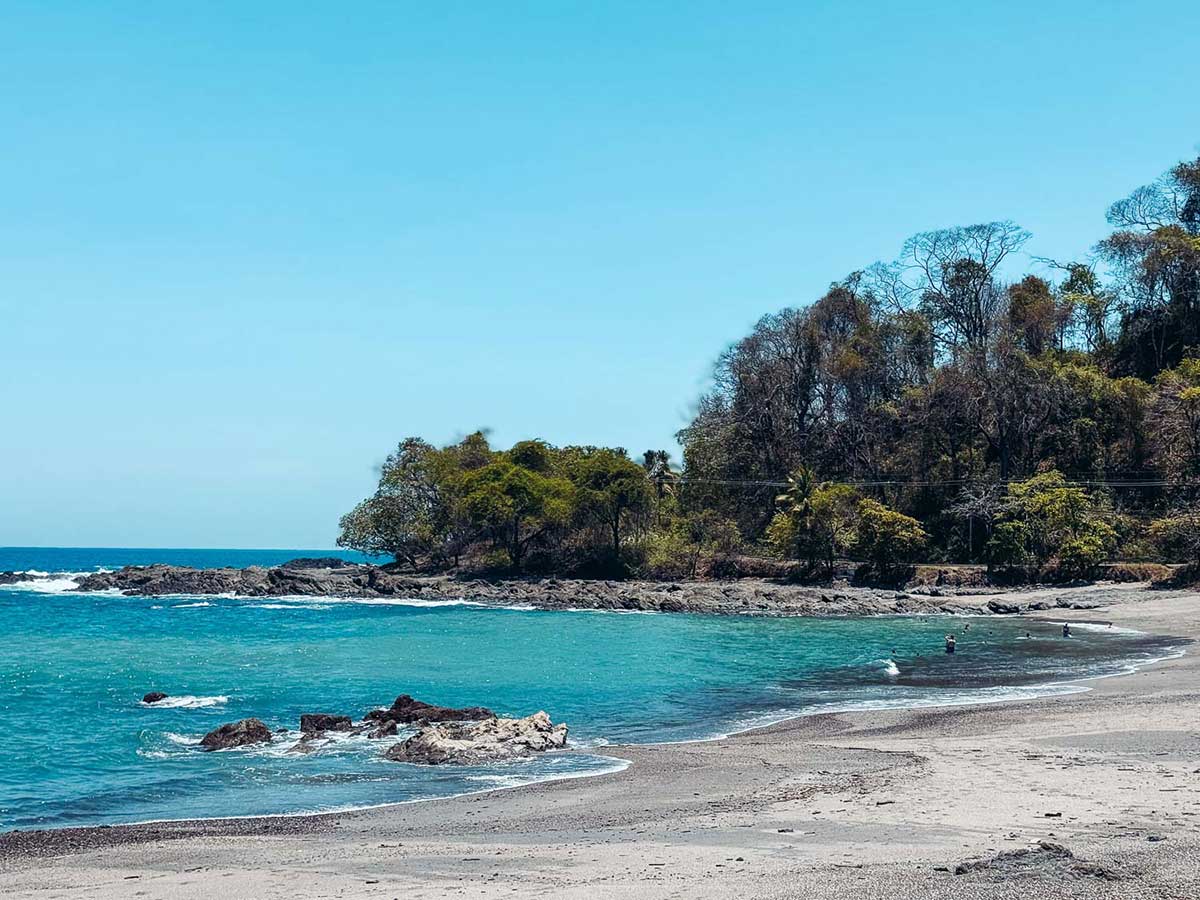


A trip to Santa Teresa will almost certainly be centred around the beach and enjoying all it has to offer, from surfing to tidepooling, but there are also many other things to do when the heat gets a bit too much.
See our full guide to things to do in Santa Teresa for more ideas, but here are some highlights…
- Surf lessons – Many people come to Santa Teresa for the surf, and there are plenty of surf schools to choose from. We highly recommend Toro from Blue Surf Sanctuary. He was fantastic with our kids.
- Tide pooling – Explore shallow pools filled with crabs and shells at low tide. El Peñon and Playa Hermosa are great spots.
- Horse riding – Ride through jungle trails and along the beach with local guides.
- Boat trips – Go dolphin or whale watching, fishing, or take a day trip to Tortuga Island. By night, see bioluminescence.
- Take a day trip to Montezuma waterfalls – hike and swim at these scenic falls in a cute nearby beach town.
- Zip-lining – Soar through the jungle canopy for a thrill older kids and teens will love.
Where to eat and drink in Santa Teresa



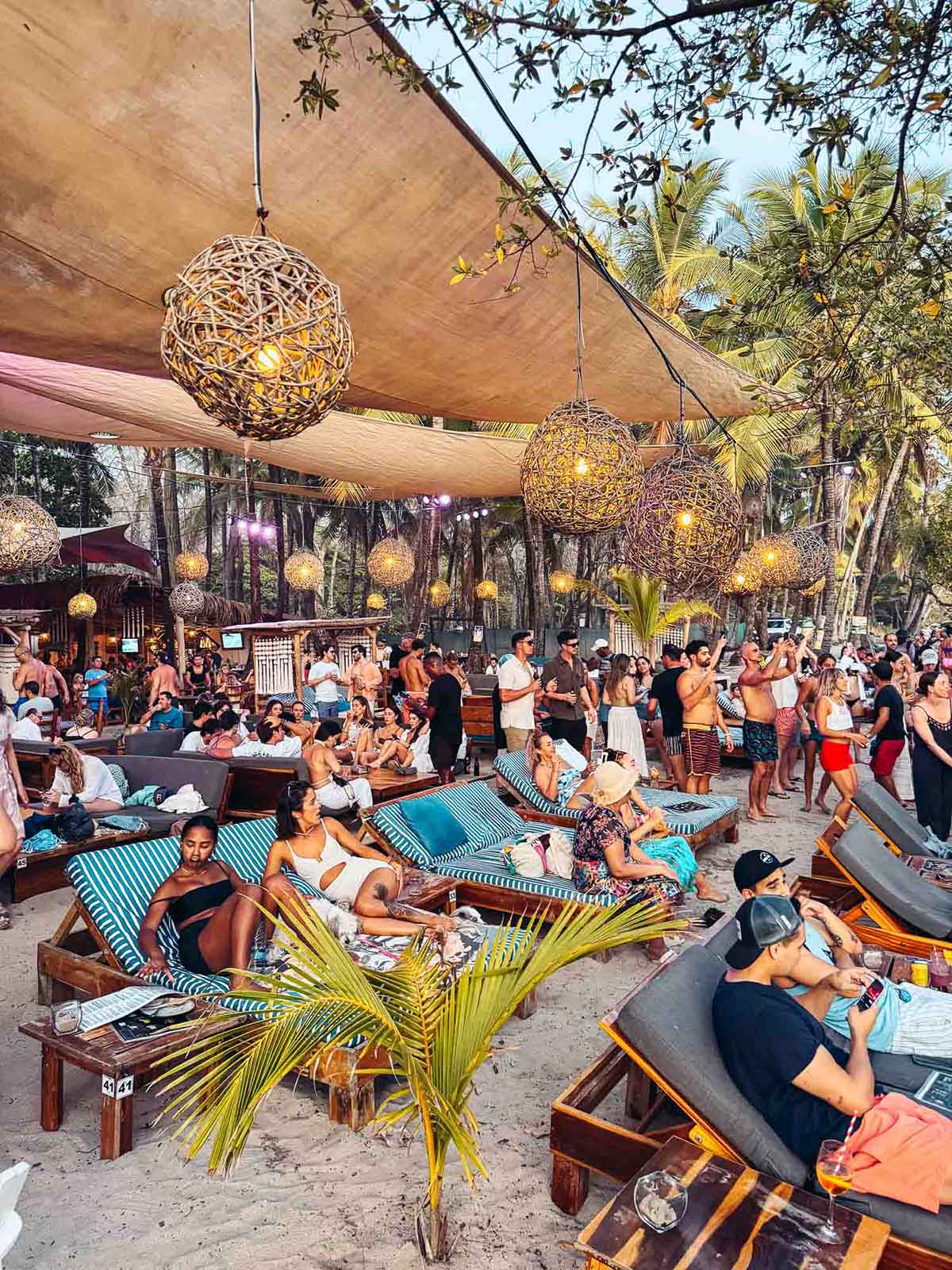

The food scene is a highlight in Santa Teresa. Here are some of our favourites.
- Rocamar – Our favourite beach bar. Great tacos, sunset views, and a rope swing to entertain the kids.
- El Patio – Garden café with a laid-back, hip vibe.
- The Bakery – Incredible brunch, pastries and air-con!
- Cafe Social – Opposite Blue Surf. Excellent smoothie bowls and healthy breakfasts.
- Uma – Upscale Mediterranean food in a dreamy beachside setting.
- House of Somos – Iconic Santa Teresa institution, epitomising, the hip, community vibe.
- Organic grocery store – Well-stocked health food shop.
Where to stay in Santa Teresa with kids
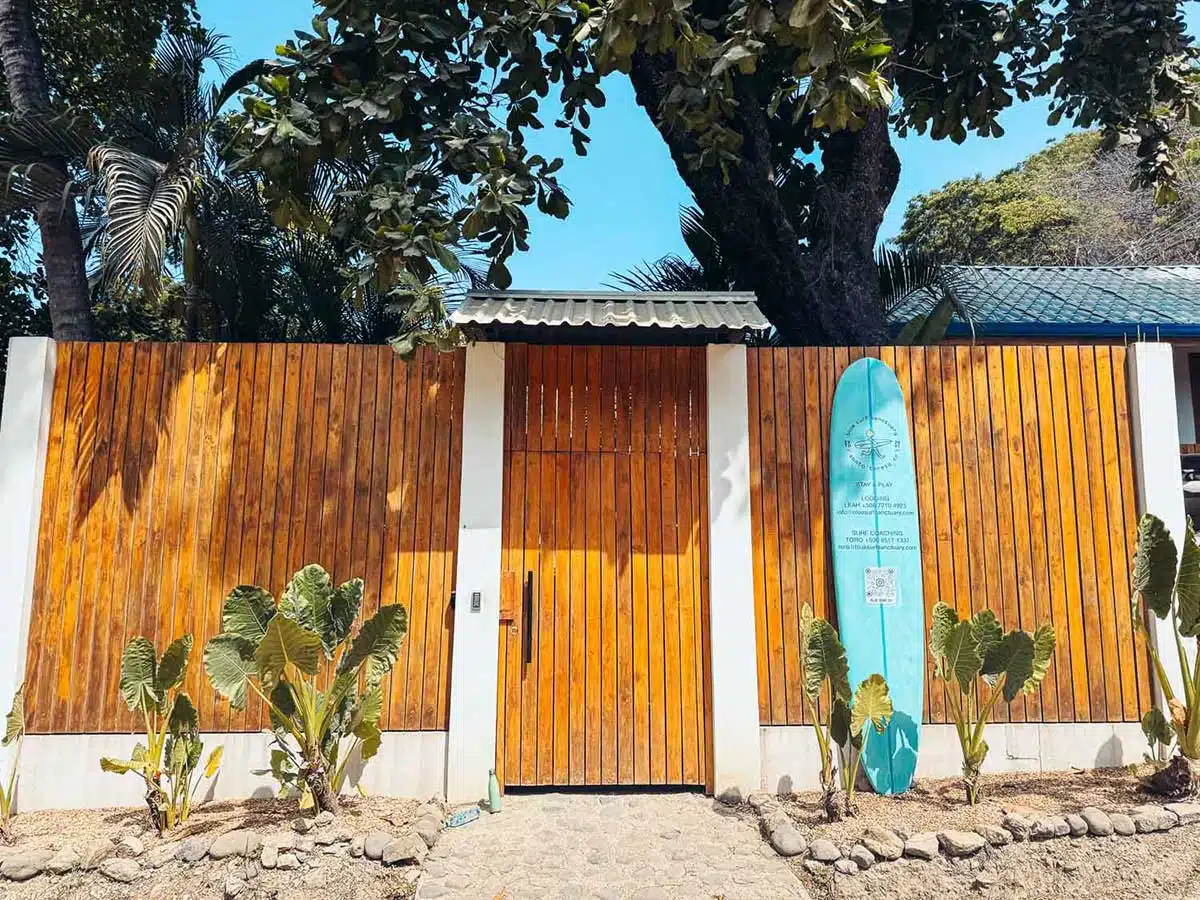


We stayed at Blue Surf Sanctuary, a boutique surf lodge that feels like a stylish, grown-up version of a hostel. With just a few bungalows around a shady pool and shared kitchen, it naturally fosters a friendly, sociable vibe. The location is ideal – just a few minutes from the beach – and the on-site surf school is brilliant with kids and nervous surfers. It was one of our favourite places of the whole trip. See the full Blue Surf review here.
How to get to Santa Teresa
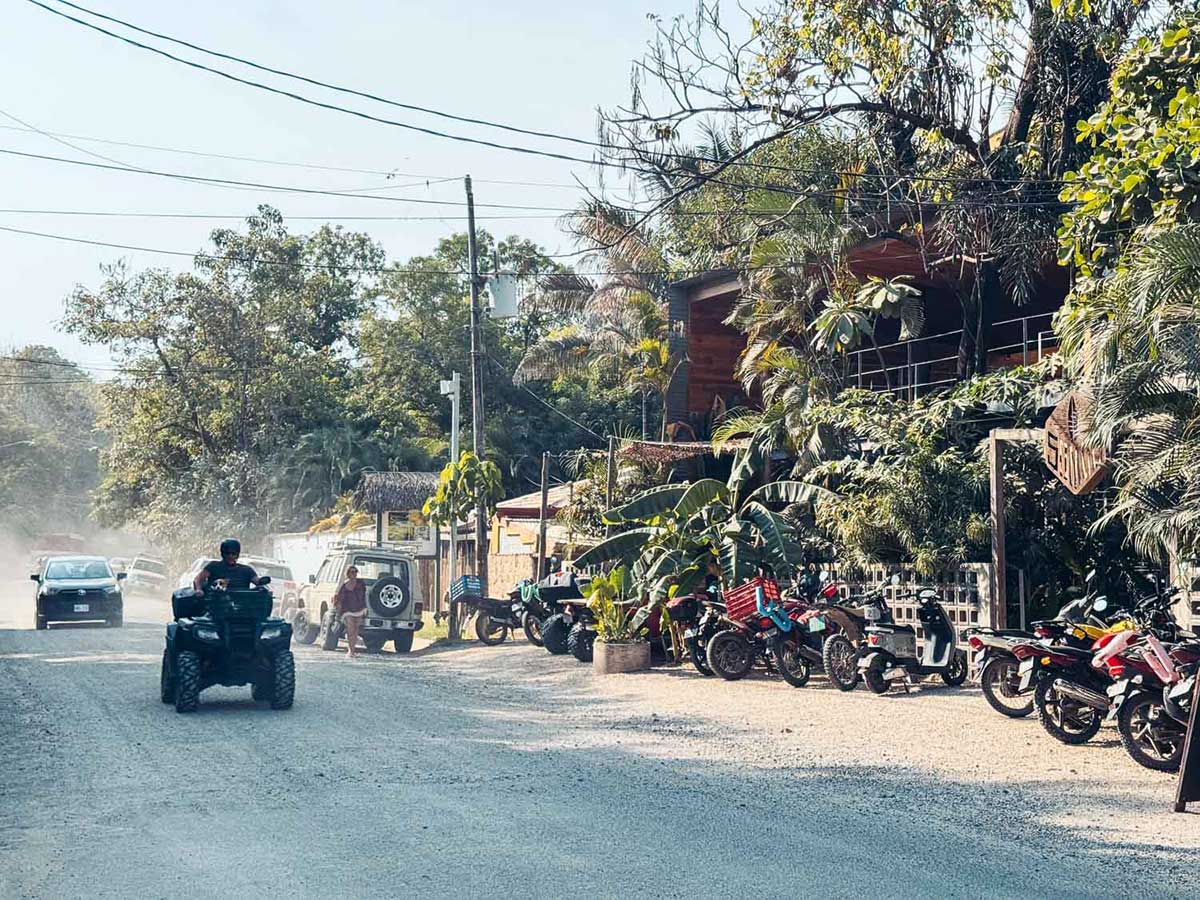
The drive from Isla Chiquita to Santa Teresa is just over an hour. The road is fairly bumpy so a 4×4 is recommended.
If you’ve adapted the itinerary and are coming from elsewhere, bear in mind that some of the roads to get to Santa Teresa are very bumpy and/or involve river crossings, which Google Maps doesn’t tell you about. For example, if you drove straight up the coast to Nosara, you’d have to cross several potentially crocodile-infested rivers (not joking!), so you’d definitely need a suitable vehicle.
Nosara

Nosara is the kind of place that makes you wonder: could we live here? It’s a stylish, health-conscious surf town that attracts a huge amount of ex-pats, partly due to the excellent international schools available, but also due to its somewhat magical allure, and of course its excellent waves. There’s definitely something about Nosara that draws you in – and local folklore says those who bathe there are destined to either run or beg to stay.
Unlike Santa Teresa, Nosara isn’t a party town, but more a wellness destination. It’s divided into two main areas – Playa Guiones and Playa Pelada – with a network of quiet, jungly beach roads winding through the towns, dotted with cool cafes, restaurants and hotels. And 100m behind it all are Pelada and Guiones’ namesake beaches (you can’t build on Nosara’s beaches aside from a handful of exceptions). It feels intimate and the community spirit is palpable. Everyone who lives there is proud to do so.
But don’t go to Nosara expecting a truly authentic Costa Rican surf town. There’s a clear American influence and a wellness scene that reminded me of Ubud in Bali (where we lived back in 2013!). It’s even more polished than Santa Teresa and the prices are some of the highest we saw in Costa Rica. There’s a botox clinic in the yoga retreat, and Nosara won’t be everyone’s cup of tea.
But behind the polish, we found a town with a special sort of spirit, where people are drawn to build new lives, prioritising wellbeing, community and nature. We found it all incredibly tempting.
Things to do in Nosara
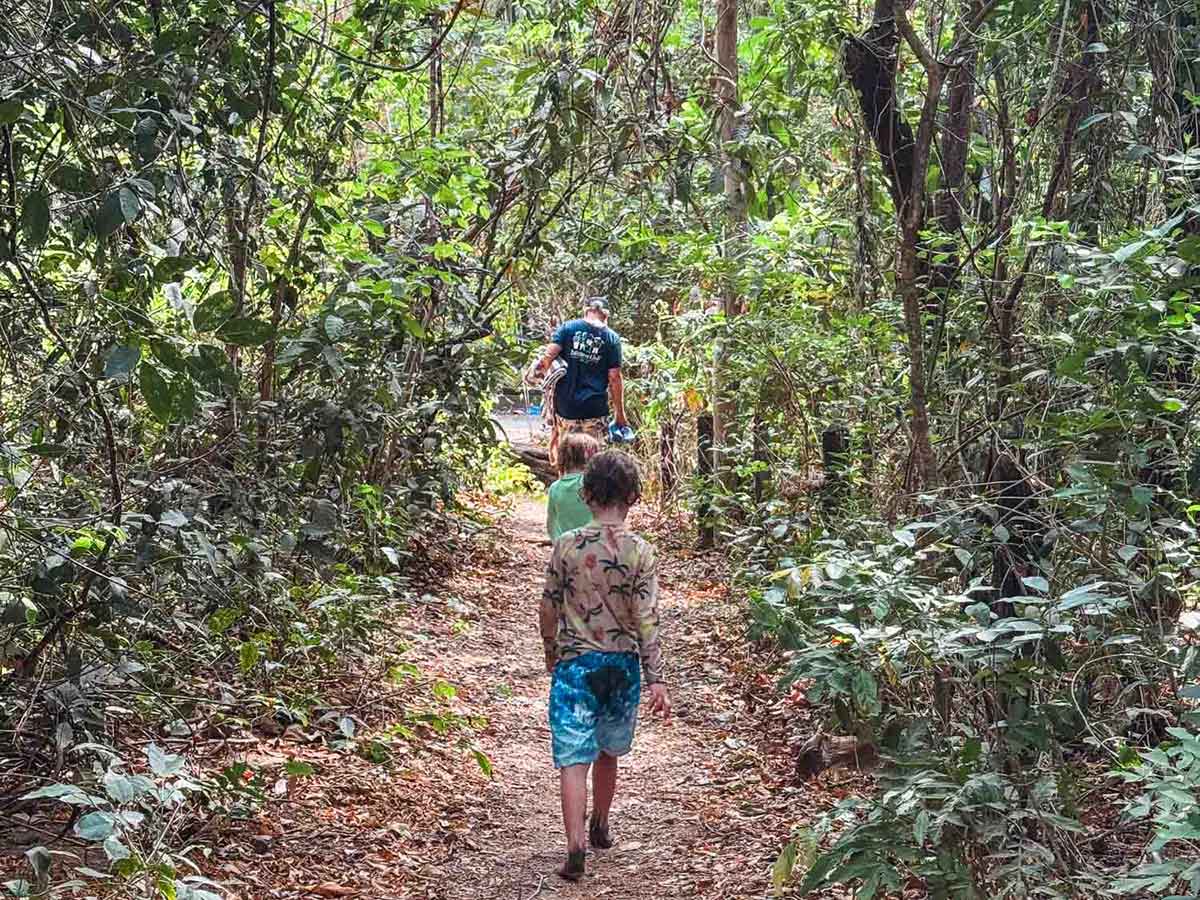
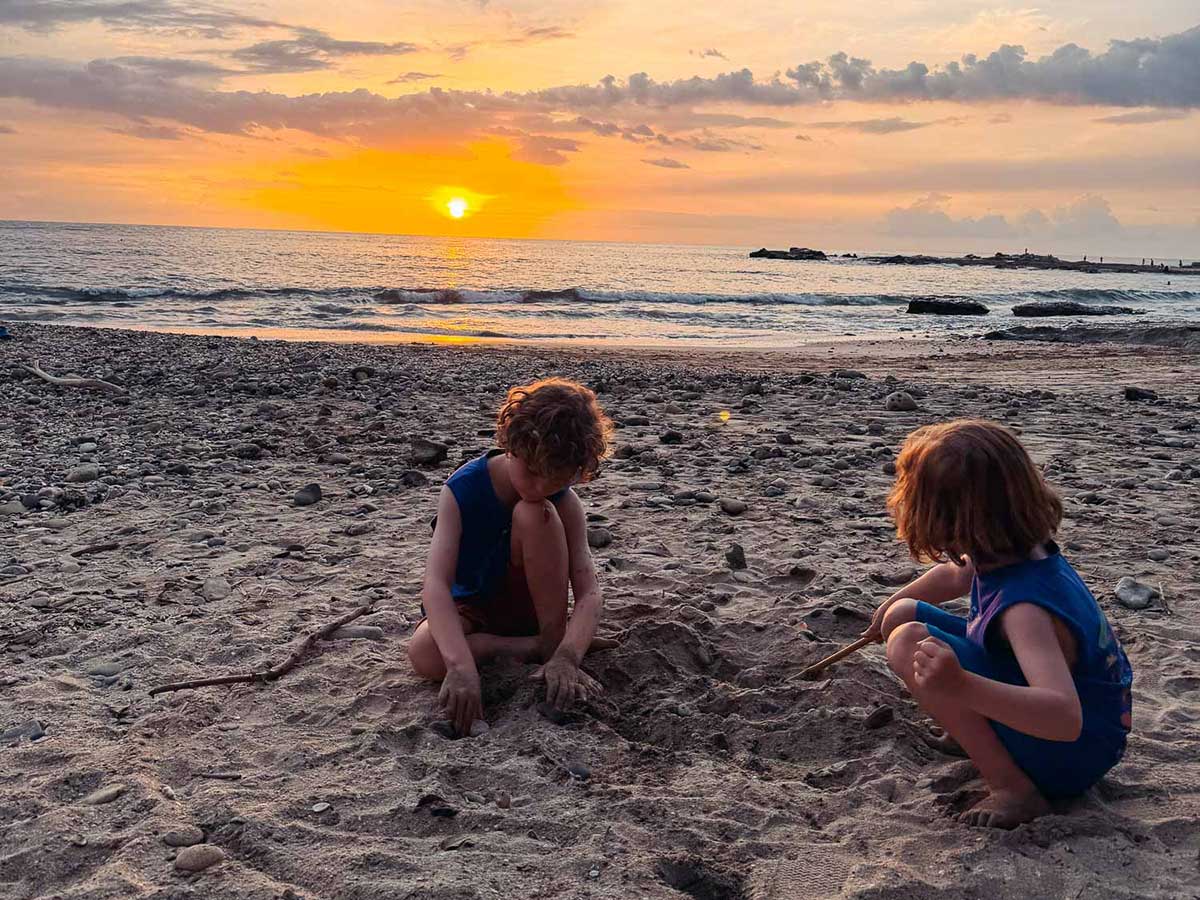

Nosara is a beach and surfing destination, but also one that draws yogis and other types of retreat seekers. You could easily spend a week vacationing there, soaking in all its vibes. Here are some ideas for things to do.
- Surfing at Playa Guiones – A wide, sandy beach with consistent waves makes it great for beginner and intermediate surfers alike.
- Explore the beaches – Guiones is the main surfing beach, whereas the half-moon cove at Pelada is quieter and more picturesque. It’s good for rock pooling and collecting shells. Playa Garza, 15 minutes’ south of Nosara, is another popular and even quieter option.
- Visit a wildlife sanctuary – Choose between Sibu Wildlife Centre and International Animal Rescue Costa Rica.
- Do some yoga or other wellness classes – Check out the noticeboards around town or the schedule at places like Bodhi Tree Resort and Harmony Hotel, and join a class, from yoga to pilates to sound healing.
- Sea turtles at Ostional – Just 25 minutes north of Nosara is Ostional, which is famous for its sea turtles. You can generally see them throughout the year, but most arrive in July/August.
- Shopping – The boutiques in Nosara are beautiful. Great for window shopping or picking up a souvenir. We loved the clothing in Soli Surf.
- Nosara Skatepark – Excellent skatepark and climbing wall at the entrance to Guiones.
- Other activities you can join in Costa Rica include horseback riding, zip lining, kayaking, ATV tours, or tours of the Nosara Biological reserve.
Where to eat and drink in Nosara
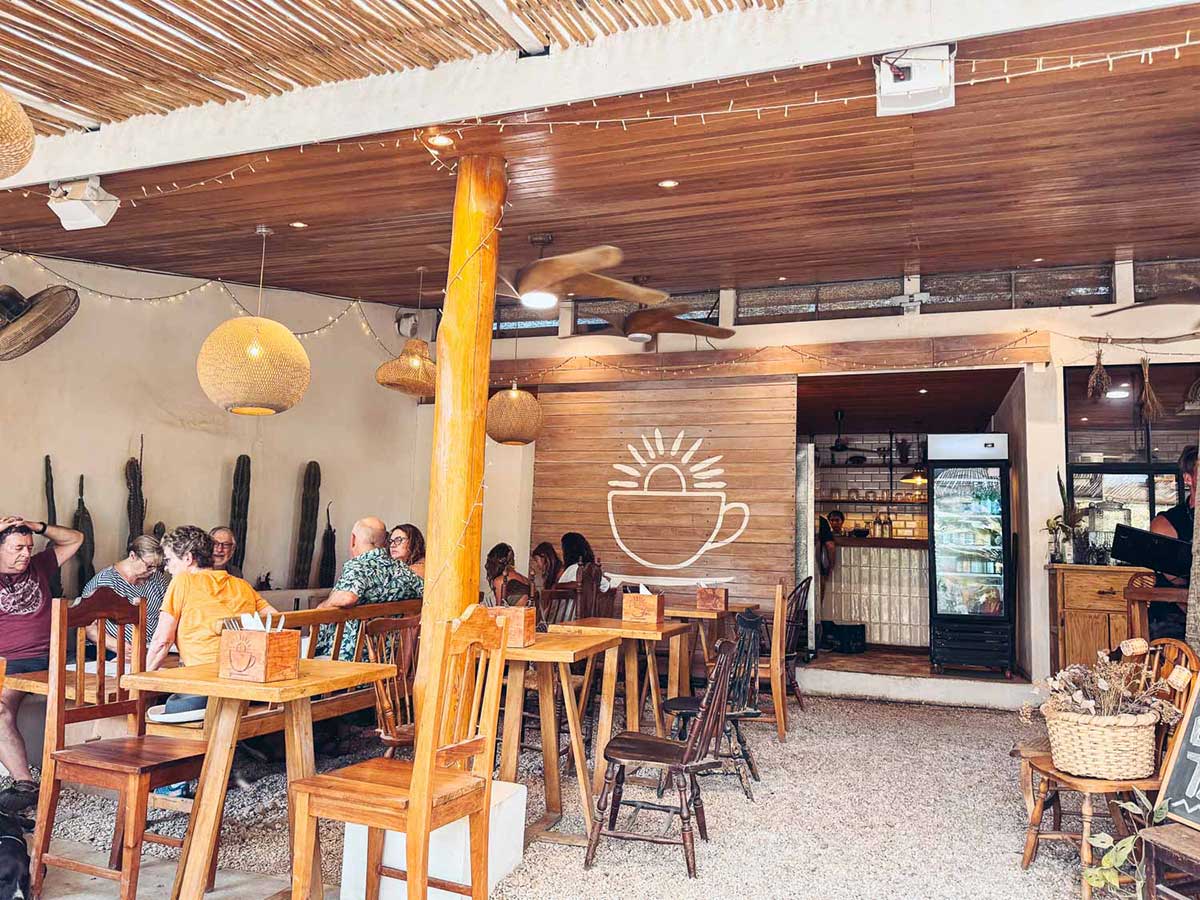


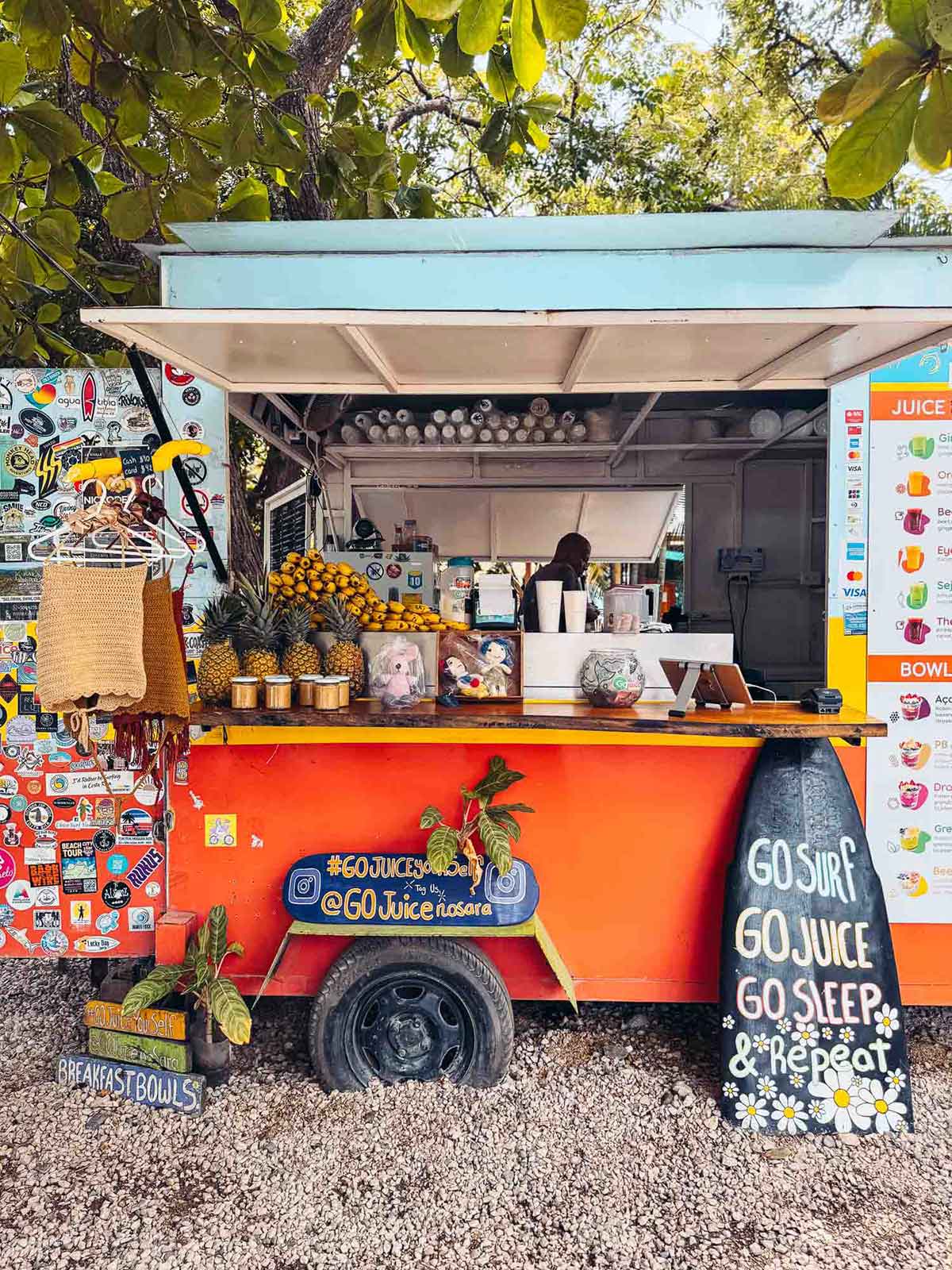

Like in Santa Teresa, the dining scene is a highlight in Nosara and you can find all sorts of excellent food, especially that in the wellness sphere. Here are some of our favourites.
- La Luna – Our standout meal in Nosara. The high-end beachfront restaurant is now one of my favourites in the world. The views are exceptional (get there for sunset!), the food is great, and the style is spot-on for Nosara’s aspirational
- The Gilded Iguana – one of Nosara’s most popular family resorts has an on-site restaurant, serving excellent brunch, lunch and dinner.
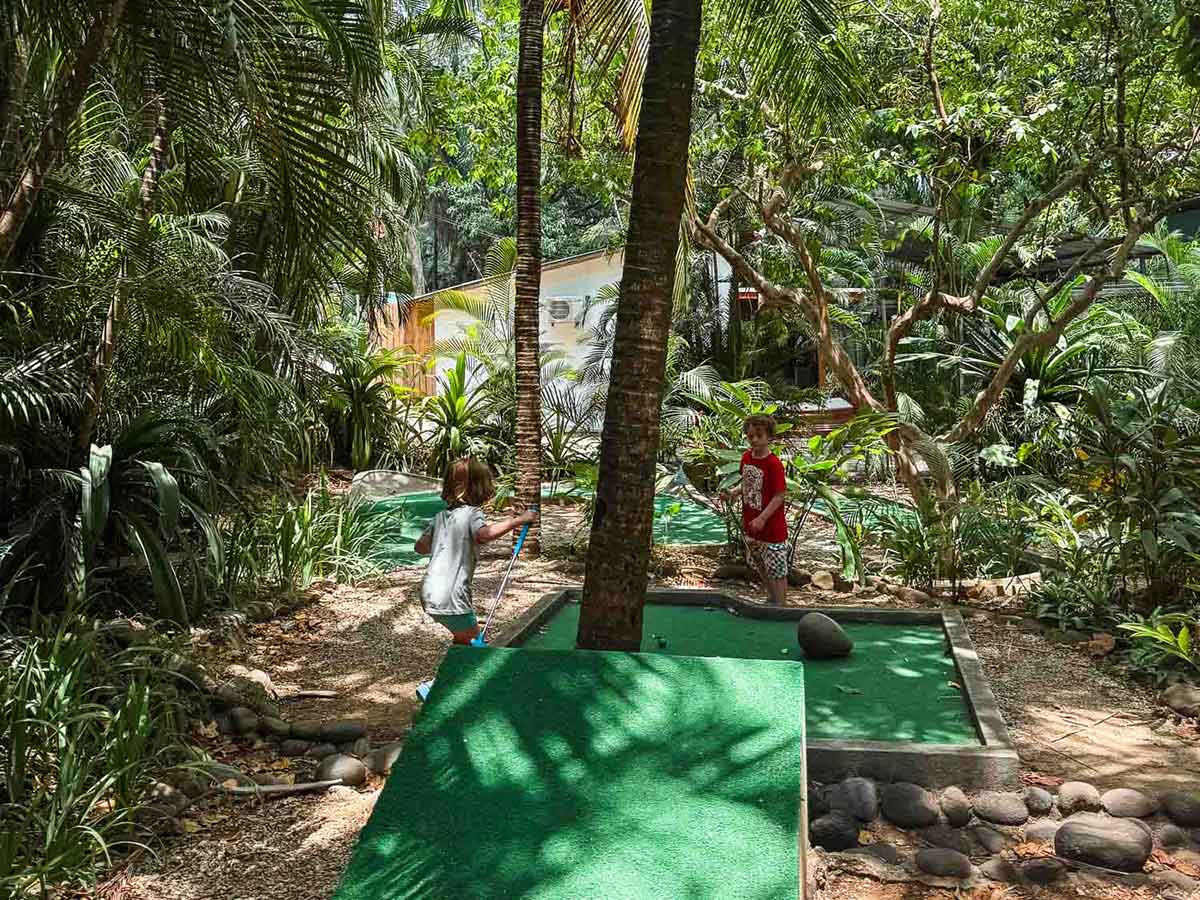
- Organico Bakery – the sister bakery to the popular grocery store across the street serves all sorts of healthful meals as well as baked goods. There’s a swimming pool and mini golf too, which was a huge hit with the kids.
- Sunrise Coffee – popular bohemian spot serving a brilliant brunch menu and excellent coffee (loved the banana coffee here!)
- Harmony Juice Bar – Harmony Hotel’s Juice Bar is the most popular spot for juices in town. Set in the hotel’s lush grounds, it’s a beautiful place to hang out.
- Rosi’s Soda Tica – a great spot for traditional Costa Rican cuisine.
- Coyol – we didn’t go here as it isn’t particularly family-friendly, but it’s widely recommended as one of Nosara’s best destination restaurants. It’s about a 20-min drive out of town.
- Pura Pizza – good for a quick and cheap bite to eat
- Go Juice – original home of banana coffee (coconut milk, banana, coffee and honey), although we kind of preferred the one at Sunrise.
Where to stay in Nosara
We stayed at Domo Hotel Boutique for three nights, and one night at Lagarta Lodge.
Domo Hotel Boutique
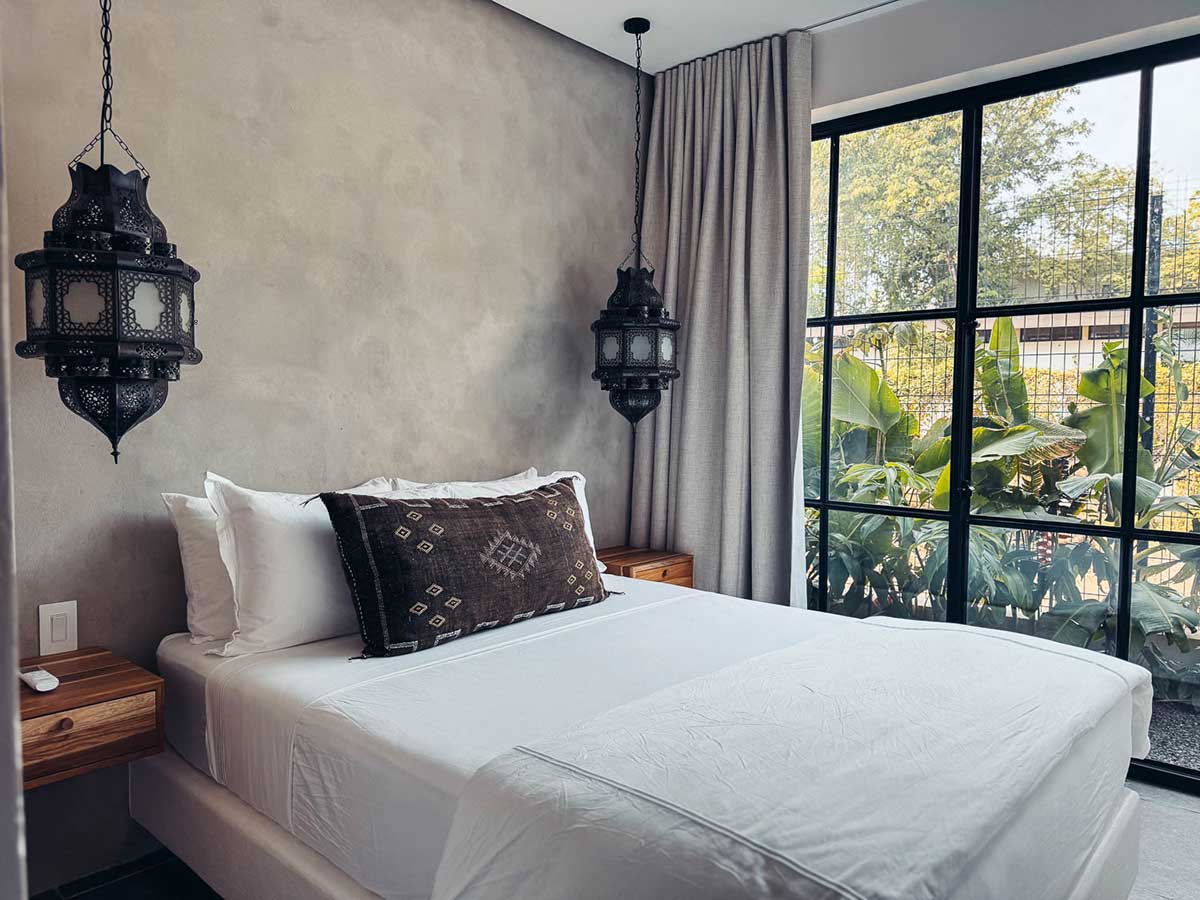
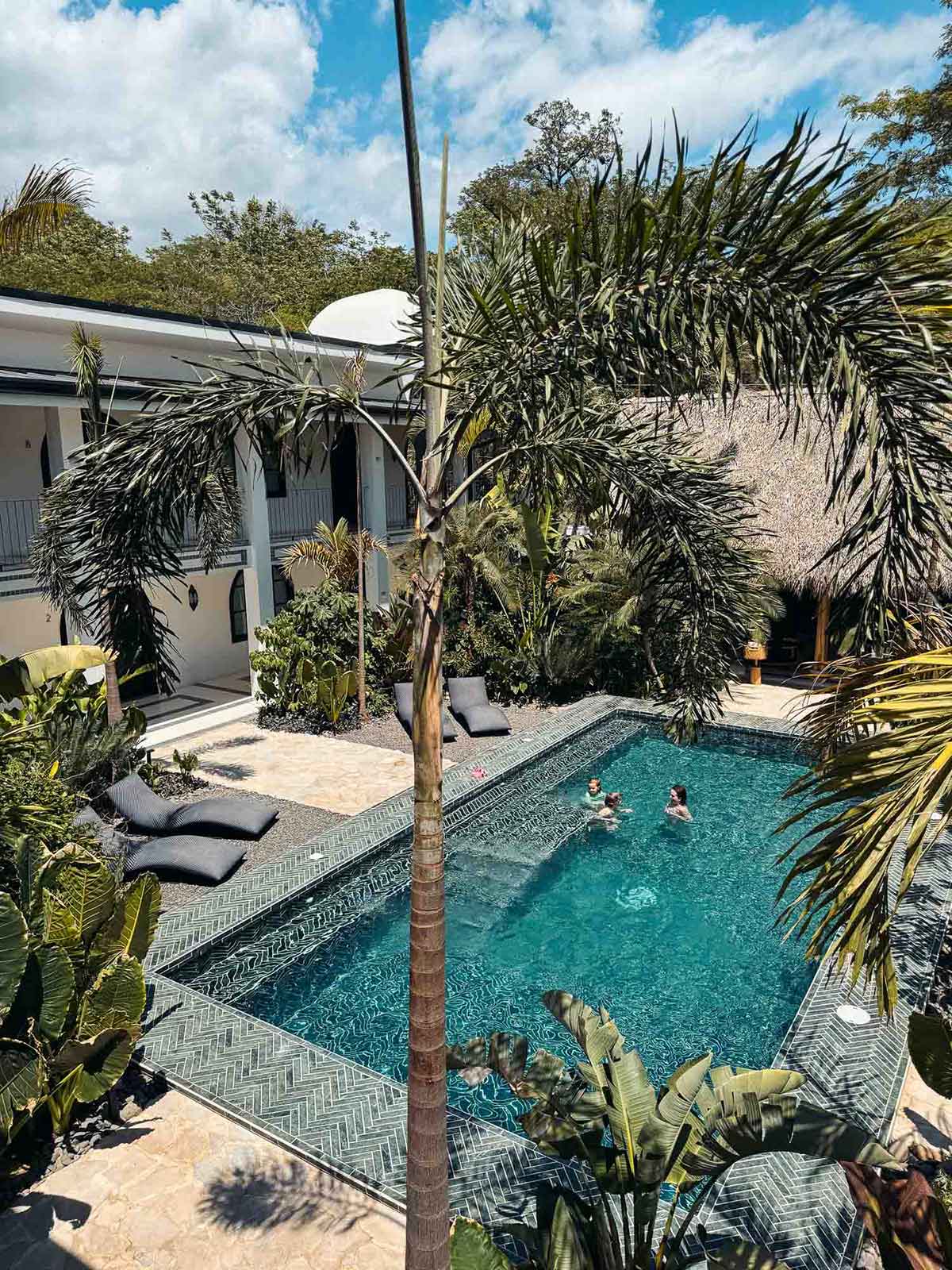

Domo Hotel Boutique is a gorgeous newcomer to Nosara’s exceptional hotel scene, and without a doubt one of the most stylish places to stay with kids. The sleek design could easily pass as an adults-only retreat, but they welcome children and the spacious self-catering suites are perfect for families.
It’s been thoughtfully designed with Morroccan-inspired touches, like beautiful arches and intricate lanterns throughout. And the dark-tiled pool is one of the most beautiful I’ve ever seen, creating an elegant centrepiece for the hotel. It was a treat to be playing with kids in such an aesthetic setting (definitely not always the case with family hotels!).
There are excellent dining options nearby in Playa Pelada, including Sunrise Coffee just across the street, and La Luna, one of Nosara’s best restaurants, just a short walk away.
Check availability and book now.
Hotel Lagarta Lodge


This mid-range resort is a bit more traditional than the chic surf style of most of Nosara’s accommodation, but you come here for the views above all else. It’s high on a hill above the town, so you can see across the jungle out to the ocean – a view best enjoyed from the restaurant or the hotel’s series of beautiful pools. It’s a stunning place to watch the sunset. Book an ocean-view room to make the most of your stay there.
There’s also a biological reserve on the grounds, which you can walk down to from the hotel. And it’s a great place for wildlife sightings – we saw a family of howlers from our balcony.
Check availability and book now.
How to get to Nosara

We travelled to Nosara from Santa Teresa. I touched on this in the Santa Teresa section, but when you search for the route in Google Maps, it will suggest you take the coast road straight up. Only do this if you have a suitable car and are comfortable doing river crossings. We weren’t, so we took the road inland via Paquera. It’s a long, 4-hour drive on variable roads. Some are paved, some are dirt, and some are a mixture of both! Be on constant alert for potholes.
If you’re reversing the route and travelling to Nosara from Liberia airport, it’s a 2.5 hour drive. Most of this is paved aside from the final stretch along the coast, which is incredibly pot-holed. It also involves driving across a very skinny bridge. If you want to avoid the potholes and bridge, go inland via Nicoya, which is only adds about 20 minutes to the journey.
Other destinations to consider adding to your itinerary
There are a few places we skipped during our Costa Rica road trip, largely because we didn’t have the time to fit in absolutely everything. Depending on your route and interests, you might like to include some of these.
Uvita
Down on the south Pacific coast, Uvita is home to Marino Ballena National Park and the famous ‘whale tail’ sandbar that only reveals itself at low tide. It’s one of the best places in the country for whale watching, particularly from July–October and December–April.
The area has a laid-back, tropical vibe with lots of nature and far fewer crowds than Manuel Antonio. Think waterfalls, mangroves, and wild beaches – ideal if you’re looking for something a little quieter and more nature-focused. We would have loved to go here, but just didn’t have enough time on this particular trip. Next time!
The Osa Peninsula and Corcovado National Park
If you’re after true wilderness, Corcovado is the place to go. Often described as the most biodiverse place on Earth, it’s where you’ll find tapirs, scarlet macaws, and – if you’re seriously lucky – even a jaguar. It’s remote, rugged and totally unspoiled, with boat-only access in some areas. While we’d have loved to go down here, we felt as though Fortuna, Manuel Antonio and Monteverde were better options for little kids, and have bookmarked this one for when they’re older.
Tortuguero
Tortuguero is both a national park and a village in the northeastern corner of the Caribbean coast. It’s best known for its namesake sea turtles, which come ashore to nest from March to October, but the wildlife watching extends to monkeys, crocodiles, frogs, sloths and all the wildlife Costa Rica is known for.
Join turtle watching tours, hike the jungle paths or cruise the canals. This was high on our wish list. But we decided to skip the Caribbean coast purely so our trip wouldn’t be too rushed. Again, it’s one for next time.
Puerto Viejo
This colourful town on the southern Caribbean coast is said to have a completely different vibe to the Pacific side – with a strong Afro-Caribbean culture, lively nightlife and a super relaxed pace. The beaches look beautiful, and there’s a great mix of local sodas and stylish cafés. You can bike along the coast from one beach to the next and explore spots like Cahuita National Park or the Jaguar Rescue Center. It’s definitely one for a future trip.
Costa Rica itinerary FAQs
How long do you need for a Costa Rica road trip?
If you want to see a variety of landscapes – cloud forest, volcanoes, beaches, jungle – you’ll ideally want at least two weeks. We had three weeks, which gave us time to move at a relaxed pace with young kids, build in downtime, and enjoy each place without rushing.
That said, you can still have an incredible trip with less time. As a rough guide, this is how you could adapt this itinerary with less time.
- 7 days – Choose two regions (e.g. Arenal plus beach, or Monteverde plus Manuel Antonio)
- 10 days – Three regions (e.g. Arenal, Monteverde, and a beach stop)
- 14 days – All of our route without the longer Nicoya Peninsula loop (perhaps just choose one of the Nicoya destinations)
Keep in mind that travel days can be tiring, especially for young kids, and distances that look short on the map may take longer than expected. Costa Rica isn’t huge, but the roads (especially in remote areas) mean progress can be slow. Building in rest days makes a big difference.
Remember, we missed out on some popular destinations, including Corcovado National Park, the entire Caribbean side, Uvita and San Jose. We felt like we’d be rushing if we tried to fit it all in, so these are the places we missed. And now we have a perfect excuse to go back!
When to go to Costa Rica
Costa Rica has two main seasons: dry (December to April) and wet (May to November). The dry season is generally considered the best time to visit, especially if you’re planning a road trip like ours. We travelled in April at the tail end of the dry season. The days inland were mostly sunny with the odd downpour/cloudy weather, and the Pacific coast was almost pure sunshine. April is the hottest and most humid month on the Pacific Coast, which was sometimes a bit much. You definitely appreciate access to a pool on days like that!
The rainy or “green” season has its own appeal: fewer crowds, lower prices, and lush, vibrant landscapes. Just be aware that some roads (especially on the Nicoya Peninsula) can become muddy or impassable, and certain tours may be affected by the weather. If you don’t mind a bit of rain and want to avoid peak season prices, June to August can be a good window.
December and January are the busiest months, with a surge in both local and international visitors over Christmas and New Year. If you’re travelling during this time, be sure to book well in advance.
Wildlife sightings also vary slightly with the seasons – sea turtles nest at different times depending on the coast, and certain migratory birds are best seen from December to March. But year-round, you’ll have an excellent chance of spotting monkeys, sloths, toucans, and frogs.
How to get around Costa Rica
The most convenient way to explore Costa Rica – especially if you’re doing a multi-stop trip like ours – is by car. The alternatives are public buses or tourist shuttles. While public buses are the cheapest option, they can be slow and unreliable. Tourist shuttles are a more comfortable option than public buses and tend to take you door-to-door for popular destinations. They are quite expensive though and the cost will obviously add up the more destinations you go to.
For us, having a car made the trip feel like more of an adventure – and gave us the freedom to explore at our own pace.
We rented a 4×4 and were very glad we did. While the major roads are generally in good shape, once you get off the beaten path (which you inevitably will), you’ll hit potholes, gravel tracks, and the occasional river crossing. A higher-clearance vehicle adds both comfort and peace of mind.
How to drive in Costa Rica
The main roads in Costa Rica are generally in good condition, but some rural and mountain routes can be steep, narrow, or potholed. A 4×4 is recommended for most of the country, especially if you’re heading to places like Monteverde or Santa Teresa. Driving is on the right, and signage can be a bit sporadic, so download offline maps in advance. We used Google Maps, but a lot of people swear by Waze.
We rented through Vamos Rent-a-Car and had a smooth experience from start to finish – they met us at the airport and took us to the car quickly. They also supplied car seats and gave us clear instructions on drop-off and ferry logistics. Crucially, they also make the sometimes confusing insurance laws easy to navigate by including them upfront when you’re booking. We also recommend Discover Cars who feature deals from all the leading brands.
Here are some tips and things to know about driving in Costa Rica.
- Drive on the right
- Watch for speed bumps—they’re everywhere, sometimes unmarked and surprisingly vicious
- One-lane bridges are common—use caution and follow the local rhythm
- Don’t leave valuables in the car, especially in car parks at trailheads and beaches
- Parking attendants often appear “unofficial,” but many are legit and will keep an eye on your car in exchange for a few dollars
- Car seats are legally required for kids under 12
- Costa Rican insurance is mandatory for all rental vehicles. You can’t use your own third-party cover, like Rentalcover.com. The only exception is if a rental car cover is provided via your credit card. Different companies have different rules about the level of coverage required, so be sure to check that carefully.
How to get to Costa Rica
Costa Rica has two main international airports: San José (SJO) in the centre of the country and Liberia (LIR) in the north. Which one you choose will depend on your route, but for this itinerary, flying into Liberia makes the most sense.
It’s closer to Rio Celeste, La Fortuna, and the Nicoya Peninsula, which bookend our trip nicely.
We flew into Liberia from the UK via Toronto and picked up our rental car right after landing. Vamos Rent-a-Car met us outside the terminal and shuttled us a few minutes to their office to collect the vehicle.
Liberia is a smaller airport than San José, which makes it easy to navigate, and it’s increasingly well served by international airlines. It’s a great entry point if your focus is on beaches and the northwest of the country.
If you’re planning to visit the Caribbean coast or the Osa Peninsula, San José might be more convenient.
How expensive is Costa Rica?
Costa Rica isn’t a budget destination—prices are more comparable to the US or UK than to other Central American countries. There’s a reason some call it the “Switzerland of Central America”! Popular upscale areas with many expats, like Nosara and Santa Teresa, are especially expensive.
Accommodation prices vary hugely, from basic cabins to luxury resorts, and this varies even more depending on the season. We paid anything from $70-500 per night for our accommodation and we were travelling in the peak Spring break/Easter vacation season.
An easy way to save money is to balance meals out with supermarket snacks or self-catering where possible.
Is Costa Rica good for families?
Absolutely. Costa Rica is one of the most family-friendly destinations we’ve visited. People are warm and welcoming, kids are celebrated (not just tolerated), and there’s a real sense of safety and ease when travelling with little ones.
English is widely spoken in tourist areas, and there’s a strong focus on sustainability and nature, which adds an enriching layer to the trip. You’ll find plenty of activities that are exciting for kids without being overwhelming.
Do you need to speak Spanish?
It helps, but it’s not essential. Most people working in tourism speak at least some English, especially in hotels, restaurants, and on tours. That said, having a few Spanish phrases in your pocket will go a long way and is always appreciated.
Found this useful? Share it on Pinterest!

Creative family travel guides
We don’t think you have to sacrifice creativity and style when travelling with kids. Browse our guides for creative family travel around the world. We also have a whole section on cool places to stay with kids in destinations worldwide. And guides to theme parks too.
Family travel tips: Tips for travelling with a baby | Baby packing list | Flying with a baby survival guide | Where to stay with a baby | Ultimate guide to Home Exchange | Bucket list family vacation ideas | How to plan a road trip
UK: Birmingham with kids | Bristol with kids | Cornwall with kids |London with toddlers | Edinburgh with kids | Manchester with kids | UK family Christmas trips
Europe: Annecy with kids | Barcelona with kids | Barcelona with a baby | France family surf camp | Innsbruck with kids | Majorca (Puerto Pollensa) family holiday | Croatia (Sibenik) family holiday | Trentino with kids | San Sebastian with kids | Valencia with kids
USA: Austin with kids | Boston with kids | California with kids | Charleston with kids | Chicago with kids | Florida with kids | Florida Keys with kids | Hawaii with kids | Los Angeles with kids | Miami with kids | New York with a baby | Orlando with kids | Portland with kids | Sacramento with kids | San Antonio with kids | San Diego with kids | San Francisco with kids | Savannah with kids | Tuolumne County with kids
Asia: Koh Lanta with kids | Phuket with kids | Thailand family holidays
Central America: Costa Rica with kids | La Fortuna with kids (CR) | Manuel Antonio with kids (CR) | Santa Teresa with kids (CR)
Family road trip itineraries: Boston to Maine |California road trip |Florida Keys road trip | France road trip | Italy (Trentino) road trip | New England road trip | Pacific Coast Highway road trip | Provence road trip | San Francisco to Seattle road trip | Southern USA road trip | Portugal road trip | Texas road trip | West Coast France road trip