
Last updated on April 2, 2025
Looking for the perfect way to spend 10 days in Japan? We spent sooo long crafting our 10-day Japan itinerary, sifting through all the best things to do and how to make the most of it all. A trip like this is an investment, so you want to get it right!
And seeing as we’ve now done the leg work, this post is here to help save you a ton of time with loads of first-hand tips and ways to get the best out of your Japan trip. Believe me, you’re in for a treat. Japan is incredible.
I think 10 days in Japan is a good amount for a first timer, but if you have a bit more time, you could easily stretch this itinerary to two weeks in Japan, or skip one or two places if you only have a week.
About our 10 day Japan itinerary
Wild, mind-boggling, and futuristic are all words that come to mind when I think of our 10-day trip to Japan. From the Zen of the temples in Kyoto to the crazed sounds of a pachinko parlour in Tokyo’s Akihabara district, Japan is king of extremes. It topped our wish list for years (Steve is frankly obsessed by the place!), but we were always put off by the expense. We kept saving it for “a time when we had money”.
We finally went when we were invited to a wedding in Seoul and realised that tagging on a trip to Japan was an opportunity too good to resist. We were worried about the money, and that 10 days wouldn’t be enough, but in the end, we found ways to keep costs down. And I think 10 days in Japan is a good amount to get a good taste of the country and all the things that make it unique.
As always, we spent hours researching our trip to Japan and planning the ultimate 10-day Japan itinerary. We wanted to get a good mix of city, nature and culture, while also hitting some of our bucket list items like the snow monkeys in Shibu Onsen, and the temples of Koya-San.
We finally landed on what we think is the ultimate Japan travel itinerary for first timers. Many people have replicated the trip since we did it and are always as happy as we were, so I hope you will be too. Feel free to add your own Japan tips and questions in the comments.
Our Japan highlights

It’s hard to choose what we loved most in our Japan itinerary. Ten days gives plenty of time to experience its extremes, and we saw a lot during that time. If I had to choose ten highlights, it’d be these:
- Staying in a traditional ryokan (we did this in both Hakone and Shibu-Onsen)
- Catching sight of Mount Fuji on a trip to Hakone
- Seeing the snow monkeys in the mountains of Nagano
- Visiting local onsens in Shibu-Onsen (only possible if you stay the night there)
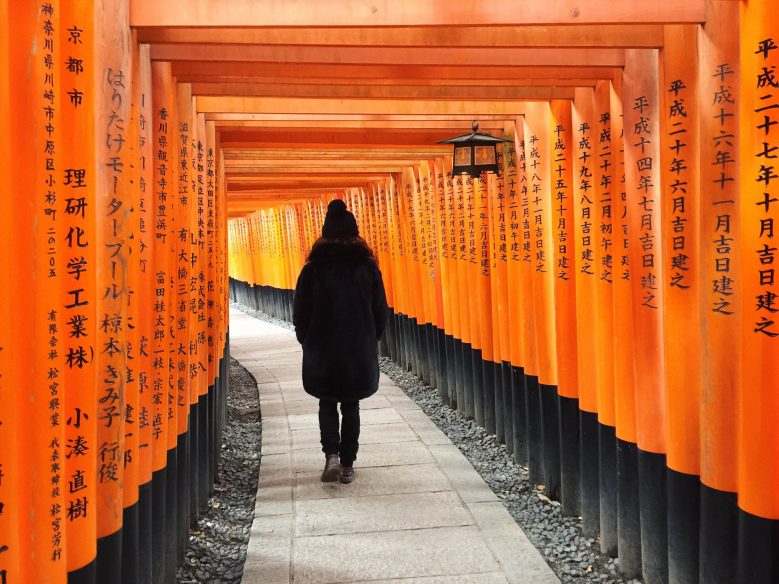
- Fushimi Inari Shrine in Kyoto (it’s popular for a reason)
- Playing the arcades in Tokyo’s Akihabara district, and going to an izakaya followed by karaoke in Shibuya.
- Waking up at dawn in a Buddhist temple on Mount Koya-San to hear the monks chanting.
- Soaking in a private onsen next to a bamboo forest at Mount View Hakone ryokan
- Eating all the amazing food, from cheap Japanese curries to huge feasts in ryokans, and restaurants where fresh tofu is made at the table.
- Drinking Japanese whiskey at The Sodoh in Kyoto, one of the best bars I’ve ever been to.
Some of the links in this post are affiliate links, which means I get a small commission if you buy something (at no extra cost to you). It’s one of the ways I keep this blog going. Thanks a million for your support. You can read more about my affiliate policy here.
Overview of our 10 days in Japan


Our itinerary covers Tokyo, Hakone, Shibu Onsen (to see the snow monkeys), Kyoto, Nara, Koya-san and Osaka. This provided a perfect mix of the best that Japan has to offer, from its fast-paced cities to its magnificent nature (including Mount Fuji) and captivating ancient temples. They are definitely some of the best places to visit in Japan.
Days 1-4: Tokyo (Stay at a Tokyo Airbnb)
Days 4-5: Hakone (Stay at Mount View Hakone)
Days 5-6: Shibu Onsen (Stay at Sakaeya)
Days 6-8: Kyoto (Stay at Kyoto Airbnb)
Days 8-9: Koya-San (Stay at Shojoshin-In)
Days 9-10: Osaka (Stay at Hostel 64 Osaka)
How to choose what to see in Japan in 10 days


We had a limited amount of time and money, so we wanted to try and fit in as much as possible into our Japan trip itinerary. This wasn’t a time for slow travel and it was more fast-paced than what we’re used to. But it was definitely worth it for all the things we saw, and it never felt rushed. We balanced out the busyness with moments of calm along the way.
Of course, it would have been nice to stretch the trip and spend a few days in each place to soak everything in some more, but for the time and money we had, our itinerary for Japan worked really well, and I highly recommend it for first-timers to Japan.
Should you base yourself in Tokyo and Kyoto?
Many 10-day itineraries suggest basing yourself in just Tokyo and Kyoto and doing day trips from there, but for me, some of the highlights of our time in Japan were the nights we spent elsewhere in Hakone, Shibu-Onsen and Koya-San.
I don’t mind changing accommodation (we pack light and I love experiencing different hotels). Plus it gives the chance to splash out on a couple of special one-night stays, perhaps in a ryokan or a temple (like we did), rather than extended stays somewhere cheaper. But if you prefer the idea of day trips and basing yourself in the two cities, that’s a good option too.
Both Shibu-Onsen and Koya-San aren’t convenient day trips, so you’d need to skip those if basing yourself in the cities. You could still visit Nara and Osaka from Kyoto, and Hakone from Tokyo. And other day trips to consider from Tokyo are Kamakura and Nikko. From Kyoto, you could visit Miyajima and Hiroshima.
Other places to consider visiting in Japan
Depending on your priorities, you might like to skip some things in our Japan itinerary and add extra time to some of the others. Places we missed, but you might consider visiting are:
- Kanazawa for art museums, Edo-era history, and one of Japan’s most beautiful gardens.
- Takayama for traditional crafts and sake breweries
- Hiroshima for the Memorial Park
- Miyajima for gorgeous views, forests and temples, including the floating shrine
- Nikko for ancient shrines, including the famous Toshogu Shrine
- Tsumago, a traditional village of wooden houses
- Kamakura for a bamboo forest, giant buddha and the Hase Dera temple
- More time in Tokyo to explore attractions like Disney Sea
- Or you could even tag on a trip to Okinawa (that’s my next dream!)
We’ve also written a storybook version of the Japan itinerary with lots of photos to inspire you. And besides this Japan blog, also have a look at our travel resources page for lots more money and time-saving tips.
Japan trip itinerary: Pre-travel essentials

When is the best time to go to Japan?
We went to Japan in December, but that was largely because we were going to a wedding in Korea just before. The weather was cold and dry, but often sunny, and we loved warming up in outdoor onsens amid the cool air (this experience alone makes me happy we went in winter!). Winter is also a good time for snow sports if you visit the mountains.
Far and away the most popular time to visit is April, which is cherry blossom season, and looks as spectacular as the hype suggests.
And Autumn (September – November) is good for the fall foliage.
The summer is hot and humid, and often rainy up until early July. That said, I’m keen to visit Okinawa in the summer and experience Japan beaches.
Is Japan as expensive as people say?
Regarding price, Japan wasn’t as expensive as we had imagined. It’s very pricey in comparison to south-east Asia, but the costs were comparable to London. For example, you could get a coffee for about £2.50 ($3.50), and an average dinner at a mid-range restaurant cost around £30 ($40) for two people without alcohol. At lunchtime, we spent as little as £6 ($10) each for a curry.
Our accommodation cost from £60-£150 ($80-$200) per night for two people, sometimes including breakfast and dinner. This was on a moderate budget where we sometimes splashed out but other times stayed in a hostel or Airbnb. We never went full luxury as the prices were sky-high. Details of all the places we stayed are included in the detailed Japan itinerary below.
How much does a 10-day trip to Japan cost?
To replicate our 10 day Japan trip, excluding flights, would cost around £2400 ($3100) for two people. That’s around £900 ($1200) for the accommodation; £500 ($650) for travel; and a budget of £100 ($150) per day for food and activities. You could save money by doing some self-catering or sticking to cheaper restaurants.
Where to stay in Japan

Our itinerary includes a range of Japan accommodation, including traditional ryokans, city Airbnb apartments, and a temple stay. We were particularly keen to experience a ryokan, which is something I’d classify as a “must” for any Japan trip.
The most we stayed in one place was three nights, and we stayed in four places for one night only. While this meant having to change accommodation quite often, we felt it was worth it for the places we got to see and experience.
It gave us the chance to really soak up the atmosphere in places like Koya-san, Hakone and Shibu Onsen, plus some of the most interesting places we stayed were outside of the city in the traditional ryokans and temple stays. As I mentioned before, if you’d prefer not to move so much, you could base yourself in Tokyo and Kyoto and take day trips from those cities.
Some quintessential Japanese accommodations we didn’t try were capsule hotels and love hotels, but both are included in our guide to the best hotels in Japan. And we’ve also written a handy guide to the best Tokyo Airbnbs.
Getting around Japan – why you need a Japan Rail Pass
We’ve added transport and accommodation info to each section of the itinerary. The days overlap for each place as we often spent the morning in one place before travelling on to the next.
One top tip if you’re traveling long distances is to get a Japan Rail Pass (a JR Pass). You have to order this before you enter Japan (there is no leeway on this) – they send you a ticket called an ‘exchange order’, which you then exchange for the pass once you’re in Japan. There was a trial in 2023 where you could buy the pass at a higher cost in the country, but they’re currently not continuing with that.
To work out if getting a pass is worth it, you can estimate out how many train journeys you’ll be taking and add up the prices using Hyperdia, which is a really useful Japanese website detailing all the transport timetables (it’s currently only showing historical data, but that’s still quite useful for average costs). We only saved about £40 by getting a rail pass, but some people save a lot more when they cover longer distances than we did. Another benefit of having a rail pass is that you don’t have to buy tickets for each individual train – you simply show your pass at the gate.
It’s important to note that the pass isn’t accepted on every single train in Japan – for example we couldn’t use it for the Hakone loop or for some of the private local train lines within Kyoto. There’s an option on Hyperdia where you can search for trains that are only included with the JR Pass.
The passes are available for 7, 14 or 21 days and you can get an ordinary pass or a green pass, which allows first-class travel. We went for the ordinary one, which cost ¥38,880 (£230) for seven days. The normal class was totally fine, so I don’t think it’s necessary to upgrade unless you have the money to spend, then why not? Also, we now know you can get a pass for less money by booking through this JR Rail Pass website. For example our pass would have cost around £201 with them.
Also remember to accurately time the day you activate your JR Pass so that you can make the most of it. Because we had a 10-day trip and only a 7-day pass, we activated it on day 4. This worked well as our first three days were in Tokyo where we could buy a subway ticket instead.
How is Japan for vegetarians?

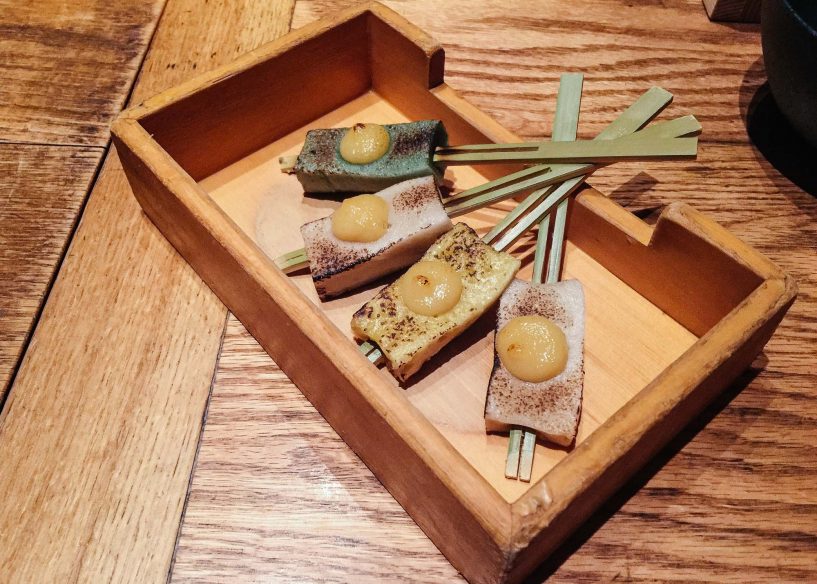
One of the most common questions we get is: Is Japan good for vegetarians? And the answer is kind of. We ate really well in Japan, and with a bit of effort were able to find great Japanese vegetarian options, but there were also times when we struggled.
Those times we struggled were the evenings when we decided to simply walk around a city and choose somewhere without any research. Unfortunately, I don’t like nori, which means our options were limited even further.
On one of those nights, we ended up eating pizza and the other night, we finally found an okonomiyaki only to find that the chef had covered it in fish flakes (this was despite us seeing him start to do this and reminding him we didn’t eat fish. He was adamant that fish flakes didn’t count!).
I would recommend doing a little bit of research before you set out each day so you know where to find the good veggie food. All of the restaurants recommended in this itinerary are vegetarian-friendly.
Staying in touch while in Japan – Pocket WiFi and SIMs
When travelling, I tend to use my Three Mobile Go Roam package, but as Japan isn’t a Go Roam destination, we instead relied on mobile wifi devices and a travel SIM card while there. These let you make phone calls and use the internet on your phone at local prices rather than incurring hefty roaming charges. You can choose one or the other, depending on what works best for you.
Pocket wi-fi
Japan has a surprising lack of wi-fi, plus you’re probably used to having access to the internet wherever you are, so a pocket wi-fi device will likely come in handy. These little devices can supply wi-fi to around 10-15 devices, so you’ll only need one per group. And they’re a must-have for looking up directions, making calls, checking schedules etc. That said, there is a part of me that loves the idea of going totally offline like the olden days of travel!
Lots of the Airbnbs/hotels we stayed at supplied pocket wifi devices, but it’s a good idea to buy/hire one yourself as then you’ll have access to the internet wherever you go/stay.
One recommended company is Sakura Mobile. It offers easy-to-use travel SIM cards and pocket wifi devices, which are preconfigured to work with any given country’s phones or computers (lots of local Japanese SIM cards don’t work on foreign devices). Choose the option that suits you best and order the card/device online.
You can pick them up at the airport/the company’s office in Shinjuku or have them delivered to your hotel (how convenient is that?!). Handily, the company offers full English language support. Order at least three days before your arrival. Order your SIM Card here. Order your pocket wifi here.
Our detailed Japan 10-day itinerary

Days 1-4: Tokyo
Tokyo is one of the most fascinating cities we’ve ever been to and the kind of place you could spend a lifetime getting to know. We had three nights there so tried to pack in as many Tokyo experiences as possible into that time.
We stayed in Shibuya, which was an ideal place to explore the city from. It’s one of Tokyo’s most iconic areas of the city and is filled with bars, malls, restaurants, karaoke bars, and a hell of a lot of neon. It’s also home to the world’s busiest intersection, which tells you a bit about how buzzing Shibuya can be. You can get a good view of this from above at the Keio Inokashira Line, or the Starbucks (although you need to buy something to take advantage of this). While in Shibuya, also check out the Hachiko dog statue, and the Shinto Meiji Shrine
We also explored Akihabara, which is the centre of the city’s otaku culture and home to lots of amusement arcades, anime hvens, and tech shops (go to Yodobashi Akiba for nine floors of tech!). This is also where you go if you want to experience a maid café, which we decided wasn’t our cup of tea.


Other areas we explored were:
- the shopping district of Ginza (where we bought A LOT of stationery in Itoya)
- Jimbocho, which is home to streets of incredible bookstores (a Tokyo highlight for us)
- the beautiful YoYogi Park in Harajuku (this area is also known for its fashion and Harajuku girls who dress in full traditional/Anime costumes on Sundays).
- Shinjuku, the crazy entertainment district where we went to the Robot Restaurant (definitely not everyone’s cup of tea, but it does show a certain side of Japan and is pretty fun in many ways, while enraging in others!). Update: The Robot Restaurant is currently closed, but is due to re-open at some point in 2024. Samurai Restaurant is currently open in the same location with an equally crazy looking show!
- Golden Gai, which is an area with rows of tiny little bars, perfect for an evening drink
- and Ebisu, an upmarket hipster area with lots of lovely boutiques and restaurants.


We tried to go to the Shinjuku Gyoen National Garden, which looked beautiful but was closed when we went there on a Monday. If you’re into fish, there’s the Tsukiji Fish Market, the largest fish market in the world (you could combine it with a sushi class on this tour).
And if you go during cherry blossom season, try Ueno Park and Sumida Park, which are both gorgeous cherry blossom spots in Tokyo (or you could join a tour of the blossom guided by a local enthusiast).
The Tokyo Skytree would also be a good place to visit for incredible views of the city (it’s one of the tallest buildings in the world). You can even walk across a glass floor up there. Buy a skip-the-line ticket here to save time. We didn’t do the Skytree and instead opted for cocktails at the Mandarin Oriental one evening instead, which also had epic views.
Accommodation in Tokyo
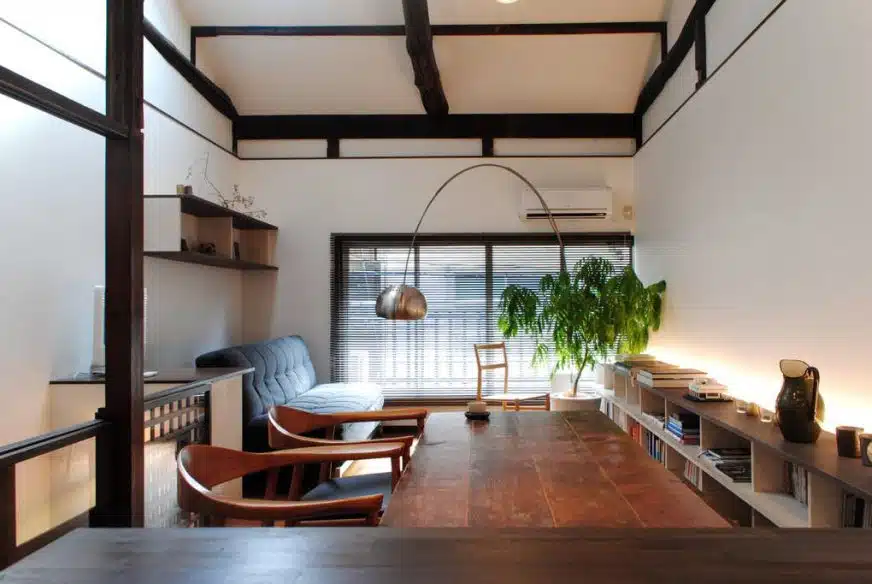

We stayed in an Airbnb apartment in Shibuya. The exact one we stayed in is no longer available, but we’ve made a list of the 19 best Tokyo Airbnbs, including options for all budgets and styles.
Ours cost ¥8,600 (£51/$65) per night, and included a mobile wi-fi device, which was very useful (this seems quite standard in Japanese Airbnbs).
Remember to sign up to Airbnb with this link to get £25 off your first booking.
Food and drink in Tokyo

We ate really well in Tokyo and it was easy as vegetarians. One top tip if you’re looking for a budget eat is to look for one of the many curry shops, which nearly always have a vegetarian option. We tried one in Shinjuku (モンスナック) and another in Jimbocho (Bondi) – both were delicious.
Other highlights were a tofu restaurant in Shibuya called Tofu Ryori Sorano (where they make fresh tofu at your table) and 板蕎麦 香り家, a soba restaurant in Ebisu.
We also spent one evening in an izakaya, which is a traditional Japanese bar serving tapas-style dishes – there are tons of these in Shibuya – just wander around and pick your favourite.
I’ve also heard good things about:
- Bon, a veggie restaurant specialising in fucha ryori, a version of shojin ryori (veggie buddhist cuisine)
- T’s Tantan, a vegan ramen restaurant in Tokyo station
- veggie restaurant Milk Land near Shinjuku Station
- tempura at Tsunahachi
- and okonomiyaki at Zen.
For drinks, one evening we went to the Mandarin Oriental. It’s expensive but worth if for the incredible view across the city. And we also did karaoke in Shibuya, which was surprisingly brilliant (you pay per hour for a booth and the menu is in English as well as Japanese).
A top coffee recommendation is Café de l’Ambre in Ginza, which is a charming traditional coffee shop with the tiniest milk jug you ever did see! Definitely make a stop here if you’re in the area.
A good way to experience Japanese cuisine in Tokyo would be to join a food tour like this half-day local food tour, or this 3-hour tour through the fish market.
Getting to and around Tokyo
We bought a prepaid IC card to get around Tokyo – these are available in the subway stations and you simply add credit like you do with an Oyster card in London. There are two types, Pasmo or Sucia, and we used the Suica one. They are valid on both the subway and JR lines.
However, if you’re travelling a lot in one day, it might be cheaper to get a one-day pass, which starts at about ¥600. The problem with these is that they’re only valid on certain lines.
There’s a lot of useful info about this in this post. We didn’t use our JR pass because we activated it on day four when we started taking longer train journeys.
Day 4-5: Hakone
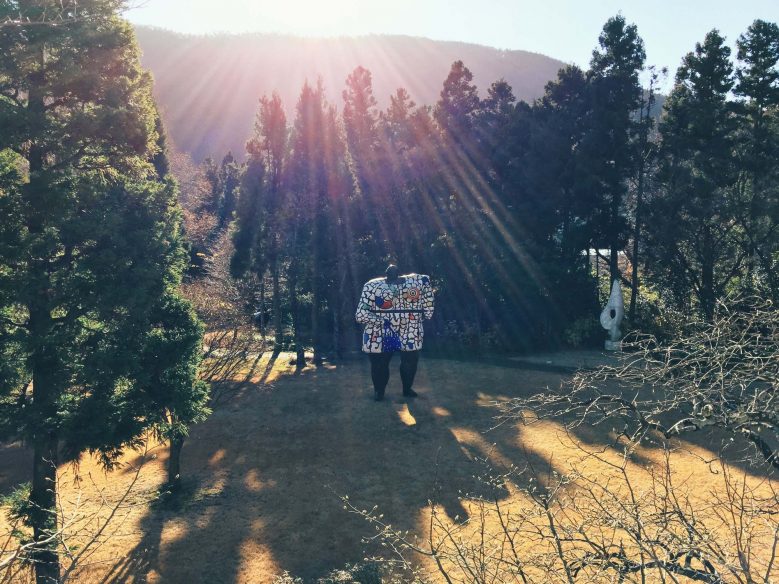

Our prime motivation for going to Hakone was to catch a glimpse of Mount Fuji – a definite Japan highlight. It was a gamble as the mountain spends a lot of time hidden behind clouds, but we were willing to risk it, plus we also liked the idea of spending some time in Japan’s countryside.
It was definitely worth it as we did get to see Mount Fuji, which was a truly spectacular sight. And even without that, I think the trip would have been worth it for the magnificence of all the scenery and the peaceful break away from the city.
We did the Hakone Loop (see transport section below) and mostly concentrated on enjoying the gorgeous sights rather than doing lots of activities. We also went to the Hakone Open Air Museum, which is a world-class sculpture park and gallery featuring works by artists such as Picasso and Henry Moore. Sadly, the sculpture I wanted to see the most – the Woods of Net– was closed due to safety problems, but the other sculptures made up for that.

You could go to Hakone as a day trip from Tokyo on a tour like this one, which is a nine-hour round trip. Or if you want to include a bullet train too, you could do this one instead.
Accommodation in Hakone

We stayed at a ryokan called Mount View Hakone, which was our first ryokan experience. Our room was exactly as I imagined a ryokan to be – peaceful, sparse and calming.
As with all ryokans, there were public onsens available for guests (one for men and one for women), but one of the highlights of Mount View Hakone was the private onsen that you could hire for 45 minutes for 2,000 yen. This meant that Steve and I could go in there together. The onsen was outside and looked out onto a beautiful bamboo forest, illuminated by green light. For me, being in warm water in a cold climate is one of the most refreshing experiences I can think of – it took me back to the saunas of Finland.
Another highlight at Mount View Hakone was the food. It was our first multi-dish Japanese meal and we loved the adventure of it, especially safe in the knowledge that everything was vegetarian. The food was an eclectic mixture of Japanese and Western food, including ramen, potato wedges, and vegetables that we grilled ourselves at the table. It sounds odd, but it worked! Meals are served in a large dining room along with the other guests.
The hotel is right next to the Little Prince Museum.
Rooms cost from £100 per night, which includes breakfast and dinner. Book your stay now.
Food in Hakone

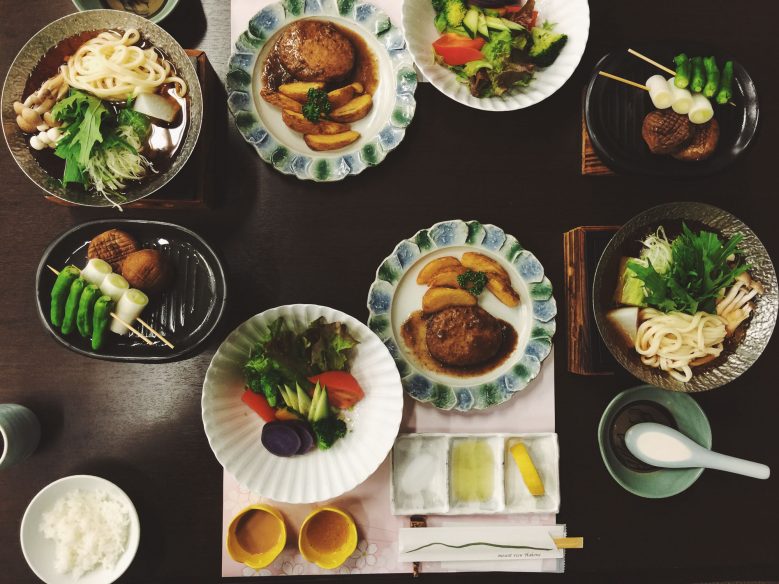
The main food we ate in Hakone was at the ryokan. But on day one, we had lunch at a little restaurant near the pirate boat stop. The vegetarian choice was slim but we ate some tempura and soba noodles.
There is also a really cute coffee shop inside an airstream caravan at the top of the ropeway. We enjoyed some delicious hot chocolate and a cake up there.
Getting to and around Hakone
Hakone is a popular day/weekend trip from Tokyo and it only takes about an hour to get there on the shinkansen bullet train. The classic thing to do there is the ‘Hakone Loop’, a journey around the area that takes you on five types of transport: bus, train, pirate boat(!), ropeway and cable car. If you leave early enough, you can do the whole loop in a day trip from Tokyo, but we split the journey into two days.
You buy a pass called the Hakone Free Pass, which allows you to go on all the different transports in the loop over 2 or 3 days, depending which one you buy. The 2-day pass costs ¥4000, or ¥5,140 including the train from Shinjuku.
Our hotel was about ¾ of the way around the loop so we went in an anti-clockwise direction and did the first ¾ on day one, and the remaining quarter the next morning. This worked well as it meant we could be finished in Hakone by about 11am and make the most of our next destination. However, our journey around Hakone was definitely the most rushed part of our Japan trip, and I wish we could have added an extra day or at least a few more hours.
One key thing to bear in mind is that the ropeway sometimes closes early. On the day we went, it closed at about 3pm, just as we arrived. They wouldn’t let us on, which meant we missed that part of the trip and had to take a bus up the mountain instead.
This was a big disappointment as it’s from the ropeway that you get the best views of Mount Fuji. Had we known this before, we would simply have left Tokyo earlier in the morning. Don’t make the same mistake!
Day 5-6: Shibu Onsen and the Snow Monkeys

Shibu Onsen was not a convenient stop on our Japan itinerary, and it would have made much more sense to go straight to Kyoto on the high-speed shinkansen from Tokyo, but we were fixated on going there so we decided to make it work (and I’m pleased we did!). Our main motivation was to see the snow monkeys, which were made famous in the movie, Baraka.
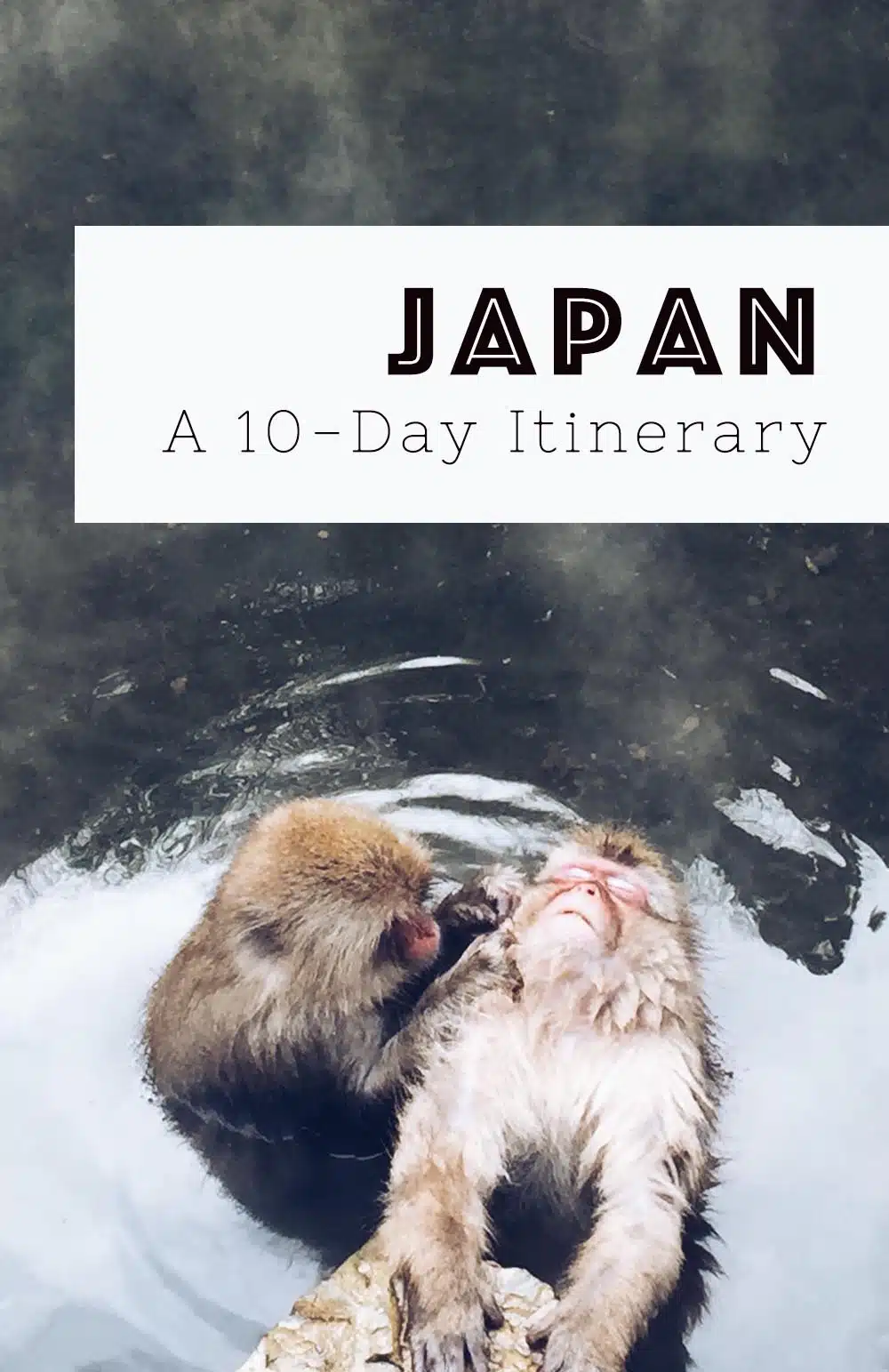
These monkeys have overtaken an outdoor onsen in the mountains of Nagano and spend their days taking respite from the cold and bathing in the warm water while grooming each other. It’s like a little monkey spa.
Despite our past run-ins with monkeys, we were desperate to see these creatures for ourselves and, for us, it was worth it. The monkeys were much more peaceful than the ones we encountered in Bali (I think because people weren’t feeding them) and it was fascinating seeing how human-like their behaviour was in the onsen.


One thing to bear in mind is that the setting of the monkey spa isn’t as idyllic as it looks in some photos. The immediate area surrounding the pools is quite dishevelled and resembles a building site, but the 30-minute walk to the snow monkey area is beautiful, through a deep pine forest.
I had heard that the walk can be treacherous, but it felt very safe to me (and I am terrified of heights and cliffs). That said, it was only snowing lightly when we went, and in icy conditions, the path would probably be dangerous as, despite being wide, it does have a big drop on one side.
It is, of course, very touristy, so don’t expect to be the only ones there! All that said, we still enjoyed it and were pleased we made the trip.


Aside from the snow monkey park, our trip to the region was also made worth it for our time in Shibu Onsen, a little spa-town about 15 minutes away from the snow monkey park. There are nine onsens in the town and it’s said to bring good luck if you visit every one. Only one of the onsens is open to the public, but you are given a key to the other eight if you stay in one of the ryokans in Shibu Onsen, which we did.
Steve and I had an amazing evening, walking around the town in the snow, dressed in our robes and wooden clogs, visiting all of the nine onsens. They are split into male and female rooms and we both encountered plenty of villagers taking their evening bath and giggling at us as we struggled with the high temperatures of the baths.
Each onsen has a stamp that you can print on a towel provided by your ryokan. Traditionally, you’re supposed to offer this towel to the temple in Shibu Onsen, but we couldn’t resist keeping ours as a souvenir!
Snow monkey tours
If you don’t want to stay in Shibu Onsen, you could do a day trip to the snow monkeys from Nagano station. Get Your Guide offer this one that also includes a visit to a temple and a sake tasting, and this one that runs in spring and also includes a visit to the cherry blossom.
Accommodation in Shibu Onsen
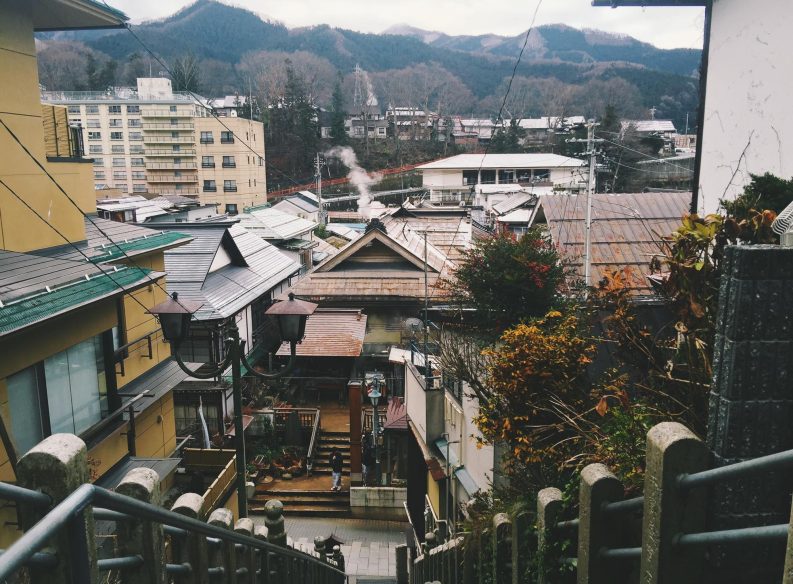

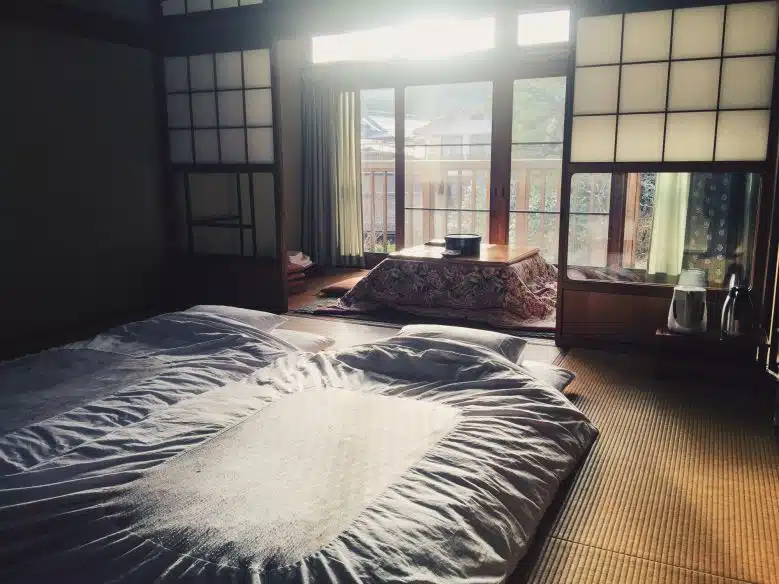
We stayed in a traditional ryokan in Shibu Onsen called Sakaeya. We opted for one of the newer rooms, which came with a kotatsu, which is essentially a table with a blanket table cloth and a heater underneath – it’s wonderfully cosy and perfect for the cold weather. We also had a balcony that looked out over the town.
Food at Sakaeya was served in a private dining room, just for Steve and I, which felt extra special. The food here was of a higher quality than at Mount View Hakone and entirely Japanese. We tried a lot of things we’d never seen before and loved the variety of flavours. We told the hotel we were vegetarian beforehand, and they were happy to accommodate us. The only thing we couldn’t stomach was a raw egg that came with our breakfast!
Food in Shibu Onsen

We only ate at our hotel but there are a few little restaurants in Shibu Onsen too.
Getting to and around to Shibu Onsen
As we said before, Shibu Onsen was an out-of-the-way stop on our trip in Japan. To get there from Hakone, we had to take a train back to Tokyo from Odawara station (80 minutes); a shinkansen from Tokyo to Nagano (100 minutes); a train from Nagano to Yudanka (50 minutes); and a bus from Yudanka to Shibu Onsen (10 minutes). It took about four hours in total. I know it sounds like a lot, but looking back on it now, the memories of Shibu Onsen were well worth the effort.
Days 6-8: Kyoto

If Tokyo is Japan’s futuristic centre, Kyoto is its ancient heart. The city is filled with thousands of temples, shrines and gardens and, if you’re lucky, you’ll see some geisha walking to their secret rendezvous through the atmospheric cobbled streets.
We only had two nights there and one full-day so we had to heavily prioritise what we wanted to see. You could easily spend weeks in Kyoto, exploring all the sights, and it’s a must for any Japan itinerary.
The things we chose to see were:
- Kinkaku-ji, also known as the Golden Pavillion
- Kiyomizu-dera, a temple with a balcony that overlooks the city and is the perfect place for sunset
- the historic Higashiyama neighbourhood, filled with temples and shrines.
- Gion, the geisha district
- Nishiki Market where you can try all sorts of Japanese food at all its different food stalls
- and Fushimi Inari Shrine, a place you’ve likely seen photos of with its iconic paths lined with red tori gates.


If you want to join a tour, you can see all of these and more on a private guided tour of Kyoto.
We stayed in Higashiyama, which is filled with charming wooden buildings, picturesque streets and many shrines and temples. Sannenzaka and Ninensaka are two of the most beautiful streets.
Higashiyama is next to Gion, the famous geisha district and home to the Yasaka Shrine, which we strolled through on our first night. It’s not guaranteed that you’ll see any geisha, but we did see a few throughout our trip.
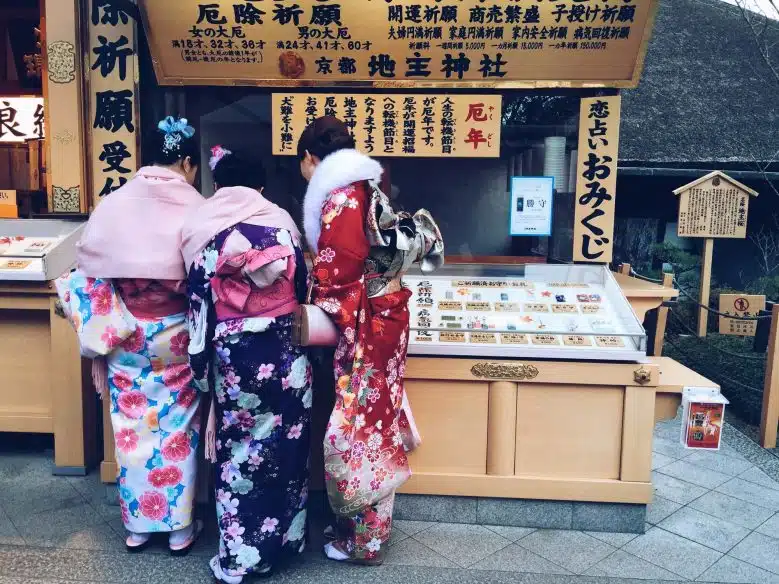
We didn’t take photos of the geisha as this is frowned upon in the city. We did, however, take photos of the many Japanese tourists who come to Kyoto on a historical pilgrimage and dress up in traditional costumes for the day. There are lot of shops offering this service, and as such a lot of colourfully-dressed people, around the Kiyomizu-dera temple.
If you’re keen to see geisha, it’d be worth doing this guided night walk of Gion as the guide is more likely to know where to spot them.
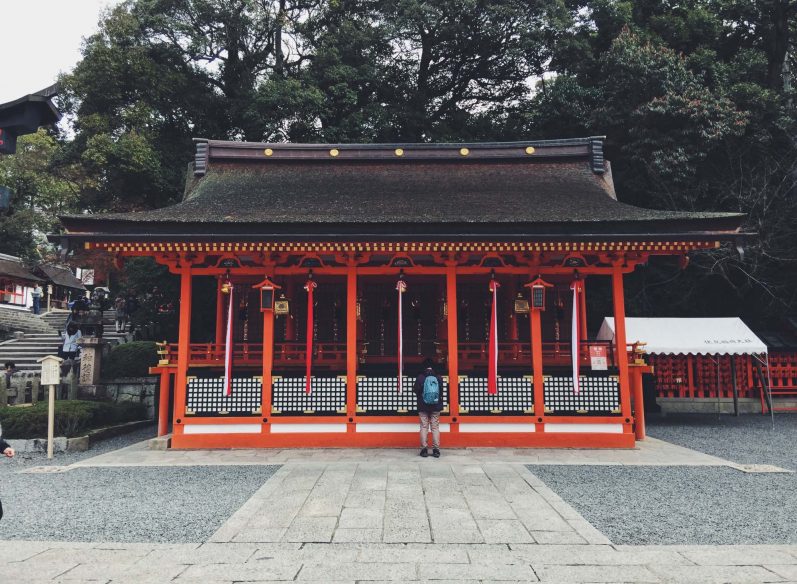

Another good spot in Kyoto was the Nishiki Market – it’d be fun to combine a trip there with a cooking lesson like this one.
One thing we wished we could have seen in Kyoto bit didn’t have time to visit is the bamboo forest. Next time!
Although we loved Kyoto, we were surprised by how seedy it sometimes felt at night. At around 7pm in Gion, hostesses fill the streets, making their way to hostess bars. This was a recurring element of our time in Japan – although futuristic in many senses, its attitude towards women – from the culture of hostess bars to the maid cafes in Tokyo, and the tendency to infantilise women – sometimes felt uncomfortable.
Accommodation in Kyoto
We stayed in a studio apartment in Kyoto that we found through Booking.com. It was inside a building filled with apartments set up for business travellers with a small kitchen, washing machine and bathroom. It wasn’t anything special, but it was clean, well located and reasonably priced for Kyoto.
As with our apartment in Tokyo, we were simply given a code to enter and didn’t meet the owners at all. We were also given a mobile wi-fi device. This particular apartment is no longer available, but there are plenty more like it available on Booking.com. A studio apartment costs around 11,000 Yen per night (£66/$85).
As always, I also recommend checking out Airbnb.
And here’s a post by Broke Backpacker with more ideas for where to stay in Kyoto.
Food in Kyoto


Kyoto is famous for its kaiseki-ryori cuisine, which is unfortunately not vegetarian-friendly. However, you can also find lots of shojin-ryori food, which is traditional Buddhist temple food and entirely vegetarian.
Because we’d already tried some in Tokyo and would be eating more in Koyasan, we didn’t try any in Kyoto, but we heard good things about Shigetsu, a Michelin-recommended restaurant in the Tenruji temple in the Arashiyama neighbourhood (also home to the bamboo forest).
Places we can recommend in Kyoto include: おかる curry in Gion; deserts at Nana’s Green Tea; and the street food snacks around Fushimi Inari Shrine.
There was a vegetarian modern izakaya called Onikai that we would have loved to try, but it was fully booked during our stay.
We also ate at a tiny little vegetarian restaurant called Hale in the Nishiki Market, which was atmospheric and cosy but the tofu-skin dish was a little slimy for our taste. The menu changes daily so I’d still recommend going there. And don’t miss Floresta Donuts for ridiculously cute and tasty creations.
And we had good pizza one night at Pizza Salvatore, which was a nice little break from all the Japanese food. Sometimes it has to be done!
We found an amazing, cosy cocktail bar in Kyoto called The Sodoh, which is next to a fancy Italian restaurant of the same name. It was a great place to try some Japanese whiskey and they made an excellent Old Fashioned. It was our perfect type of bar – intimate, quiet and serving amazing drinks. I still dream of that place!
Kyoto also has some good food tours and cooking classes, including: a Nishiki market tour; Japanese Izakaya cooking class; and a Japanese bento cooking class.
Simon and Erin at Never Ending Voyage have a good guide to vegetarian restaurants in Kyoto.
Getting to and around Kyoto
We got to Kyoto from Shibu Onsen by following the same route back to Nagano and then getting a train from there to Kanazawa (90 minutes) and another train from there to Kyoto (130 minutes). A train directly from Tokyo to Kyoto takes 140 minutes.
Once in Kyoto, our JR pass worked on some trains, but for the two subway lines – Tozai and Karasuma – you need a different ticket. If you buy a ticket for one, it can’t be used on the other, unless you buy a day pass. The bus network is also good and useful for getting to places such as the Kinkaku-ji Temple.
Passes for both the bus and subway cost ¥1,200 for one day and ¥2,000 for two days.
Days 8-9: Nara and Kōya-san

Nara and Kyosan were another two stops on our trip to Japan that required a bit of effort and planning to get to, but they were at the top of our list of “must sees” so we managed to fit them into our Japan itinerary – and we’re really pleased we did.
Nara was Japan’s first capital and is home to lots of temples and a UNESCO World Heritage Site. We had our eyes set on one temple in particular – Tōdai-ji, which houses Daibutsu, a giant statue of Buddha. Because we were short on time, we only stopped in Nara for a couple of hours en route to Kōya-san and headed straight to Tōdai-ji.


The temple is in a beautiful park filled with tame deer, which unfortunately seem to have become reliant on the tourists for food. You could also try this walking tour of Nara, which gives a great overview of the city, including street food, temples and machiya houses.
From Nara, we made our way to Kōya-san, the centre of Shingon Buddhism. It’s a small town situated on the sacred Mount Koya and is filled with more than 100 temples, many of which offer lodging for the night. It’s a magical place to spend some time in the company of monks while exploring the sacred sites.
A highlight is the atmospheric graveyard, situated in a huge forest lit by lanterns. The graveyard also houses Oku-no-in, the mausoleum of Kukai who started Shingon Buddhism.


We arrived in Kōya-san in the late afternoon and left at midday so didn’t have a huge amount of time to explore, but we loved soaking in the atmosphere, walking through the cemetery, and seeing some of the temples, including Garan, the town’s central temple complex.
Accommodation in Koya-san
We stayed at Shojoshin-In temple which was a beautiful experience, giving us an insight into the life of the Buddhist monks. The temples in Kōya-san vary in quality and Shojoshin-In was one of the most beautiful we saw. As such, it was a little more expensive than some of the others, but for us, it was worth it.
The temple is also right next to the cemetery, which is convenient for an evening walk. Our room was clean, warm and comfortable with a balcony looking onto the mountain.
Dinner and breakfast were included and everything was vegetarian as the temples only serve shojin-ryori (Buddhist vegetarian) food.
A highlight was the early-morning service where we woke up around 5:30am to listen to the monks chanting.
Food in Koya-san
In Kōya-san Kōya-san we ate at our temple lodging (detailed above), and in Nara we grabbed a quick snack at the Mos Burger in the train station, which luckily, and surprisingly, had a veggie option.
Getting to and around Koya-san

There are trains to Nara from Kyoto that take round an hour. To get to Tōdai-ji from the station, we took a taxi as we were short on time, but there are also regular buses.
We knew we would be passing back through Nara on our return from Kōya-san so we left most of our luggage in the train station lockers so we wouldn’t have to carry so much to Kōya-san (we bought a lot of stuff in Japan!).
We got a train from Nara to Hashimoto (90 minutes) and a train from there to Gokurakubashi, which is a beautiful scenic journey through the mountain valley. From there, you get a little funicular train up to Kōya-san, which is a lovely ride up the side of the mountain. There are three bus networks in the town and you can pick up a map at the bus station at the top of the funicular. We got a bus straight to the temple we were staying at.
If you just want to see Nara, you could do that as a day-trip tour from Kyoto or Osaka, which is a nine-hour round trip including sightseeing.
Days 9-10: Osaka
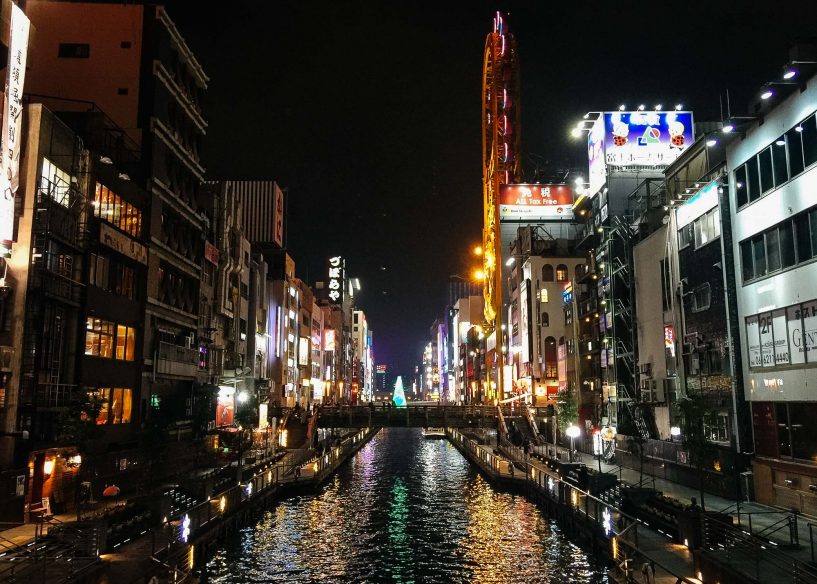
We were only in Osaka for an afternoon/evening so we didn’t get to see much of Japan’s third largest city, but it’s a worthwhile stop on a Japan itinerary. We mostly spent our time doing some last-minute shopping in the Umeda area. We also went to the iconic Dotonbori Street, a hubbub of shopping, bars and neon galore.
We were specifically looking for pottery and Japan’s famed flavoured Kit Kats. Unfortunately the shop that used to sell all the flavours in Namba station no longer stocks Kit Kats so it was a bit of a wild goose chase. In the end, we just got some multipacks in a local supermarket.
We also went to the Namba area in the evening, which was bustling and neon-filled like Tokyo. We did one last night of karaoke there.
Accommodation in Osaka

We stayed in a private room in a great retro-style hostel called Hostel 64 Osaka. The staff are really friendly and the hostel has put together useful guides to Osaka, including where to find the best food and shops. It was a five-minute walk from Shinsaibashi Station.
Food in Osaka
We had curry for lunch at a little place called Camp, which was at the bottom of a department store in Umeda. For dinner, we tried to find an okonomiyaki, but it was served with fish flakes despite our protests (see vegetarian section above)! Let us know if you ever find a purely vegetarian one!
To go deeper into the food culture in Osaka, you could do this nighttime food walk or this street food hopping tour.
Getting to and around Osaka

From Koya-san, we took the same route back to Nara and got a train from there to Shinimamiya (37 minutes) and from there into Osaka (15 minutes).
Osaka has a good subway system made up of eight lines. We were only there for a short amount of time so just bought single tickets for our journeys, but you can also buy an IC card like in Tokyo. We got to the airport via a train from Namba, which took about 35 minutes.
Top travel tips for Japan
The best way to save money travelling around Japan is to get a Japan Rail Pass. You can buy yours here.
Don’t forget your travel insurance! We recommend True Traveller who offer reliable, comprehensive cover, including medical, evacuation, baggage and a range of adventure sports and activities. You can buy True Traveller insurance even when you’ve left home, which is unusual for travel insurance companies.
I’ve written another post with a guide to the most unique and best hotels in Japan. We booked our accommodation through Airbnb and Booking.com.
I travelled with the Samsonite Spark suitcase and a small Case Logic backpack, which had enough room for everything I needed. Steve used the same suitcase and a ThinkTank Shapeshifter Backpack for all his camera equipment.
We’ve also written a storybook version of this itinerary with lots more photos from the trip.
If you decide to hire a car, we recommend Discover Cars. They always seem to have the best deals.
And check out more of our detailed itinerary posts here, including a one-month California road trip itinerary; Florence to the Amalfi Coast road trip; and 5 days in Iceland.
Save time and money on your next trip
See our travel resources page for all our best travel tips, including how to save money with the best cards, what insurance to choose, and all our favourite tools and tricks.
