
Last updated on April 16, 2026
Your complete guide to creating a magical, stress-free Lapland trip with kids.
If Lapland is on your family travel wish list, I can confirm it’s every bit as magical as you imagine. Frozen forests, reindeer trotting through the snow, cosy cabins lit by twinkling lights, and the real-life Santa waiting to greet wide-eyed little ones. It’s pure core memory material.
But as enchanting as it is, planning a Lapland holiday can be overwhelming. There’s a lot of pressure to get it right, and many decisions to be made: where to stay, which activities to book, what the weather will be like, and how to keep costs in check without losing the magic.
This guide breaks it all down into simple steps – the when, where and how of planning a family trip to Lapland, and the tips I wish I’d known before our own visit. It’s written with families in mind, but it works just as well for anyone planning a winter trip, with or without kids. It links through to my other detailed posts on specific parts of planning your trip, like costs, itineraries, packing lists and more.
Read all our Lapland guides
We have a Lapland planning hub, or you can see all the individual posts here…
Lapland planning tips: How to plan a family trip to Lapland | Four-day Lapland itineraries | Things to do in Lapland with kids | What to pack for Lapland | Northern Lights tips for Lapland | How much does a trip to Lapland cost? | Special places to stay in Lapland
Lapland Santa tips: How to meet Santa in Lapland | Guide to Santa Claus Village, Lapland | Northern Lights Villages’ Searching for Santa review
When to go to Lapland


The best time to visit Lapland depends not just on snow and activities, but also on light. In winter, daylight is limited and gets shorter the farther north you travel. There’s even a period called polar night when the sun doesn’t rise at all. This only lasts a few days in Rovaniemi, but for around a month in Saariselkä. But this doesn’t mean complete darkness – you still get long periods of twilight.
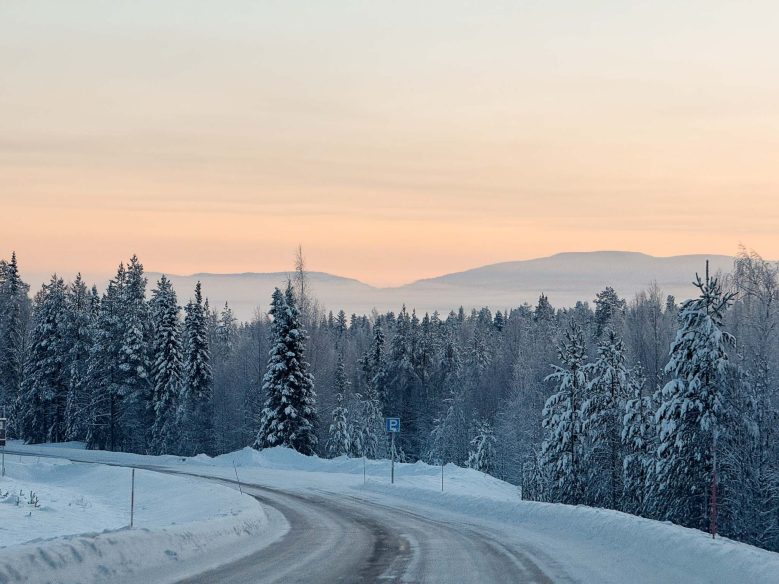
While it can sound daunting, these low-light conditions are part of what gives Lapland its unique atmosphere, and winter activities are timed to make the most of the available light. If you get a clear day, the pastel skies are stunning.
The other three key things to think about are snow, Christmas and the northern lights.
Here’s how the seasons break down…
Late November – New Year: peak Santa magic
Late November to mid December is when Lapland begins to feel properly festive, with fairy lights, early darkness and the build-up to Christmas creating a strong sense of magic. Daylight is limited, but there’s always enough soft twilight for daytime activities, and the long evenings add to the atmosphere.
Thick snow is normally in place by mid December, although conditions can vary year to year (for example, snow arrived to Rovaniemi in late November in 2025, but not until mid December in 2024). You have a better chance of snow the further north you go.
This is also the busiest and most expensive time to visit, with accommodation and popular activities booking up far in advance.
January – February: the deepest winter
January and February bring true Arctic winter to Lapland. Temperatures can be extreme and daylight is very short. In the far north, the sun doesn’t rise at all in early January, but snow conditions are excellent. It’s one of the best times for husky safaris, snowmobiling and Northern Lights spotting (there’s less falling snow so the skies tend to be less cloudy). It’s also much quieter than December and prices tend to drop too. It’s a better choice than November/early December if you want guaranteed snow.
March – early April: lighter days and gentler weather
March and early April are a favourite for many families, thanks to noticeably longer days and slightly milder temperatures. Snow is still reliable in most areas, making it a great time for skiing, snow play and exploring, while evenings are often clear enough for aurora sightings. The further into April you get, the more risky it becomes in terms of snow – I’d stick to March to be safe. Our first trip to Lapland was in March and you can see photos from that trip in my Lapland itinerary post.
May – November
From May to November, Lapland is a completely different vibe, swapping snow and winter magic for long days and green forests. This is summer and autumn in the Arctic, with hiking, berry picking, canoeing and wildlife spotting replacing huskies and sleigh rides. In midsummer, the Midnight Sun means it barely gets dark at all.
If you’re dreaming of snow, Santa experiences or winter activities, this isn’t the time to go. But if you’re curious about Lapland beyond Christmas – especially for autumn colours, hiking or a calmer, more affordable trip – it can be a lovely alternative.
How to choose the right base in Lapland


Lapland isn’t one single place – it’s a vast region spanning Finland, Sweden, Norway and Russia. For the purposes of this post, I’m focusing on Finnish Lapland, which is what most people mean when they talk about a Lapland holiday.
Even within Finland, Lapland covers a huge area, stretching from Rovaniemi in the south all the way north to Ivalo and beyond. Where you base yourself can make a big difference to the feel of your trip.
Most people see northern Lapland as the place to go for a more traditional, wilderness-led Lapland experience, but there are also great options further south. The further north you go, the better your chance of thick snow early in the season, and the better your chance of seeing the Northern Lights.
Here are the most popular areas in Finnish Lapland for families.
Rovaniemi
Often called the “capital” of Lapland, Rovaniemi is the official home of Santa Claus and the location of Santa Claus Village, where Santa can be visited year-round.
As a city, it has the widest choice of activities, tours and places to stay, along with plenty of cafés, restaurants and the best transport links in the region. It’s usually the most budget-friendly base for families.
Rovaniemi works well if you want a short, high-impact Lapland trip without much travelling, but it does feel busier and more commercial than other areas. To experience the quieter, wilder side of Lapland, you’ll need to head beyond the city. It only takes about 20 minutes to get somewhere that feels much more wild, but those destinations normally require a car (unless they’re a resort/hotel that offers transfers).
Levi
A lively ski resort town that combines winter adventure with a polished, family-friendly feel. Levi is best known for skiing, but it also has a strong line-up of Lapland activities, including husky safaris, reindeer farms, snowmobiling and Santa experiences.
It’s a great choice if you want a bit more buzz than the far north, with good restaurants, easy logistics and plenty to do within a compact area. Prices tend to be higher than in Rovaniemi, especially in peak season. But there are more hotel options across different budgets than you’ll find in Saariselkä.
Saariselkä
A quieter, more wilderness-focused option in northern Lapland, with a strong reputation for Northern Lights viewing. Saariselkä feels calmer and more spread out, surrounded by national park landscapes and wide-open space.
It’s particularly known for glass igloos and aurora cabins, and suits families who want a slower pace, fewer crowds and a more “authentic” Arctic feel. There’s less nightlife and fewer cafés than Levi or Rovaniemi, but the scenery and atmosphere are the draw, and the village is very cute.
Pyhä
Pyhä is another quieter, more nature-led Lapland region. This area is ideal if you’re looking for a more authentic, wilderness-focused Lapland experience, with snowy forests, independent reindeer and husky farms, strong Northern Lights potential and far fewer crowds than Rovaniemi. It also has a good ski resort.
Pyhä is often paired with neighbouring Luosto and referred to as Pyhä-Luosto. The region is around 1.5 hours from Rovaniemi, and a good option if you’re happy to rent a car. We’ve been to this region twice now and can vouch for it being beautiful. As well as luxury resorts, there are also some good budget/mid-range hotels around the ski resorts.
Should you book Lapland as a package or DIY?


Many people book their trip to Lapland as a package deal, typically including accommodation, meals and activities – and some with flights too. These packages take the stress out of planning, and can save you money, especially if you’re looking for a luxury experience or have your heart set on a specific hotel. For example, booking a package with one of the Northern Lights Villages can work out around 20% cheaper overall than arranging accommodation, meals and activities separately. I go into this in more detail in my post on how much a trip to Lapland costs.
That said, the most budget-friendly way to do Lapland is usually DIY. Booking flights independently, staying in simple cabins or apartments, self-catering some meals and choosing just one or two key activities gives you far more control over costs. You’re not paying for bundled experiences you might not need, and you can prioritise what matters most to you – whether that’s huskies, snow play or a single special Santa visit. This approach takes more planning, but it’s the best way to keep a Lapland trip affordable.
A package can also feel generic if you prefer more characterful places. A lot depends on the provider. I’ve heard good things about the Northern Lights Villages, but far more mixed reviews of some of the big-name third-party package operators.
Where to stay: hotels, cabins and igloos


Where you stay has a big impact on how your Lapland trip feels – from cute forest cabins to luxury resorts and city Airbnbs. As well as budget, it’s worth thinking about logistics: transport, activities and how much flexibility you want.
Some great-value cabin stays are only accessible by car, so you need to be comfortable driving in winter conditions to stay at them. On the other hand, many resorts run activities on site or include transfers, which makes things simpler. If you base yourself in Rovaniemi, most attractions are walkable or reachable by public transport.
Finally, it’s worth thinking about the aurora too: if you stay somewhere with lots of light pollution, you’ll likely need to travel somewhere to hunt for them. However, if you stay somewhere remote, you can often see them from your accommodation – worth bearing in mind if the aurora is a priority.
Broadly speaking, these are the main options for accommodation in Lapland.
- Aurora cabins / glass igloos – the iconic Lapland stay, designed for watching the Northern Lights from bed. They’re warm, snug and undeniably special, but they come at a premium and sightings are never guaranteed, so they often work best as a one-night splurge rather than a full stay.
- Forest cabins and lodges – a brilliant option for families. These give you space to spread out, a more authentic wilderness feel, and often your own sauna or fireplace. They’re also usually better value than igloos, especially if you’re staying for several nights. You can find lodges like this as part of small, family-run resorts (Korvala is my favourite), or as standalone holiday rentals on Airbnb or Booking.com.
- Luxury Arctic resorts – think polished design, lakeside saunas, excellent food and activities run on site. These work well if you want everything taken care of in one place, and can be particularly good value when booked as part of a package. Some even have glass-roof cabins. We love Sunday Morning Resort in Pyhä and Silver Birch near Rovaniemi.
- Snow hotels and ice rooms – a true bucket-list experience, but usually best for a single night. Most people combine them with a warmer base elsewhere, as sleeping on ice is more about the novelty than comfort.
- Hotels – straightforward, often good-value bases, especially in larger hubs like Rovaniemi. Comfortable and convenient, with easy access to restaurants, shops and transport, but generally less atmospheric than cabins or wilderness stays.
- Apartments / aparthotels – ideal for families who want more space and a kitchen. A flexible, budget-friendly option for self-catering, particularly on shorter trips or in peak season.
To help you narrow it down, I’m putting together a guide to the best places to stay in Lapland, covering everything from special splurge stays to great-value family bases and beautifully designed hideaways. In the meantime, see our Lapland itinerary for details of where we stayed.
What activities to book (and when)


The activities you choose in Lapland have a big impact on the overall cost of your trip. For example, you can meet Santa for free at Santa Claus Village, or opt for a more bespoke forest experience that costs upwards of €500 for a family of four. Husky safaris and snowmobile tours are also big-ticket items, so it’s worth being selective. I’ve written a full guide to the best things to do in Lapland, along with a breakdown of how much a Lapland trip really costs, which can help you decide what to prioritise.
Once you’ve decided what matters most, timing is the next key consideration. Some of Lapland’s most popular experiences have limited capacity, especially in peak season, and many run at fixed times each day. Booking early, and planning your itinerary around those anchor activities, is important. Here are a few key tips:
- Book Santa-related activities first, especially private or small-group visits. We booked ours in September and availability was already limited. It was a priority for us, so we ended up planning our trip around that booking. I’ve written a guide to how to meet Santa in Lapland, including a full review of the Searching for Santa experience at Northern Lights Village.
- Husky experiences tend to fill up next, particularly at the smaller farms.
- Snowmobile tours and reindeer rides usually have more flexibility, but still book early if you’re travelling in peak weeks and have a particular provider in mind.
- With kids, one or two main activities per day is usually plenty, leaving time for snow play and downtime.
For more ideas and comparisons, see my full guide to the best things to do in Lapland.
Seeing the Northern Lights in Lapland

Many people travel to Lapland hoping to see the Northern Lights – and it’s one of the best places in the world to do so. But it’s important to plan your trip in a way that doesn’t depend on them.
The aurora is a natural phenomenon, which means there are no guarantees. You need a combination of solar activity, dark skies and clear weather – and even then, it can be brief, faint, or spectacularly bright.
The good news is that if you’re visiting between late September and late March, staying somewhere away from city lights, and giving yourself at least three nights, your chances are genuinely good. But the key mindset is this: plan a trip that feels magical even if you don’t see them.
I always recommend treating the Northern Lights as a bonus rather than the main event. Lapland is full of experiences that are just as special in their own right – husky rides, reindeer encounters, snow play, forest cabins, Santa visits and the simple wonder of being deep in the Arctic winter. If the lights appear, it’s unforgettable. If they don’t, it’s still an extraordinary trip.
If you’re keen to maximise your chances, choose accommodation in quieter locations away from light pollution, keep evenings flexible, and be prepared to step outside late at night if alerts come in. But don’t overpack your itinerary with late nights or long excursions just for the aurora – especially with kids.
In short: hope for the Northern Lights, but plan for everything else. I have more aurora hunting tips here.
Itinerary ideas for Lapland


Most people visit Lapland for three or four nights, which is the perfect amount of time for the key experiences. I’ve written a post with our full 4-day Lapland itinerary for both trips we’ve been on. In short, a typical trip might look something like this:
- Day 1: Arrive, settle in, explore the snow
- Day 2: Husky safari and Santa visit
- Day 3: Reindeer ride and Northern Lights adventure
- Day 4: Snow play, spa time, final treats before heading home
How much does Lapland cost?
Lapland prices span a huge spectrum. You can do it somewhat affordably with simple cabins, self-catering and a handful of key activities, or lean into the luxury world of glass igloos, private Santa meetings and luxe wilderness lodges. I’ve written a post that outlines all the different expenses and how much a trip to Lapland costs.
How to get to and around Lapland


Rovaniemi is the main gateway to Lapland, serving both domestic and international flights. And you can also fly direct from the UK to Kittilä for Levi. and Ivalo for Saariselkä and Inari.
Right now, you can fly direct to:
- Rovaniemi from London, Liverpool, Bristol, Manchester, Birmingham, Edinburgh and Newcastle
- Kittilä from London, Manchester, Glasgow, Bristol and Nottingham
- Ivalo from London and Manchester
Direct flights are easiest, but sometimes a connection via Helsinki is cheaper. You might also save money by flying to Rovaniemi and driving north. London usually has the lowest fares, but once you factor in travel, time and parking, a more local airport can work out better overall.
We flew into Rovaniemi, which worked well for our route – it’s around a 1.5-hour drive to Pyhä-Luosto, and just 20 minutes from our stay at Silver Birch.
How to get around Lapland
Public transport is scarce in Lapland. There are Matkahuolto buses that connect the main towns. And ski buses connect from the cities/airports to the resorts. The ski buses can be expensive (around €35 one way), but the Matkahuoloto buses are pretty cheap.
We chose to hire a car on both our trips, which gave us far more flexibility and made it much easier to reach activities and more remote accommodation.
All rental cars come with proper winter tyres, and we didn’t feel a 4×4 was necessary. Steve was the driver and said it was easier than expected. It felt simpler than Iceland because temperatures are more consistent, so snow tends to stay compact rather than melting and refreezing into ice. That said, roads are still slippery and you need to drive cautiously, especially in darkness.
If you’re staying at a resort or booking a package, transfers are often included and you may not need a car at all.
What to pack for Lapland


Packing for temps around -20°C sounds intense, but it’s fairly easy once you know the art of layering. Some activity providers or hotels provide you with thermal suits and boots, or you can hire them too (we got ours from Wild Nordic). These are essential for the lowest temperatures (it reached -32 when we were there!). I’ve written a full guide to what to pack for Lapland.
Common mistakes to avoid when planning your Lapland trip
Here are some classic Lapland mistakes that can be avoided:
- Packing cotton jumpers and jeans instead of proper thermal layers
- Booking too many activities back-to-back
- Assuming Santa outings are all the same
- Leaving things to the last minute (December often books up months ahead)
- Underestimating how cold -20°C actually feels
- Forgetting that daylight is very limited in early winter
Final tips for a magical family trip to Lapland
Lapland is one of those rare places where everything feels a bit magical, and seeing it through children’s eyes makes it even more so. Plan the big things early, leave space for snow play and slow moments, and choose somewhere cosy to retreat to at the end of the day.
I have a whole series of Lapland posts that can help with everything from deciding which Santa experience suits your family best to how to plan your budget. And if you’re struggling for time, I also offer a travel planning service and can help plan your individual trip.
Read all our Lapland guides
We have a Lapland planning hub, or you can see all the individual posts here…
Lapland planning tips: How to plan a family trip to Lapland | Four-day Lapland itineraries | Things to do in Lapland with kids | What to pack for Lapland | Northern Lights tips for Lapland | How much does a trip to Lapland cost? | Special places to stay in Lapland
Lapland Santa tips: How to meet Santa in Lapland | Guide to Santa Claus Village, Lapland | Northern Lights Villages’ Searching for Santa review